

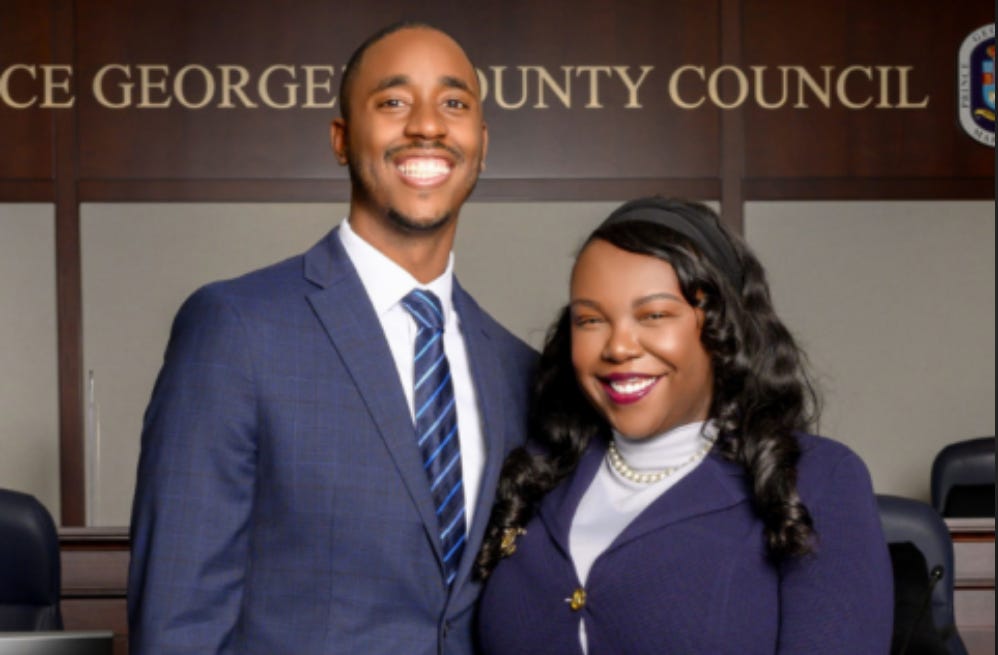
🟦 THE AT‑LARGE COLLISION: FIVE DEMOCRATS, ONE INCUMBENT, AND A COUNTY THAT ALWAYS TELLS YOU WHAT IT REALLY THINKS
By Barry O’Connell | Maryland Wire
Prince George’s County doesn’t do quiet elections. Even the races that look settled on paper have a way of revealing the county’s deeper tensions — generational, institutional, ideological, and sometimes just personal. The 2026 Democratic primary for the two at‑large seats is shaping up exactly that way: one seat effectively anchored by Jolene Ivey, and one seat wide open, contested by four candidates who each represent a different theory of what the county wants next.
This is the early‑stage map — the lanes, the structures, the fault lines — before the mailers, before the endorsements, before the county’s political class decides which way the wind is blowing.
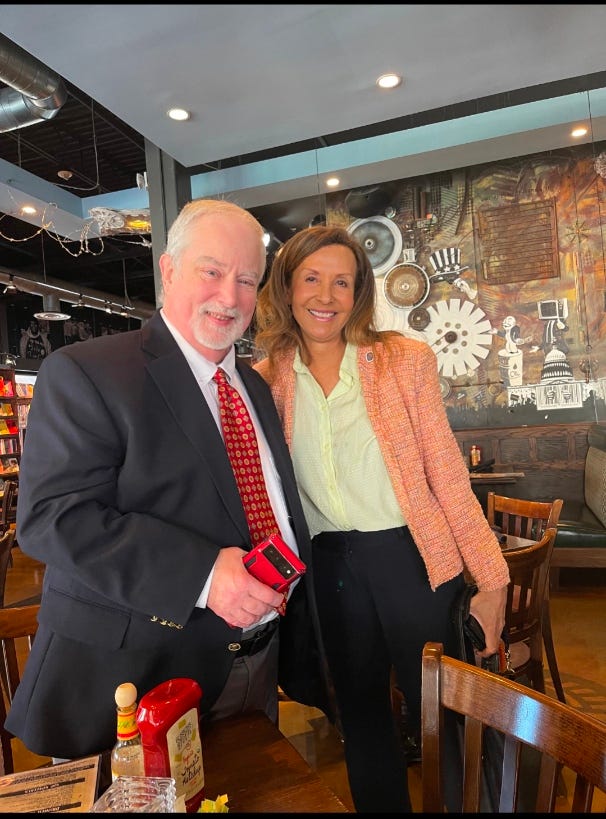
🟦 THE INCUMBENT: JOLENE IVEY
The one candidate who doesn’t need to introduce herself.
Ivey is the only person in this field who can walk into any room in Prince George’s County and skip the biography. She’s been a state delegate, a councilmember, a fixture in civic life, and a known quantity to voters who actually show up in primaries. Her political identity is built on competence, candor, and institutional memory — three commodities that remain in short supply in county politics.
She’s not running for attention. She’s running to continue doing the job she already knows how to do. And in a county where incumbency still matters, she enters this race with the structural advantage no one else has: she’s already proven she can win countywide.
Everyone else is fighting for the other seat.
🟦 THE FOUR‑WAY FIGHT FOR THE OPEN SLOT
This is where the race actually lives — four candidates, four lanes, four different theories of what the county wants.
SEAN A. FLOYD — THE ORGANIZER‑TECHNICIAN
The competence lane.
Floyd comes out of the policy‑and‑community‑engagement world — the kind of candidate who reads the budget, understands the zoning map, and can explain the difference between a CIP and an operating allocation without blinking. He’s the technocrat in a field where technocrats rarely get the spotlight.
His pitch is simple: the county needs someone who can actually run the numbers.
His challenge is equally simple: Prince George’s voters don’t always reward the person who knows the most; they reward the person who feels the most familiar.
If Floyd breaks through, it will be because voters decide they want a problem‑solver, not a personality.
LAURA S. GILCHREST — THE ADVOCACY PROGRESSIVE
The reform lane.
Gilchrest enters the race with a clear identity: transparency, accountability, equity, and watchdog energy. She’s the candidate for voters who believe the county’s political culture needs friction — not hostility, but scrutiny. Her base is the progressive wing that has been steadily growing in the county, especially among younger voters and reform‑minded civic groups.
Her strength is clarity.
Her challenge is scale.
Advocacy candidates often have passionate supporters but need to translate that passion into countywide viability. If she can do that, she becomes a real contender for the second seat.
SYDNEY HARRISON — THE RETURNING NAME
The experience lane.
Harrison is the only challenger with prior council experience, having represented District 9. That gives him something the others don’t: a record of constituent service and a built‑in familiarity with county operations. He’s not running as a newcomer; he’s running as someone who’s done the job before and wants to do it again, this time countywide.
His strength is name recognition and a base that remembers him.
His challenge is reintroducing himself to voters who may have moved on or tuned out since he last held office.
If he can remind the county who he was — and who he intends to be — he becomes a serious factor.
NOAH EMMANUEL WATERS — THE NEXT‑GEN CONTENDER
The generational‑change lane.
Waters represents the future‑forward pitch: younger, energetic, and positioning himself as the candidate who speaks to the county’s next chapter rather than its last one. His messaging leans into innovation, youth engagement, and a break from the familiar rotation of names that have defined county politics for decades.
His strength is freshness.
His challenge is credibility.
Prince George’s County likes new voices — but it also likes experience. Waters’ path depends on convincing voters that new leadership isn’t a risk; it’s an upgrade.
🟦 THE STRUCTURAL REALITY
One seat is stable. One seat is a knife fight.
This is the cleanest way to understand the race:
- Ivey holds the institutional anchor.
- Floyd offers technocratic seriousness.
- Gilchrest offers reform energy.
- Harrison offers experience and familiarity.
- Waters offers generational change.
Each candidate occupies a distinct lane.
Each lane has a constituency.
Each constituency has a ceiling — and a path.
The question is
not whether Ivey wins.
The question is which lane breaks through for the second seat.
And that is where the real story of 2026 will unfold.
Thank you, Barry, for putting all of the candidates for Prince George's County Council At-Large in your article. I have a question for you. Where did you get the information about my strengths and challenges because you did not interview me?
Respectfully,
Noah Waters, PhD
Former Mayor of Eagle Harbor, MD and Candidate for Prince George's County Council At-Large