

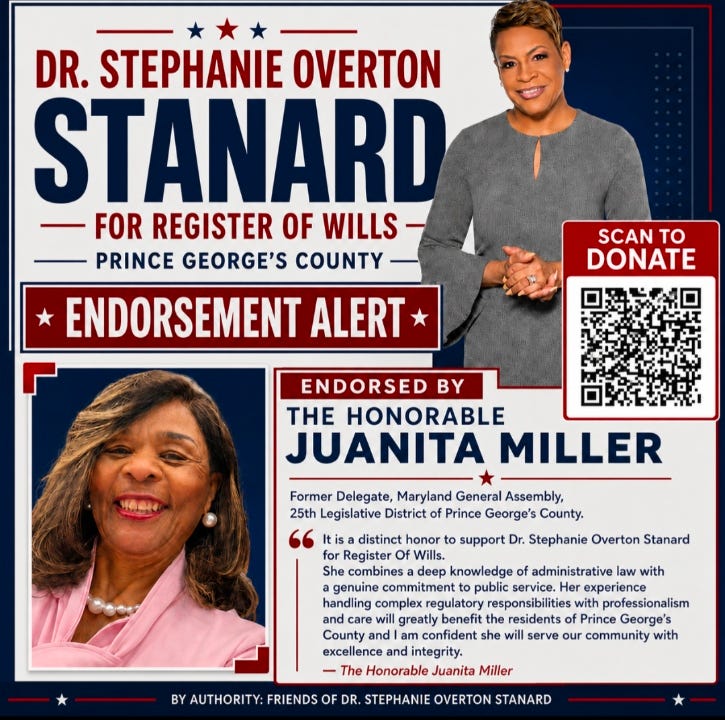
New PowerRankings Cunningham vs Overton
Register of Wills: How a Budget Crisis and Divine Nine Politics Are Reshaping the Race
By Barry O’Connell
Just a few days ago, many political observers would have described the Prince George’s County Register of Wills race as a contest led by former Bladensburg Council Member Jocelyn Rout and former Board of Education member Belinda Queen Cunningham.
Today, that assessment appears considerably less certain.
What changed was not a scandal, a major fundraising report, or even a debate performance.
It was the county budget.
The budget submitted by the County Council was returned after serious issues emerged regarding its form and compliance. Whatever one’s opinion of the policy choices involved, the larger political reality is that the budget process has become an embarrassment for the county’s governing leadership.
For voters who do not closely follow county government, budgets can seem abstract. For political insiders, however, a failed budget process sends a powerful signal about competence, management, and leadership.
The political problem for Rout is not that she had anything to do with writing the budget.
The political problem is that she has become associated with a governing coalition that now appears weakened, defensive, and under criticism.
Politics is often unfair in that way.
Candidates frequently receive credit for successes they did not create and blame for failures they did not cause.
Just days ago, being aligned with influential county officials looked like a significant advantage. Today, some of those same endorsements may carry considerably less value than they once did.
The governing coalition that appeared strong a month ago now finds itself answering uncomfortable questions about why Prince George’s County remains out of compliance and why a routine governmental process became so chaotic.
For Rout, that means the political environment around her campaign has changed dramatically.
The Governor Enters the Race
At the same time the local governing coalition has been weakened, Governor Wes Moore entered the conversation with an endorsement of Dr. Antwan Brown.
The endorsement immediately elevated Brown’s profile and provided him with something none of the other candidates possessed: direct validation from the state’s most prominent Democrat.
In a crowded race where many voters know little about the candidates, endorsements often function as shortcuts.
The governor’s endorsement tells voters that Brown is a candidate worthy of consideration.
Whether that alone is enough to win remains to be seen, but it unquestionably altered the dynamics of the race.
The Divine Nine Factor
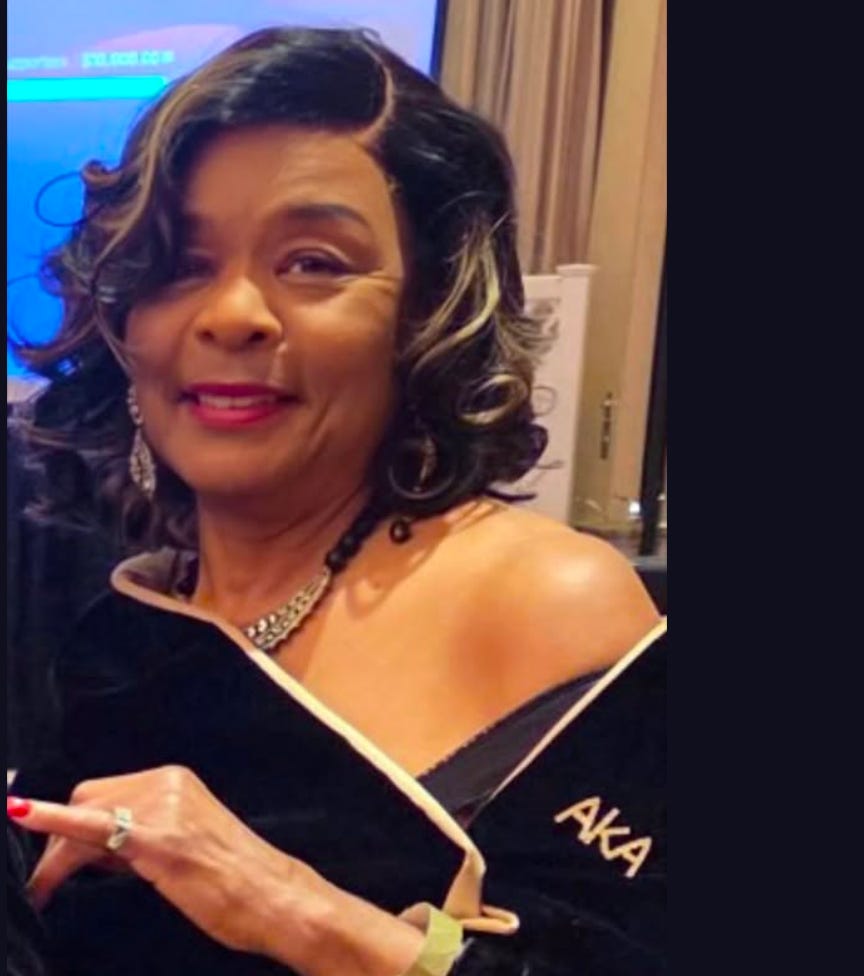
If the governor’s endorsement changed the political landscape, the endorsement of Dr. Stephanie Overton by prominent Alpha Kappa Alpha leadership may have changed the social landscape.
Political observers outside Prince George’s County often underestimate the influence of Divine Nine organizations.
That is a mistake.
In Prince George’s County, churches matter.
Community organizations matter.
Professional networks matter.
And Divine Nine relationships matter.
A great deal.
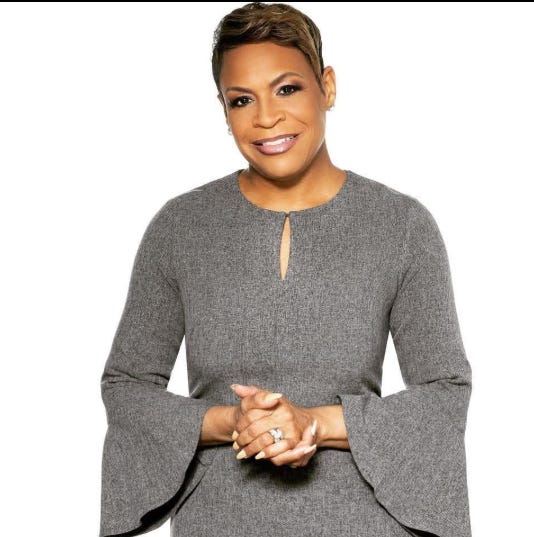
The support Overton has received from respected figures within Alpha Kappa Alpha has generated significant discussion throughout political and social circles.
The endorsement of former State Senator and Cabinet Secretary Gloria Lawlah was passingly noteworthy.
The subsequent endorsement from Dr. Juanita Miller generated even greater attention.
Among many political observers, the discussion is not simply about endorsements.
It is about influence.
It is about who has the ability to mobilize networks, activate relationships, and encourage participation.
Whether fair or unfair, many insiders view Miller’s endorsement as one of the most consequential developments in the race.
The result has been a growing perception that Overton has moved from being a credible candidate to being one of the leading contenders.
Why Divine Nine Politics Matters
The interaction between politics and Divine Nine organizations has always been complicated.
The organizations themselves are not political parties.
Their members hold a wide variety of views and support many different candidates.
At the same time, these organizations create professional, civic, educational, and social networks that often overlap with political activity.
In a county where personal relationships frequently matter as much as television advertising, those networks can become extremely important.
This is particularly true in lower-turnout elections where voter mobilization efforts can have an outsized impact.
The Register of Wills race is increasingly becoming a case study in that reality.
Candidates are no longer competing solely on resumes and endorsements.
They are competing through overlapping political, civic, professional, and social networks that stretch across the county.
The New Shape of the Race
Just weeks ago, many observers would have described the race as a contest between Rout and Queen Cunningham.
Today, the picture appears far more complicated.
Brown enters the final stretch with the governor’s endorsement.
Overton enters with growing momentum from influential community leaders and strong visibility within important civic networks.
Queen Cunningham continues to maintain significant support in portions of the county where she has longstanding relationships.
Rout remains a serious candidate, but now faces a challenge she did not face several weeks ago: the political weakening of the coalition most closely associated with her campaign.
The ultimate question is whether voters will view local government dysfunction as separate from the Register of Wills race or whether dissatisfaction with county leadership spills over into down-ballot contests.
That answer may determine the outcome.
One thing is certain.
What looked like a relatively straightforward race a few weeks ago has become one of the most fascinating contests on the Prince George’s County ballot.
And with endorsements, alliances, and political loyalties shifting almost daily, the final chapter has yet to be written.