The Bridge, the Nickel, and the New Math of Public‑Private Partnerships
By Barry O’Connell — Everybody’s Maryland Politics
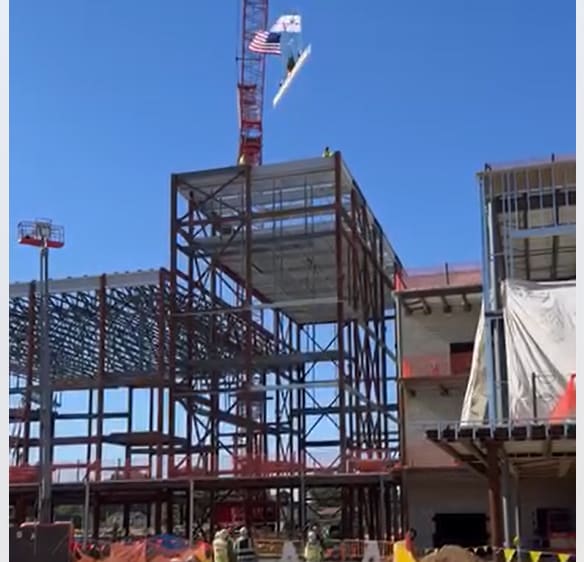
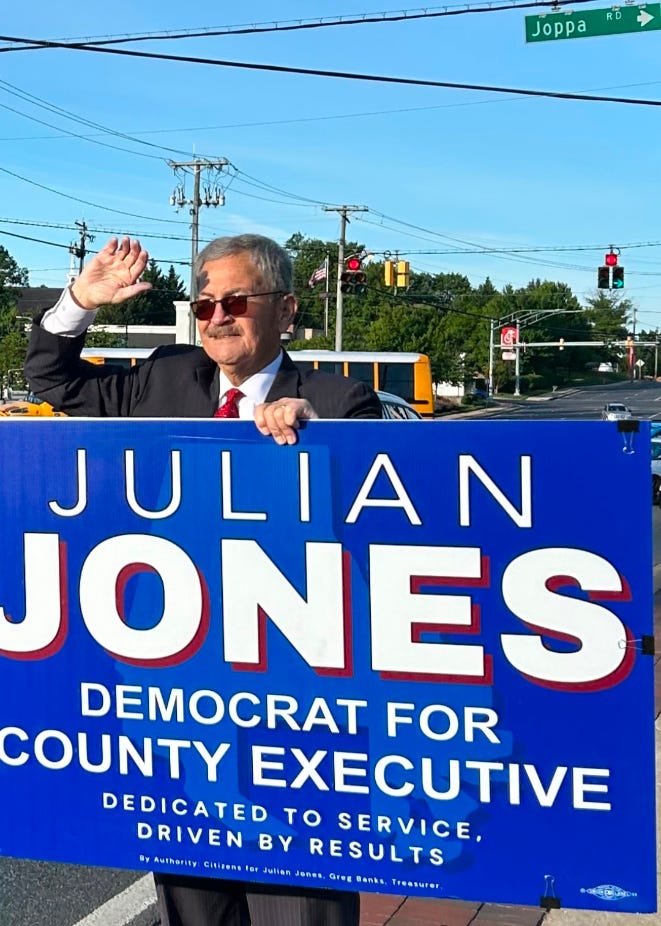
When Baltimore County Council Chair Julian Jones talks about building schools faster, he isn’t speaking in abstractions. He’s pointing to something real — the public‑private partnership model that Angela Alsobrooks deployed in Prince George’s County to accelerate school construction at a pace the traditional capital budget simply couldn’t match.
And in a video circulating among local political circles, community leader Shafiyq Hinton endorses Jones while praising that very approach: a willingness to look beyond the old playbook and consider P3s as a tool to meet urgent public needs.
Jones isn’t promising miracles. He’s pointing to a method. And like every method in public life, it comes with a history — one that stretches far beyond Baltimore County, and in my case, all the way back to the late 19th century, to a bridge over a waterfall in Scranton, Pennsylvania.
A Bridge the Government Wouldn’t Build
My great Aunt Betty grew up in a world where infrastructure wasn’t guaranteed. Roads washed out. Bridges collapsed. And when the state or city didn’t want to pay for a replacement, the answer was simple: someone else would.
In this case, that “someone else” was Betty’s father, a businessman in the lumber, livery, and early automobile trade. When the main road from Scranton to New York City needed a bridge over the Nay Aug Gorge, the government balked at the cost. He didn’t.
He built it himself — as a speculative investment — and charged a nickel toll for every crossing.
A nickel was real money then. Enough that Betty’s mother would ride out in a horse‑drawn carriage to collect the day’s tolls, a Colt Dragoon cavalry pistol hidden under the heavy lap robe for protection. According to Betty, she never had to use it. But the message was clear: the bridge was private property, built with private risk, and the revenue belonged to the family until the state eventually bought it.
Scranton got a faster, safer route to New York.
The family got a steady stream of nickels.
And everyone understood the arrangement.
That’s the original P3.
The Modern Version — and Why Jones Is Looking at It
Fast‑forward 140 years.
Baltimore County faces the same fundamental problem: schools that need to be built faster than the traditional public‑only process allows. Construction costs rise. Enrollment shifts. Communities wait.
Prince George’s County confronted the same challenge — and under Alsobrooks, they used a P3 model to build schools years sooner than the standard capital pipeline would have delivered.
That’s what Jones is studying. Not a giveaway. Not a shortcut. A financing and delivery model that trades immediate public cash for long‑term contractual payments — the modern equivalent of paying a nickel to cross the gorge.
The Upside — and the Catch
P3s can work. They can deliver real public goods faster. They can shift construction risk to the private partner. They can stabilize timelines in a way government procurement often struggles to do.
But they are not magic.
Every P3 has a ledger.
Every ledger has two sides.
And there is no such thing as a free lunch — or as Robert Heinlein put it, TANSTAAFL.
The public gets the bridge sooner.
The private partner gets the tolls longer.
The trick — then and now — is not giving away the store.
A well‑negotiated P3 is a partnership.
A poorly negotiated one is a mortgage the public pays for decades.
Jones understands that distinction. So did Alsobrooks. And that’s why their approach deserves a fair hearing rather than reflexive suspicion.
The Real Question for Baltimore County
The debate isn’t whether P3s are good or bad.
The debate is whether Baltimore County can:
- Structure them transparently
- Protect taxpayers over the long term
- Deliver schools faster without mortgaging the future
- Avoid the temptation of short‑term wins that become long-term obligations
If the answer is yes, then P3s become what they were in my family’s story:
A way to build something the public needs now, while ensuring the public doesn’t pay forever.
The bridge over the Nay Aug Gorge eventually became public.
The tolls ended.
The road endured.
That’s the model worth studying — and the one Julian Jones is signaling he intends to follow. I trust Julian Jones Jr. to get us a good deal.