


Governor Wes Moore enters 2026 reelection with commanding lead; Democratic dominance shields even weak incumbents like Lierman

In Maryland’s latest UMBC Mileah Kromer poll, the numbers speak louder than any stump speech: Governor Wes Moore is cruising toward reelection with a level of political insulation that borders on invincibility. With 49% of voters already committed to Moore and only 29% backing a hypothetical Republican challenger, the remaining 22%—split between third-party options and undecideds—would need to swing decisively and improbably to unseat him.
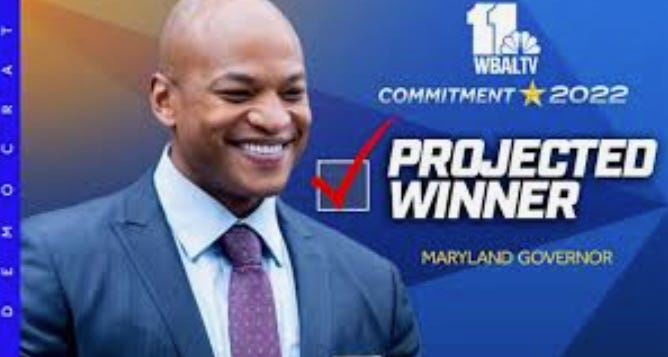
🧭 Moore’s Approval and the Democratic Firewall
- Moore’s approval rating holds steady at 52%, unchanged since February, despite a slight uptick in disapproval from 40% to 44%.
- Voters trust Democrats more than Republicans on nearly every major issue: state budget, job growth, infrastructure, education, and healthcare.
- Even on crime and public safety—historically a Republican stronghold—Democrats trail by just one point.
This isn’t just a popularity contest. It’s a structural advantage. Maryland’s electorate is not just leaning blue—it’s anchored there. 58% want Democrats to control Congress, and party loyalty remains high, with only 46% open to crossing the aisle.
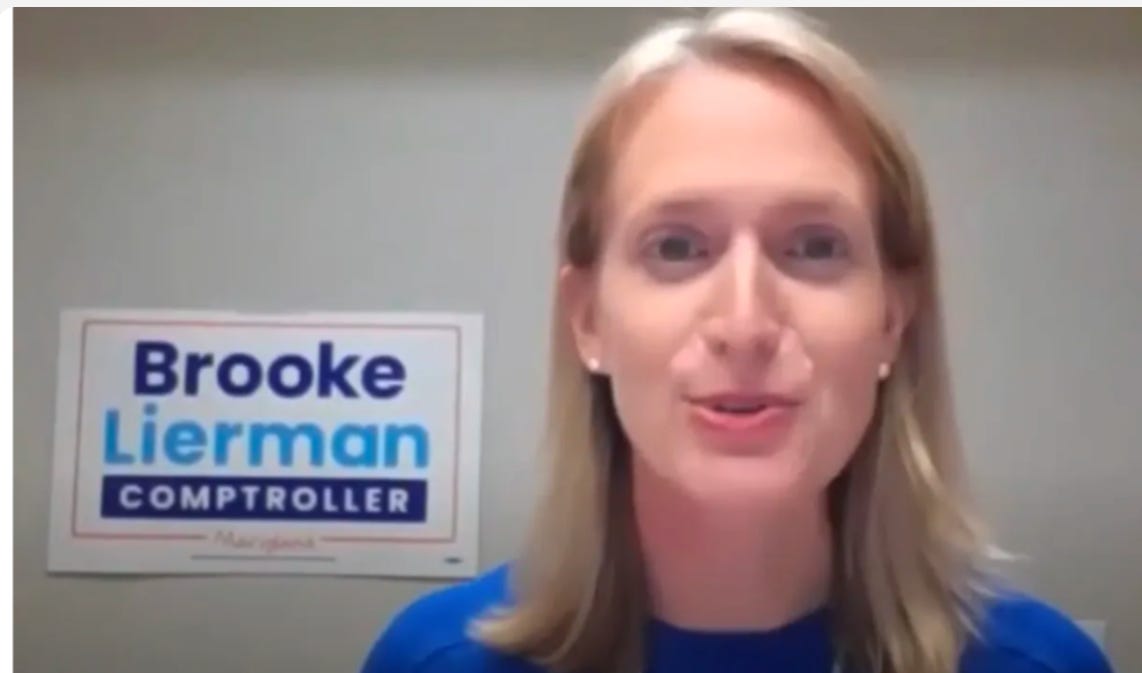
🧱 The Lierman Paradox: Weak Performance, Strong Position
Comptroller Brooke Lierman, whose tenure has been marked by what critics call “operational drift and strategic incoherence,” is nonetheless poised to glide into reelection. Why? Because no serious challenger is stepping up. The UMBC poll doesn’t even register a competitive race for her office—a vacuum of opposition that functions as de facto endorsement.
This phenomenon—where even underperforming incumbents benefit from partisan inertia—underscores a deeper truth about Maryland politics: the Democratic machine is so dominant that competence becomes optional. Lierman’s survival isn’t about merit; it’s about math. And the math favors Democrats.
📊 Voter Sentiment and the Myth of the Swing
- 63% of respondents say they vote in every election, and 52% vote for candidates they like—not just to oppose others.
- Yet with Moore’s numbers and Lierman’s lack of opposition, the “choice” in 2026 may be more symbolic than substantive.
📝 Conclusion
Governor Moore’s reelection isn’t just likely—it’s structurally inevitable unless something seismic shifts. And in that same shadow, even the most lackluster Democratic incumbents like Brooke Lierman are protected by the sheer gravitational pull of party dominance. Maryland’s 2026 election may be less a referendum on leadership than a reaffirmation of partisan entrenchment.