

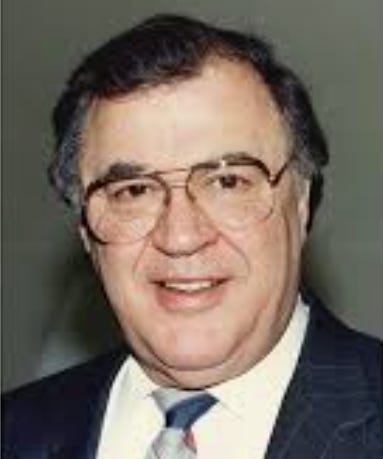
MELVIN “MICKEY” STEINBERG (1933–2026):
The Quiet Force Who Shaped Modern Annapolis
Melvin A. “Mickey” Steinberg, former lieutenant governor, Senate president, and one of the most durable power brokers in late‑20th‑century Maryland politics, died March 10 in Baltimore at age 92 after a short stay in hospice.
For nearly three decades, Steinberg was a defining presence in Annapolis—an operator whose influence was felt in budget fights, higher‑education reform, Baltimore civic life, and the early financing of Camden Yards. He was, as one longtime observer put it, “one of the most impactful governmental leaders in the state.”
But to those who worked with him, including veteran Maryland political hand Clemis Kaikis, Steinberg was something more elemental: a man whose word was his bond—the highest praise Kaikis says he can give any politician.
A Baltimore Upbringing and a Relentless Ascent
Born in Baltimore on October 4, 1933, Steinberg came out of the city’s public schools and earned both his A.A. (1952) and J.D. (1955) from the University of Baltimore. He served in the U.S. Navy before entering private legal practice and then politics.
He won election to the Maryland Senate in 1966 and took office in 1967—beginning a 20‑year run that would make him one of the chamber’s most formidable tacticians.
By 1983, he had risen to President of the Maryland Senate, succeeding James Clark Jr. and preceding Thomas V. “Mike” Miller Jr.
Those four years (1983–1987) were the apex of his legislative power. Kaikis, who watched the era from inside Baltimore’s political machinery, describes Steinberg as “extremely powerful—one of the most powerful men in Baltimore and in the state.”
In that period, Steinberg was widely regarded as the most influential Jewish elected official in Maryland—arguably the most powerful Jewish political figure the state had ever produced. His command of the Senate, his relationships in Baltimore’s civic and business circles, and his reputation for straight dealing made him a central broker in nearly every major policy fight of the era.
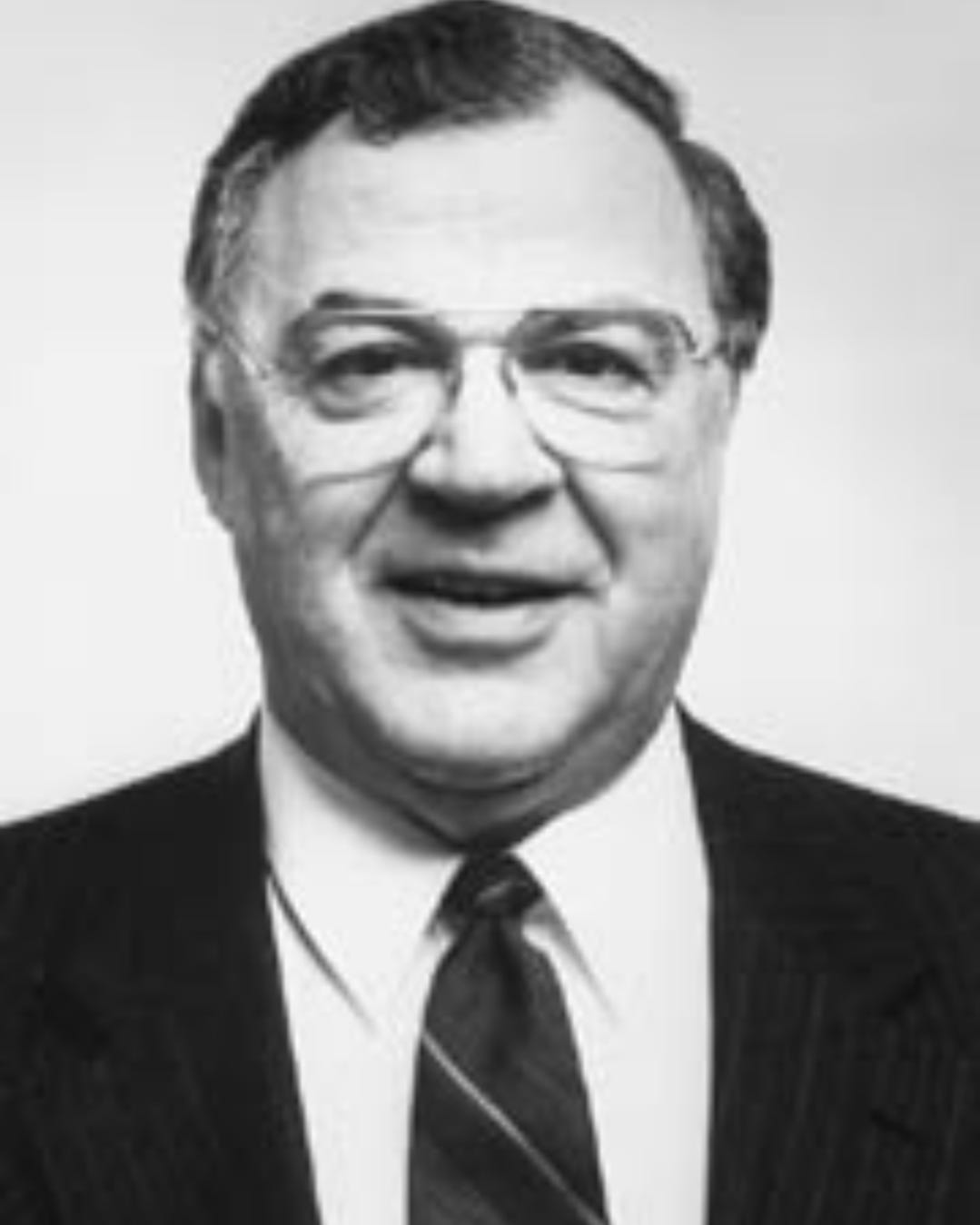
The Schaefer Years: Partnership, Friction, and Two Landslide Wins
In 1986, William Donald Schaefer—already a Baltimore legend—selected Steinberg as his running mate. The Schaefer–Steinberg ticket won easily, and Steinberg served as Maryland’s 5th lieutenant governor from 1987 to 1995, winning re‑election in 1990.
But the partnership was famously rocky.
A Relationship Built on Mutual Need—and Mutual Irritation
The public record is clear:
Steinberg and Schaefer did not always get along, and their disagreements were not subtle. They criticized each other openly, and the press devoted extensive coverage to their personal and political friction.
Schaefer, mercurial and image‑driven, often bristled at Steinberg’s independence and legislative instincts. Steinberg, for his part, was not inclined to play the ceremonial role Schaefer preferred for his lieutenant governors. He had been Senate president—he knew how to wield power, and he expected to be taken seriously.
Yet despite the tension, the two governed together for eight years, won two statewide elections, and delivered major projects—including the financing and political groundwork for Oriole Park at Camden Yards, a project Steinberg helped shepherd through the budget process.
Their relationship was a study in contrasts:
Schaefer the showman; Steinberg the institutionalist.
They needed each other, even when they didn’t particularly enjoy each other.
Policy Footprint: Higher Ed, Health Law, and the Budget Wars
Steinberg’s influence was felt across multiple domains:
Higher Education Reform
He pushed for modernization and accountability in Maryland’s higher‑ed system, helping shape the governance structures that would carry the state into the 1990s.
Health and Regulatory Law
Steinberg was known for his command of complex regulatory issues, particularly in health law—an area where he earned respect from both sides of the aisle.
Budget and Capital Projects
As Senate president and later as lieutenant governor, he was central to the budget negotiations that defined the Schaefer years. His fingerprints were on major capital investments, including Camden Yards and other Baltimore‑area projects.
1994: The Governor’s Race That Wasn’t
In 1994, Steinberg sought the Democratic nomination for governor, running on a tough‑on‑crime platform.
But the race was not his moment. He finished third in the primary behind Parris Glendening, who went on to win the governorship.
It was the end of Steinberg’s electoral career—but not his influence.
Later Years: Lobbyist, Elder Statesman, Occasional Rebel
After leaving office in 1995, Steinberg became a lobbyist, leveraging decades of institutional knowledge.
He also surprised many Democrats by endorsing Republican gubernatorial candidates twice—Ellen Sauerbrey in 1998 and Larry Hogan in 2018.
These endorsements reflected Steinberg’s independent streak more than any ideological shift; he had always been guided more by personal judgment than party orthodoxy.
He remained active in civic and veterans’ organizations and continued to advise clients and political figures well into his later years.
A Reputation Built on Integrity
For all the power he wielded, Steinberg’s legacy among insiders is defined by something simpler: trust.
Clemis Kaikis—who spent six decades in Maryland politics and worked with every major figure from Schaefer to Ruppersberger to Franchot—put it plainly:
> “His word was his bond. I thought the world of him.”
In a political culture where loyalty is often conditional and promises often evaporate, Steinberg’s reliability made him invaluable. He was tough, he was direct, and he was fair. That combination made him a force.
Final Years and Passing
Steinberg died on March 10, 2026, in Baltimore at age 92.
He is survived by his wife, Anita, and their children. Tributes poured in from across the political spectrum, including from Governor Wes Moore and former Governor Larry Hogan.
Legacy
Melvin “Mickey” Steinberg leaves behind a legacy that is both institutional and personal:
- Institutional, in the laws he shaped, the budgets he negotiated, and the projects he helped bring to life.
- Personal, in the relationships he built and the reputation he earned as a man whose commitments meant something.
He was a product of Baltimore, a master of Annapolis, and a figure whose influence will be felt long after the headlines fade.