


🏛️ Maryland’s CDAC: The Quiet Committee That Shapes $1.75 Billion in Bonds
By Barry O’Connell
In a state where budget battles often play out in headlines and hearings, Maryland’s Capital Debt Affordability Committee (CDAC) operates with quiet precision. It doesn’t set policy. It doesn’t spend money. But every October, it makes a recommendation that shapes the state’s capital budget, infrastructure priorities, and long-term fiscal health. This year, CDAC unanimously recommended maintaining a $1.75 billion general obligation bond authorization for Fiscal Year 2026—matching last year’s level and signaling cautious continuity amid economic uncertainty.
💼 The Committee and Its Charge
Created under Maryland law, CDAC is tasked with estimating how much new debt the state can prudently issue each year. It reviews tax-supported debt across higher education, transportation, and housing, and sets planning assumptions for future bond authorizations. Its recommendations go to the Governor and General Assembly, influencing everything from school construction to economic development.
🧑⚖️ Dereck E. Davis: The Chair with Gravitas
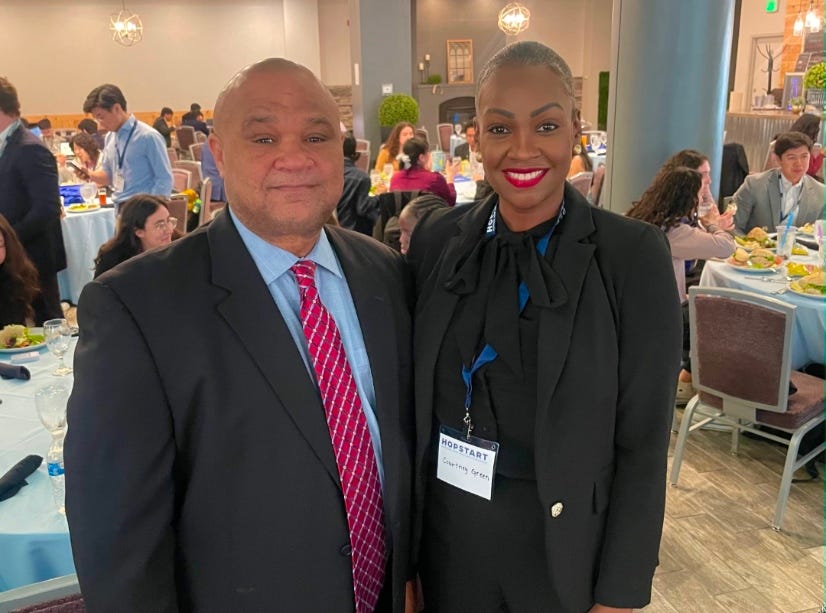
State Treasurer Dereck E. Davis chairs CDAC with the kind of presence that insiders recognize immediately. A former House Economic Matters Committee chair and longtime legislative strategist, Davis brings both fiscal realism and moral clarity to the role. His stewardship of CDAC reflects a broader philosophy: debt should serve the people, not burden them. Under his leadership, the committee has maintained Maryland’s reputation for disciplined borrowing—even as Moody’s downgraded the state’s rating from Aaa to Aa1 earlier this year.
🧷 The Members Behind the Recommendation
Here’s the full roster of CDAC members for 2025, annotated for those who read between the lines:
| Name | Role | Insider Notes |
| Dereck E. Davis | State Treasurer, Chair | Former House powerhouse, now steward of Maryland’s fiscal reputation |
| Brooke E. Lierman | Comptroller | First woman elected to the role; critics cite procedural lapses and constituent service failures |
| Helene T. Grady | Secretary of Budget & Management | Former Johns Hopkins VP; brings institutional budgeting experience to the table |
| Paul J. Wiedefeld | Secretary of Transportation | Former WMATA CEO; known for pragmatic infrastructure management |
| Paul B. Meritt | Public Member (Governor’s Appointee) | Financial analyst with private-sector roots; rarely quoted, but his votes matter |
| Sen. Craig Zucker | Senate Capital Budget Subcommittee Chair (non-voting) | Former aide to Peter Franchot; Montgomery County loyalist with deep budget chops |
| Del. Mark S. Chang | House Capital Budget Subcommittee Chair (non-voting) | Anne Arundel delegate; known for quiet diligence and bipartisan respect |
🧮 What $1.75 Billion Buys
The recommended bond float will fund:
- School construction and modernization
- Affordable housing initiatives
- Economic development zones
- Replacement of aging state-owned facilities
It’s not flashy, but it’s foundational. And in a year when federal workforce reductions and infrastructure challenges loom large—think the Francis Scott Key Bridge rebuild—CDAC’s steady hand matters.
🧠 For the Insiders
Craig Zucker’s presence on CDAC is a reminder that Maryland’s budget culture is shaped by relationships as much as spreadsheets. Zucker, once an aide to then-Delegate Peter Franchot, has quietly built a reputation as a budget technician and institutional memory-keeper. He doesn’t seek headlines, but he knows where the bodies are buried—and how to fund the exhumation.
Meanwhile, Davis continues to anchor the committee with moral clarity and strategic foresight. His leadership is the reason CDAC remains a model of fiscal realism in a political landscape often defined by short-term optics. It is quietly acknowledged in the storied halls of Annapolis that the treasurer’s strength more than balances off the Comptroller’s weakness.