

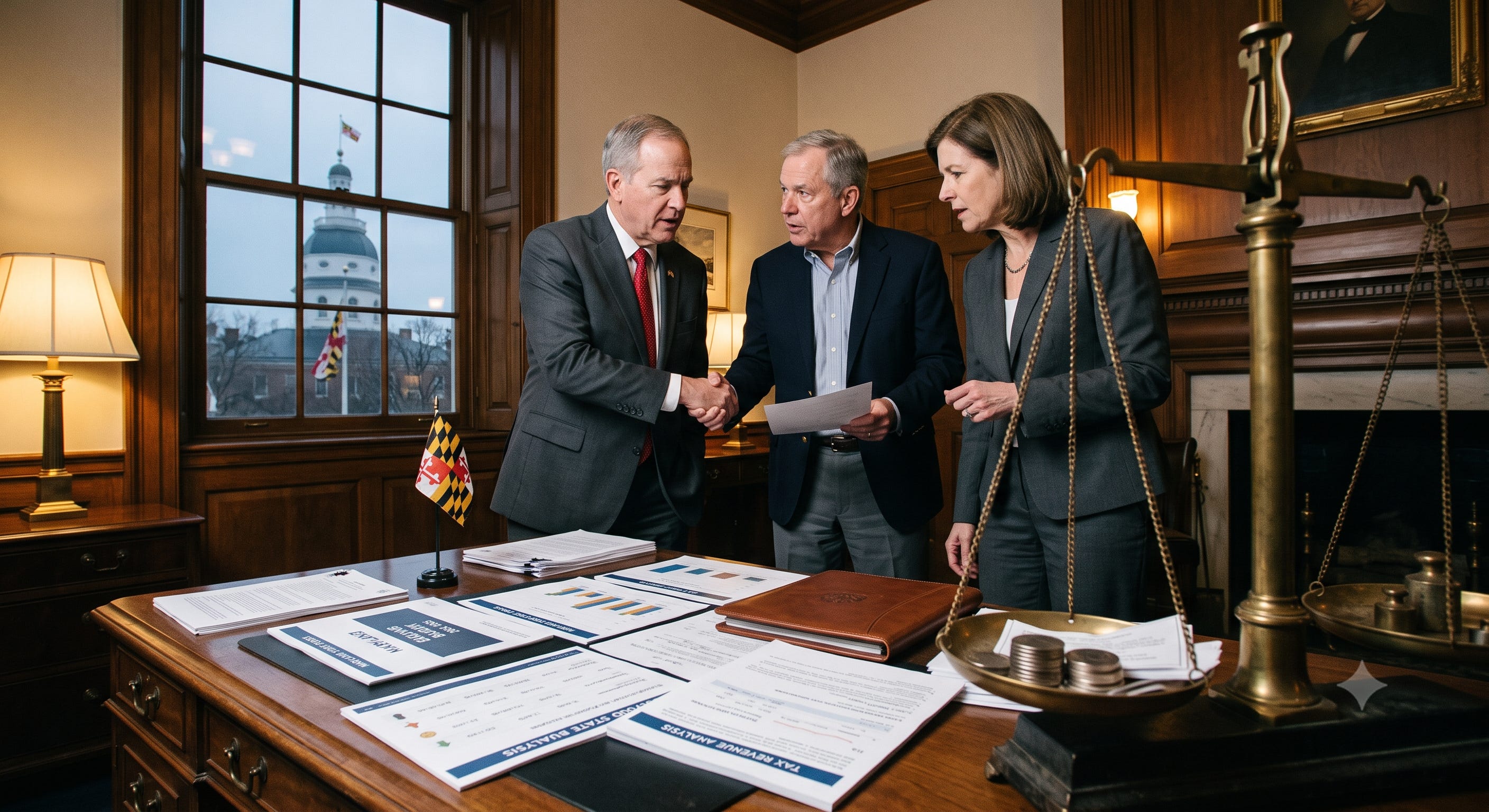
The Coming Shake-Up in Maryland’s Budget and Taxation
For years, the narrative out of Annapolis has relied on a reliable piece of fiscal sleight of hand: frame every structural deficit as a temporary crunch, cover the immediate gap with one-time cash reserves or accounting shifts, and push the real reckoning just past the next election cycle.
That runway is officially running out.
Beneath the press releases celebrating "balanced budgets" and "no broad-based state income tax hikes," the mathematical reality facing Maryland’s budget and taxation policy is reaching a boiling point. The state isn't just confronting a routine tight year; it is staring down a long-term structural imbalance driven by massive multi-year spending mandates, flattening traditional revenue streams, and a shifting tax burden that is quietly migrating from state ledgers down to county governments and local taxpayers.
When state leaders pledge not to raise statewide income or sales taxes while simultaneously expanding multi-billion-dollar programmatic mandates, the cost doesn't vanish into thin air. It simply shifts downward. And depending on which county you live or operate a business in, the mathematical consequences of that shift are radically different—and potentially devastating.
🔒 SUBSCRIBER EXCLUSIVE BEYOND THIS POINT Read the full analysis below for the county-by-county breakdown (Prince George’s TRIM cap, Montgomery, Howard, and Baltimore City) and the specific stealth tax proposals heading for the General Assembly floor.
