

Maryland Wire and the Future of Local Political Reporting
Six months ago, I made a deliberate editorial pivot. For years, Everybody’s Maryland Politics had thrived on short, Facebook‑style posts — quick bursts of commentary designed to spark conversation. But I began to feel that something was missing. Maryland politics deserved more than snippets. It deserved depth, context, and analysis. So I launched a new experiment: longer, magazine‑style, articles on Maryland Wire, complete with footnotes, citations, and the kind of narrative scaffolding you’d expect from The Atlantic or Politico.
The difference was immediate. Instead of writing for the broadest possible audience, I began writing for the sharpest handful of my readers — the ones who wanted detail, history, and rigor. Not everyone reads every word, but the seriousness of tone signaled something important: Maryland politics is worth treating as a serious subject. And readers responded.


The Synergy Between Platforms
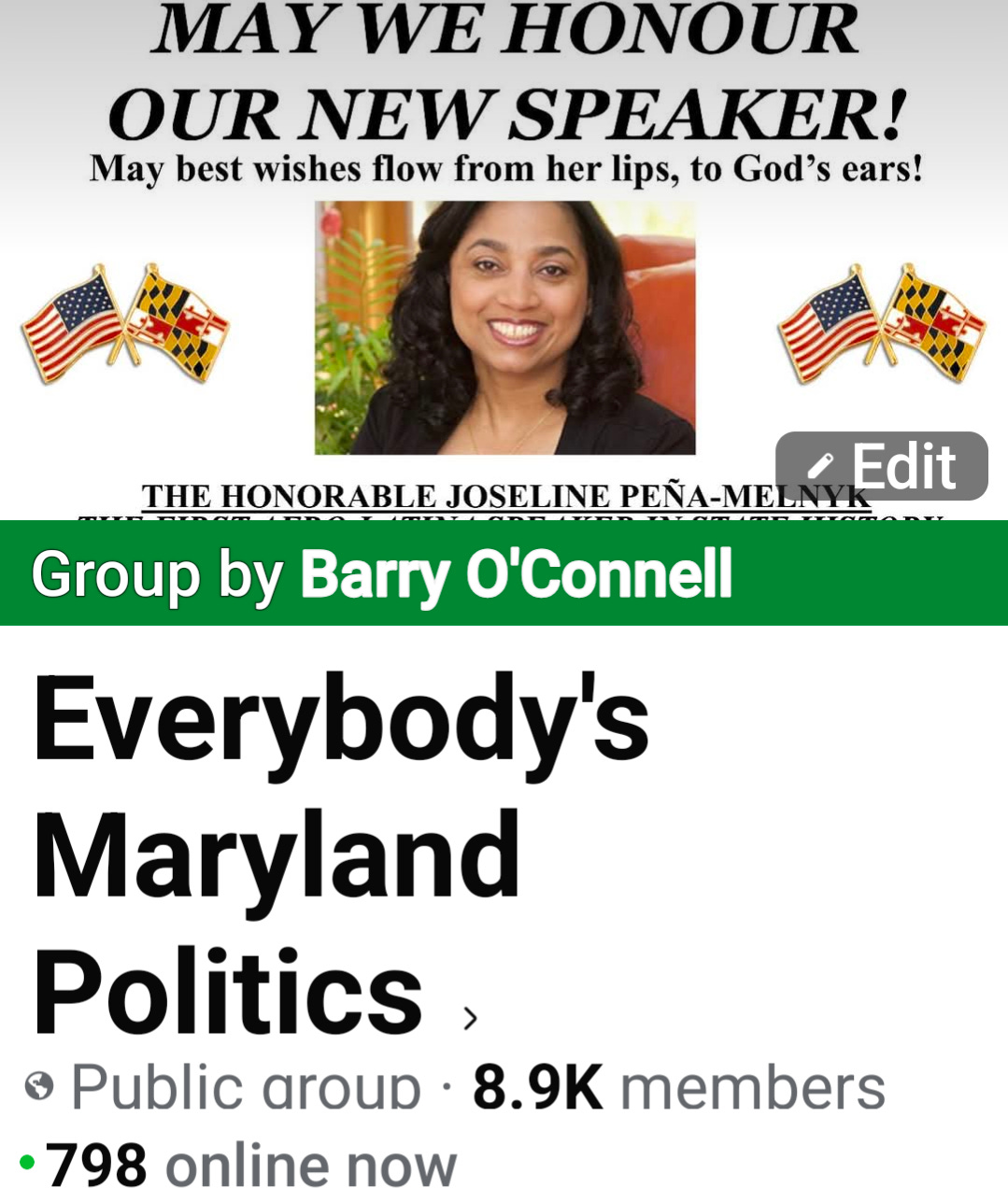
The numbers tell the story. My Facebook group, which once averaged about 600 readers a day, now trends over 6,000 daily — and in the past month, has topped 7,000. Meanwhile, Maryland Wire’s Substack readership, though smaller, has grown steadily. The two platforms feed each other: long‑form credibility drives short‑form engagement, while the Facebook group amplifies the reach of Substack essays. Together, they create a feedback loop that is more powerful than either could be alone.
Charts and screenshots make the point visually, but the deeper truth is this: serious writing and accessible conversation can coexist. One drives respect, the other drives reach. Combined, they create a model for sustainable local political journalism.
An Open Forum, Not an Echo Chamber
Of course, growth brings critics. Every day, Republicans drop in to call me “stupid” or “crazy” or “liberal.” I don’t mind. In fact, I find it funny. What matters is that neither Republicans nor Democrats “run” the discussion. The group has become an open forum where ideas are exchanged freely. That openness allows me to push serious questions — like whether Wes Moore is positioned not only for reelection but for a national run — without turning the space into partisan theater.
Answering the Larger Media Question
This experiment isn’t happening in a vacuum. Chuck Todd, once the face of NBC’s national political coverage, now runs a Substack and podcast, asking hard questions about the future of political commentary. Where is social media going? Where is local reporting headed?
I believe Maryland Wire offers one answer. By combining the immediacy of social platforms with the depth of long‑form analysis, we’ve created a hybrid model that both engages and informs. It’s not national television, but it doesn’t need to be. It’s local, it’s serious, and it’s growing.
In a media landscape where local outlets are shrinking and national voices are searching for relevance, this format shows promise. It suggests that there is, indeed, a place for local political reporting — if we treat it with respect, and if we build ecosystems where serious analysis and lively conversation reinforce each other.
Looking Ahead
The lesson of the past four months is clear: readers will embrace local political journalism when it is both rigorous and accessible. The Facebook group and Substack are not competitors; they are partners. One provides reach, the other provides depth. Together, they create a winning proposal — a model that could be replicated elsewhere.
Maryland politics may be the proving ground, but the implications are broader. In a time when national figures wonder where commentary is headed, the answer may lie in places like this: local voices, serious analysis, and communities that care enough to engage.
I love being a subscriber of Maryland Wire. I get all the news first. I hope you keep it going!
I appreciate the coverage of things happening in Annapolis, but I would strongly, strongly prefer that you not use artificial intelligence to write your stories (or at least that you edit it heavily enough that it doesn't stick out like a sore thumb). That goes for the cover images too... just use Wikimedia Commons or something-- A.I. slop, fairly or not, conveys to the reader the message "I don't put effort into my work"