

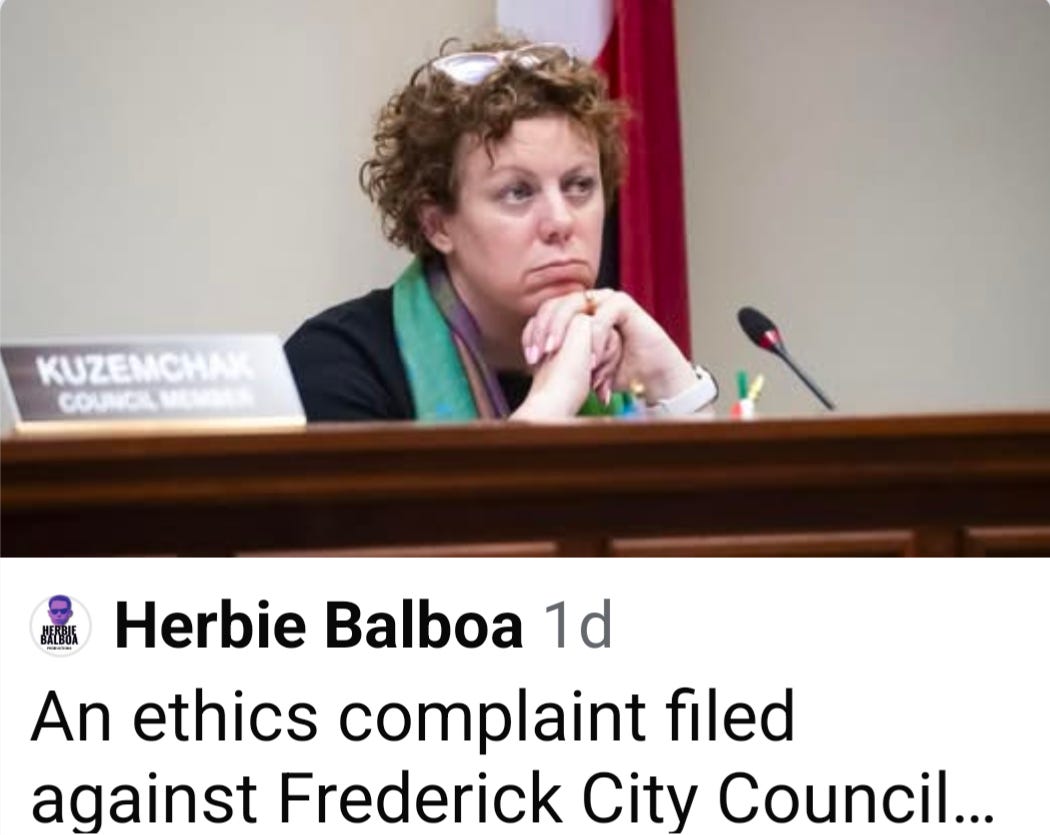
An ethics complaint in Frederick has turned a simmering debate over data centers and lobbying into a formal test of where public service ends and private interest begins. [1] At the center of the case is Council Member Katie Nash, a lobbyist whose work for energy‑sector clients now overlaps uncomfortably with her push to shape how—and whether—data centers can operate inside the city. [1][2]
A city at the edge of a new industry
Frederick has been circling the data‑center boom that reshaped parts of Northern Virginia and other regions, without yet deciding how far into that world it wants to go. [1] The city’s planning code currently has no definition for data centers, which, according to the deputy director of planning, means new facilities are not explicitly permitted—a legal gray area that could invite litigation from a determined developer. [1]
Into that vacuum stepped Nash, a council member with a separate career as a lobbyist for energy and infrastructure interests. [1][2] In June, she announced that she was working on a “text amendment” to address data centers in Frederick—a package she describes as definitions, restrictions, setbacks, and parcel‑size limits meant to regulate where such facilities could be placed. [1] Nash later told local media she drafted the amendment but withdrew it before submitting a final version to the full council. [1]
Dual roles, partial disclosures
The complaint now before the city’s Ethics Commission alleges that Nash went further than a withdrawn draft. It says she effectively introduced a text amendment “to allow Data Centers to be built within the city of Frederick” while at the same time lobbying for companies in “data center storage and management.” [1] It also claims she incorrectly represented, in June 2025, that the council as a body intended to submit such a text amendment, when no formal action had been taken and no draft had been provided to other members. [1]
Nash does not dispute that she spoke at data‑center‑focused council meetings without publicly discussing her lobbying ties. She has said she did not view her connection to Vistra Corp., a national energy company, as a conflict because “Vistra doesn’t build data centers” and has no physical assets in Maryland. [1] Lobbying records, however, show her name connected over time to Vistra and to firms such as Amazon, NTT Data Services, and Schneider Electric, all of which have business lines that intersect with data centers, power, or both. [1][2] Nash’s explanation is that some of those registrations reflect work by a previous employer, not direct fee payments into her own pocket. [1]
The Ethics Commission, through outside counsel, has notified Nash that it has received a complaint, that she is the subject of an investigation, and that she may submit documents or meet in person by early January as part of that process. [1] The complainant is not identified in the letter, which was reported by the Frederick News‑Post and echoed in statewide ethics round‑ups. [1]
Following the money from thousands to hundreds of thousands
The public record on Nash’s lobbying income has expanded in stages. Investigative pieces in The Maryland Wire highlighted at least \$30,000 in payments linked to her work for a power‑sector company over a single reporting period in 2025 and placed those payments alongside her public advocacy on data centers and related infrastructure. [2][3] Those stories questioned whether a council member could credibly claim neutrality on data‑center policy while drawing significant income from an industry whose fortunes rise and fall with large‑scale power demand. [2][3]
Subsequent review of lobbying reports and aggregated ethics summaries has painted a larger financial picture. A government‑relations digest, citing Frederick reporting, notes that Nash has taken in more than \$350,000 in gross payments from Vistra Corp. since 2019, making that relationship a major piece of her income rather than a marginal sideline. [1] Vistra is not a data‑center developer, but it operates in the power‑generation space that feeds them; industrial data centers are among the largest single consumers of electricity in any grid they occupy. [1] In practical terms, policies that open the door to more data‑center construction in and around Frederick have direct implications for the load, revenues, and strategic interests of companies like Vistra. [1][2]
That chain—from data‑center policy to power demand to energy‑sector clients—forms the backbone of the conflict‑of‑interest theory now under ethics review: that a local official promoted or prepared to promote legislation that could materially benefit an industry from which she earns substantial lobbying income, without making that relationship plain in public forums. [1]
From online scrutiny to formal complaint
Long before the Ethics Commission’s letter, questions about Nash’s dual roles were already circulating among Frederick voters and activists. Articles examining her data‑center advocacy, her characterizations of the facilities as essentially “big rooms with servers,” and her overlapping work for energy‑sector clients were widely shared in local networks and civic groups. [2][3] Those stories did not allege criminal conduct; they spelled out public records, payments, and statements, and invited readers to consider whether the arrangement met their own standard for honest government in a mid‑sized, closely watched city. [2][3]
The new complaint and the newspaper’s reporting do not simply repeat those questions; they add procedural teeth. A specific allegation has now been lodged that Nash misrepresented council intent around a data‑center amendment and pushed that policy track while having standing lobbying relationships in the same broad industry ecosystem. [1] A private debate over appearances has become an official inquiry into whether Frederick’s ethics rules on participation, disclosure, and conflicts were breached. [1]
For Nash, the stakes are more than reputational. Depending on how the city’s ethics code is interpreted, the commission could clear her, issue a reprimand, recommend restrictions on her participation in certain matters, or press for stronger structural safeguards on outside employment for council members. [1][4] Even short of formal sanctions, the combination of a six‑figure lobbying income from energy interests, a high‑profile zoning question, and an ethics investigation leaves a mark that is hard to scrub away in local politics. [1][2]
What Frederick decides now
Frederick’s data‑center fight is nominally about where to put racks of servers and how to define them in code, but the Nash case has turned it into a referendum on what residents expect from the people who write the rules. [1][2] As the Ethics Commission reviews documents and testimony, the city is also watching a broader pattern: a council member asserting that work for a power‑generation company has nothing to do with data centers, even as rising data‑center demand reshapes power markets and land‑use maps across the region. [1]
Whatever the commission decides, the process has already changed the conversation. Voters are looking more closely at lobbying registrations, council agendas, and the fine print of text amendments; community leaders are debating how much outside income is compatible with service on a small city council; and Frederick’s reputation as a “beautiful medium‑size city” that wants the benefits of growth without losing its character now depends on how transparently it manages these conflicts at the ground level. [1][4]
Citations:
[1] News You Can Use Digest - December 12, 2025 https://stateandfed.com/campaign-finance/news-you-can-use-digest-december-12-2025/
[2] Katie Nash A Question of Ethics - by Barry - The Maryland Wire

[3] The Shame of Katie Nash - by Barry - The Maryland Wire - Substack

[4] Incoming council members reserve judgment over Nash lobbying ... https://www.yahoo.com/news/articles/incoming-council-members-judgment-over-045900218.html
Further Reading
Opinion says Nash’s lobbying violated city ethics ordinance
Ethics complaint alleges Nash had conflict of interest over data center connections https://www.fredericknewspost.com/news/continuing_coverage/data_centers/ethics-complaint-alleges-nash-had-conflict-of-interest-over-data-center-connections/article_5b5186b8-ef51-5979-b1d6-95b1a19b12e0.html
How many other elected representatives face similar challenges? Where’s the legal line in this state?
Advisory Commission on Alcohol Manufacturing and Promotion and Fund (MAMPF):
1. Trade association Commission members vote on their own member’s grant applications
2. Commission members forward selected grant applicants to the Commerce Secretary for signatory - the Commerce Secretary also sits ex officio on the Commission
3. The state Agriculture Secretary’s former employees assumed ownership of his (former) company, show up in grant voting meetings as members of the public and pitch their members projects
4. Two Commission elected representatives oversee alcohol and approve budget for the Fund in their roles on General Assembly Committees: Economic Matters Alcohol Subcommittee and the Budget and Taxation Committee
This is called regulatory capture of public dollars.