

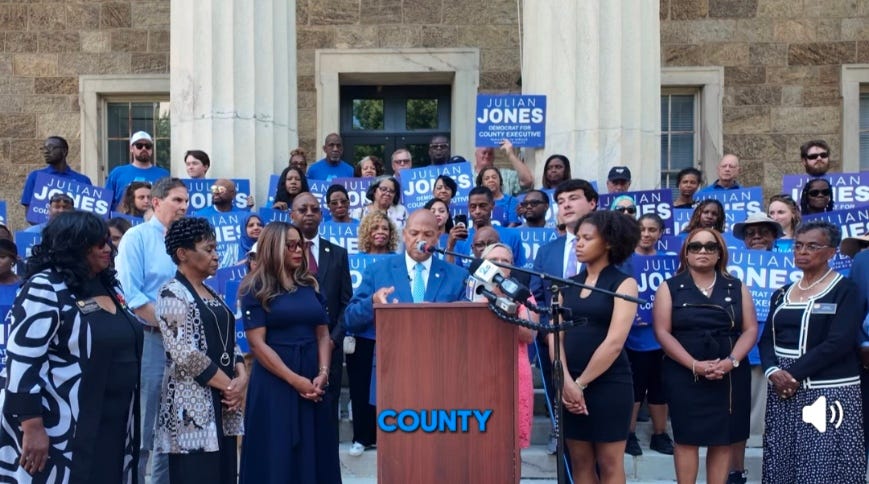
Moving Baltimore County Forward: A Conversation with County Executive Nominee Julian Jones Jr.
By Barry O’Connell
The Maryland Wire
Following a decisive victory in the Democratic primary, Baltimore County Councilman Julian Jones Jr. is looking ahead to the general election and, ultimately, to governance. A 32-year veteran of the fire department and a fixture on the County Council for the last 12 years, Jones sat down with The Maryland Wire to talk about his campaign strategy, his day-one priorities for working-class families, and his vision for transforming regional mass transit and infrastructure.
The following transcript has been edited for length and clarity.
On the Primary Victory and Campaign Strategy
Barry O’Connell: You won a big victory, Julian. You were the overwhelming choice, and nobody else was close. How are you feeling right now?
Julian Jones Jr.: I feel terrific, and honestly, very humbled. Elections are tough; everyone shows up and people say a lot of things. But at the end of the day, I believe the citizens of Baltimore County recognized the work I have done over the years and saw fit to give me a promotion.
I’ve been running on my record while others were running on promises. My campaign was structured like a 65/35 split—65% reminding voters of what I have delivered, and 35% focused on what I am going to do next. I feel incredibly good that the people recognized that record and gave me credit for it.
O’Connell: I think people respond to that. From an outsider’s perspective, what I’ve always appreciated about you as an officeholder is your accessibility. You answer the phone, and even when we disagree, you tell me your position directly. Sincere answers to tough questions are rare, and voters notice when a representative feels answerable to the people.
Jones: I really appreciate you saying that. I truly believe it is incumbent upon an elected official to be available and accessible. People can handle the truth. You just have to put it out there. I had a long, distinguished career in the fire department over 32 years, and I’m going to continue to work just as hard for the citizens of Baltimore County.
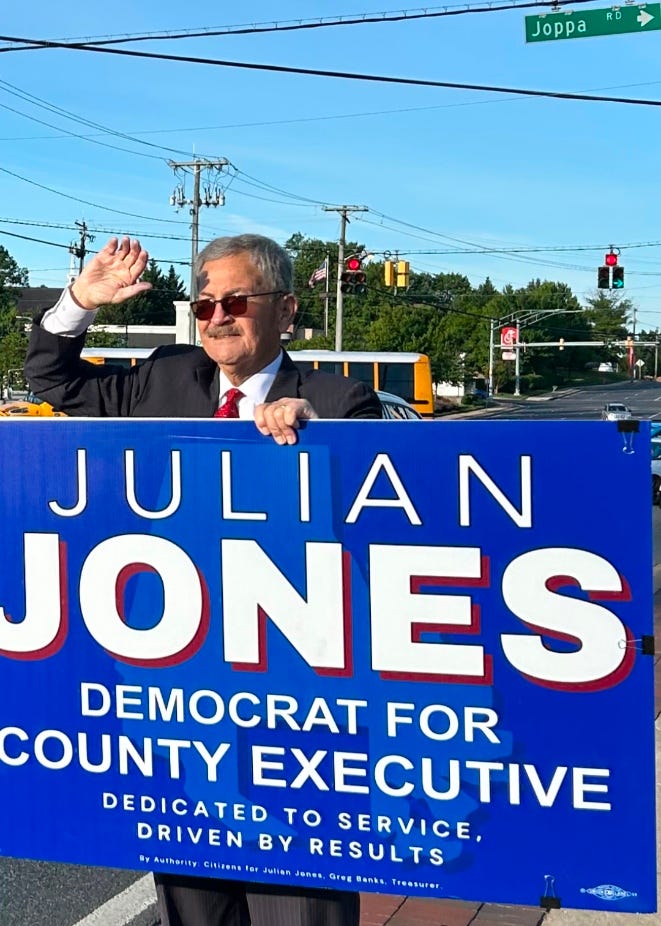
Economic Growth Without Tax Hikes
O’Connell: You’re not on a victory lap yet; you still have a Republican opponent in the general. Are you shifting gears, or keeping the team on the same trajectory?
Jones: We’re going to keep doing what we’re doing. The team is on the field. We’re taking a brief break right now, but I haven’t gone away—I’m still working every day because there is a lot to be done. There’s this campaign, the next milestone, and then the actual work of governing. We have to be prepared.
O’Connell: When you take office as County Executive, you’ll want to hit the ground running. What is at the top of your list?
Jones: Number one is a hard focus on moving Baltimore County forward by growing our economy. As a government, we have to focus on bringing in more revenue, but the way we’re going to do that is not by taxing the people. We are going to do it by growing the economy, bringing in more jobs, and attracting more businesses. In my 12 years here, I haven’t seen that specific type of dedicated focus on business growth, and it’s time.
Secondly, we will always keep people safe. But hand-in-hand with safety is economic relief for everyday families.
Lowering Utility Costs via Community Choice Aggregation
O’Connell: Talk to me about that relief. What does that look like logistically?
Jones: I have a clear plan centered around Community Choice Aggregation. Right now, when energy costs spike, people’s salaries don’t automatically go up to match them. Families are forced to cut back—on vacations, or on whether the kids get a new pair of shoes this month or next month. I want to use county aggregation to drive those costs down.
Community Choice Aggregation will give the county the legal right to purchase energy in bulk on behalf of our residents. It gives us the opportunity to decide whom we purchase energy from, negotiate lower rates with vendors, and hopefully generate as much of that energy as possible right here in Baltimore County. I will be pursuing that authority on day one.
Transforming Regional Transit: Moving From “Spoke” to Lateral Routes
O’Connell: I want to bring up one of my personal pet peeves about Baltimore County infrastructure. I used to work at the Social Security Administration off the Beltway, and lived just a short distance off Liberty Road. When my contract ended there and I was looking for my next role, I noticed a massive barrier: if you live on the Liberty Road corridor and want to apply for a job on the Towson corridor, it’s incredibly difficult if you don’t drive.
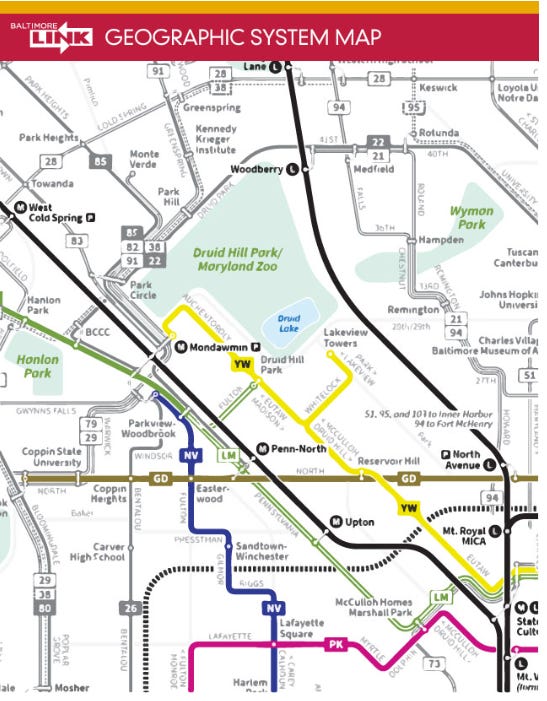
Right now, the mass transit buses force you to take a hub-and-spoke route all the way into downtown Baltimore City just to catch a bus back out to another part of the county. Can we fix this and connect the places where county residents live directly to the places where they work?
Jones: You are absolutely right, Barry. We are dealing with a wheel-and-spoke transit system that was generated many years ago, where everything runs into downtown at the arena and then shoots back out. We desperately need lateral public transportation that takes riders straight from the west side of the county over to Towson, or an express route directly to major employment hubs like Tradepoint Atlantic.
To fix this, we are going to engage directly with the MTA and evaluate whether Baltimore County needs its own Regional Transit Authority. A regional authority would give us a much larger say in how the MTA operates and structures its routes.
Furthermore, if our economic growth plans work like I intend them to, the county needs to make greater transit investments ourselves. We already established a localized loop in Towson, and we have just been approved to get a bus loop running in Owings Mills. Those are the crucial first steps toward building out effective regional transit.
Overcoming Resistance to Improve Local Communities
O’Connell: I remember riding those buses on Liberty Road when Larry Hogan was governor, and it rarely felt like anyone at the state level cared whether working people made it home on time. I’ve seen lead buses get delayed loading passengers in wheelchairs—which is a vital service—only for a second or third bus to bunch up right behind it, creating an inefficient three-bus convoy where the rear buses are virtually empty. It seems like more local control is exactly what’s needed.
Jones: I tend to agree with you. When I was a Councilman pushing for a Regional Transit Authority, even elements within the county government pushed back at the time, asking us to wait. But public transit can absolutely work if you give people reliable options. For every person sitting on a bus, that’s one less car causing traffic on our roads—assuming you can even afford a car in this economy.
O’Connell: I’ll give you credit, though—you did get a beautiful, proper bus stop with benches put in on Liberty Road at my old stop. It used to be that you’d see people early in the morning sitting on overturned shopping carts in the mud because there was nothing but a sign on a pole. Now they have shelter and dignity.
Jones: That was an important fight. For years and years, the county bus route ended and turned around at Deer Park Hardware. I always thought the route should extend further out, but every time it came up, certain community elements would shout it down. When I took office, I saw parents walking over a mile in the rain, clutching children and carrying grocery baskets just to get to that turnaround point.
I made the executive decision to talk to the community, explain why it was a matter of basic human necessity, and extended the route up to Deer Park Road and Marriottsville. People worried about crime, but I told them plainly: people looking to break into houses aren’t escaping on a county bus with a 50-inch TV; they have SUVs for that. None of those fears came true.
In fact, a resident who originally fought me on the extension came back to me later. His wife’s car engine had blown up, and he ended up relying on that very bus stop for two months while they saved for a replacement. He told me, “I finally have an appreciation for why you moved that stop.” It made a real difference.
Looking to the Future: Recreation, Schools, and Aquatics
O’Connell: Looking down the road at infrastructure, is there a chance Baltimore County will finally build a modern, fully integrated swimming and aquatic facility where residents of all backgrounds can swim and recreate together? There is a persistent rumor that the county might even look into acquiring the Suburban Club pool facility in Pikesville.
Jones: I haven’t heard that specific rumor regarding the Suburban Club, though across from the Pikesville Recreation Center would certainly make sense. I’m always open to looking at opportunities.
But to your broader question: absolutely, a unified, modern facility is going to happen without a doubt. When I talk about my long-term capital plans, I am proposing two major regional aquatic centers. Beyond those flagship centers, we are going to invest heavily in our neighborhood pools. The county currently owns a couple, and we plan to acquire and build more.
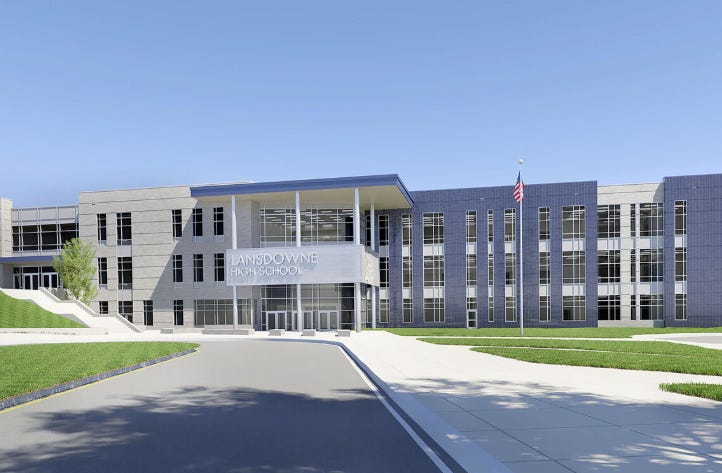
I am genuinely excited for what the future holds. We are entirely dedicated to making life measurably better for the citizens of Baltimore County—and we are going to secure the revenue to build 15 new schools, 8 new recreation centers, and those 2 new aquatic centers by expanding our economy from the ground up.