

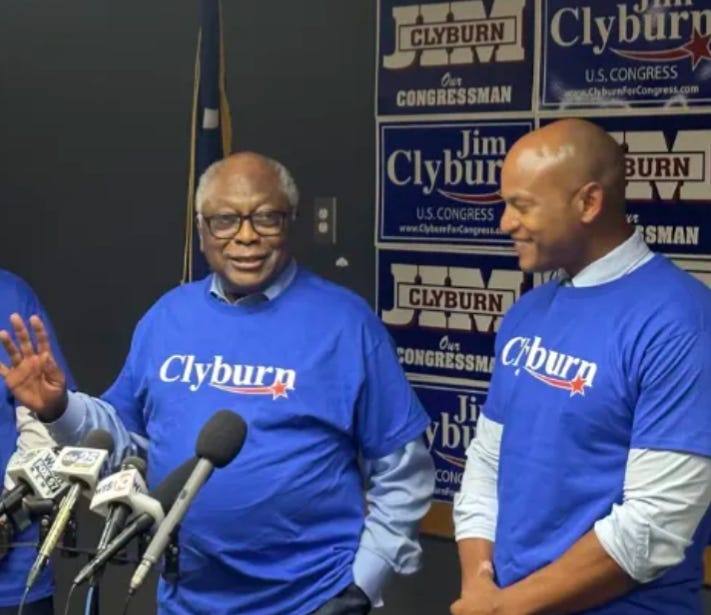
Jim Clyburn, Gavin Newsom, and Wes Moore
Why South Carolina Could Become the Early Test for the Democratic Party’s Next Generation
In Democratic presidential politics, there are few figures whose quiet words carry as much weight as JIM CLYBURN.
Clyburn is not merely another senior member of Congress. He is widely regarded as the MOST INFLUENTIAL DEMOCRAT in South Carolina, a state that has become one of the earliest and most important contests in the Democratic presidential nominating process. His political standing comes from decades of leadership within the state’s Democratic Party and from the trust he commands among African American voters.
That influence was demonstrated dramatically in 2020 SOUTH CAROLINA DEMOCRATIC PRESIDENTIAL PRIMARY, when Clyburn’s endorsement helped propel JOE BIDEN from a struggling campaign to a decisive victory that effectively reset the Democratic race.
As the party slowly begins looking toward the 2028 PRESIDENTIAL CYCLE, two governors whose names frequently surface in early speculation are **Gavin Newsom** and WES MOORE. And observers across Democratic politics are watching carefully to see how Clyburn responds to each of them.


Why South Carolina Matters
South Carolina’s importance in Democratic presidential politics is rooted in the makeup of its electorate.
In a typical Democratic primary in the state, AFRICAN AMERICAN VOTERS MAKE UP ROUGHLY 50 TO 55 PERCENT of the electorate. That reality gives the state enormous influence in determining whether a candidate can build a broad coalition inside the Democratic Party.
This dynamic stands in sharp contrast to the traditional early contests that long dominated the presidential calendar. The Iowa caucuses and the New Hampshire primary have historically been the first tests for presidential candidates, yet both states are among the least diverse in the country. Iowa’s population is roughly 85 to 90 percent white, with African Americans making up only about 4 percent of the population. New Hampshire is even less diverse, with a population that is about 90 to 92 percent white and roughly 1 to 2 percent Black. For decades this meant that the earliest signals in presidential races were coming from electorates that looked very different from the broader Democratic coalition nationally. By contrast, South Carolina’s Democratic primary electorate, where Black voters typically make up around half or more of those casting ballots, provides a far more representative test of how a candidate performs with one of the party’s most important constituencies. And in that environment, the views of Jim Clyburn carry unusual weight: candidates may campaign across the state, but everyone in Democratic politics knows that when Clyburn speaks, the entire field listens.
Winning South Carolina does not automatically guarantee the presidential nomination. But it has become something close to a CREDIBILITY TEST, Candidates who perform well there demonstrate that they can appeal to one of the party’s most important constituencies: Black Democratic voters.
Because of that dynamic, CLYBURN’S VIEWS CARRY UNUSUAL IMPORTANCE. Candidates often seek his advice, his presence at events, or at least his public goodwill long before a campaign formally begins.
Clyburn’s View of Gavin Newsom
Clyburn has spoken positively about Gavin Newsom without offering any kind of formal endorsement.
At public events and in interviews, Clyburn has described Newsom as one of the prominent voices in the Democratic Party, and he has indicated that he believes Newsom would be a credible presidential contender.
When Newsom visited South Carolina and met with Democratic activists there, Clyburn even jokingly referred to him as “one of the candidates running for president” before quickly correcting himself. The remark drew laughter, but it also reinforced the sense that Newsom is already being viewed as a serious potential contender.
The California governor has been quietly building relationships with national Democratic leaders, and visits to South Carolina are widely understood as part of that process. Any candidate who hopes to compete seriously in a Democratic presidential primary eventually needs to test their appeal in the state’s political circles.
Clyburn’s tone toward Newsom has been **warm but cautious**. That is consistent with his history. He rarely commits early to any candidate, preferring instead to watch how the race develops.
Wes Moore Enters the Conversation
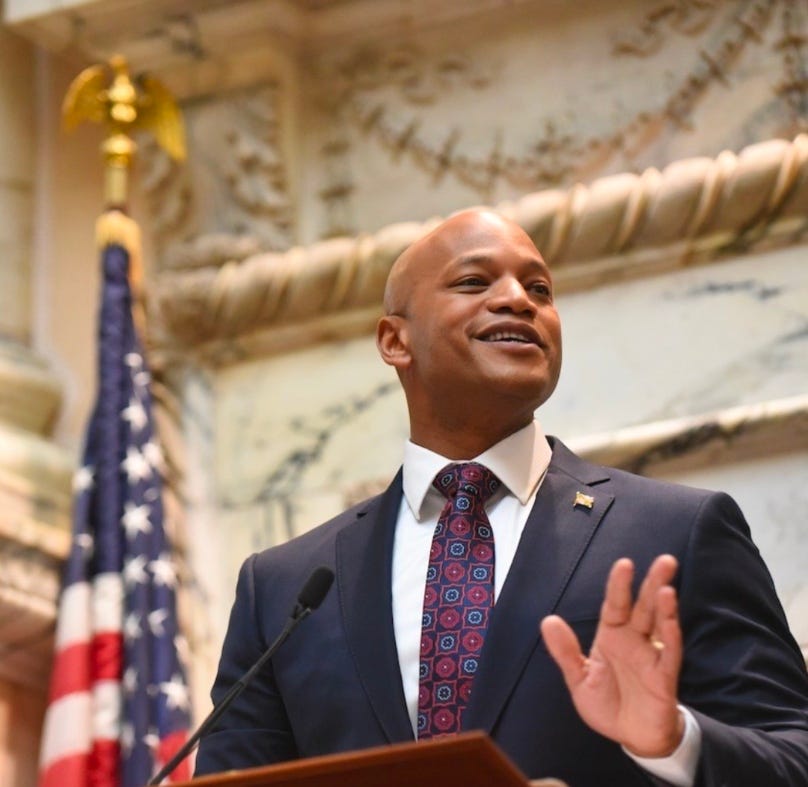
Another figure beginning to draw attention in these early conversations is Maryland governor Wes Moore.
Moore has been invited to major Democratic gatherings in South Carolina and has spoken at events attended by Clyburn and other influential party leaders. Those appearances immediately fueled speculation that Moore could become part of the next generation of national Democratic leadership.
While Moore has publicly insisted that he is focused on governing Maryland, his speeches and appearances in South Carolina have placed him firmly within the orbit of national presidential speculation.
Clyburn has not endorsed Moore or publicly urged him to run. But he has welcomed him into the same political spaces where potential candidates traditionally test their message and build relationships.
The Kingmaker Who Waits
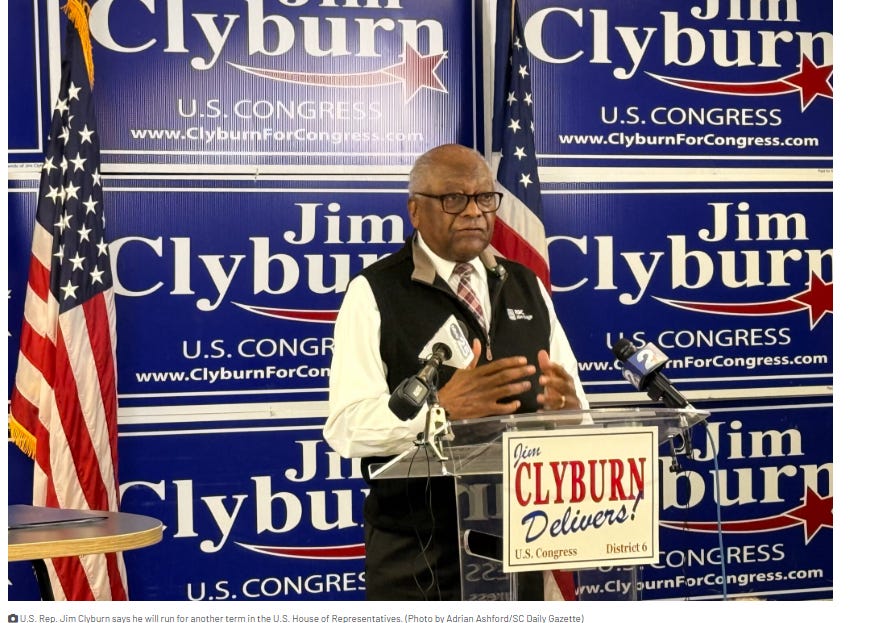
Jim Clyburn’s approach to presidential politics is deliberate.
He listens carefully.
He observes candidates closely.
And he rarely rushes to make a choice.
His endorsement of Joe Biden in 2020 came only days before the South Carolina primary, yet it reshaped the entire trajectory of that race. That history is why Democratic strategists watch his signals so closely today.
For now, Clyburn appears to be maintaining friendly relationships with several possible future candidates, including Gavin Newsom and Wes Moore. Both men represent different regional and political strands within the Democratic Party, and both are beginning to appear more frequently on the national stage.
The Road to 2028
The Democratic presidential field for 2028 is still years away from forming. But the early positioning has already begun.
Visits to South Carolina.
Appearances at party gatherings.
Conversations with leaders like Jim Clyburn.
None of these moves officially launch a presidential campaign. But they are the traditional first steps in building one.
And if history is any guide, when the Democratic race finally begins to take shape, the voice of Jim Clyburn and the voters of South Carolina will once again play a decisive role in determining which candidate emerges from the field.