

The County CIO Who’s Also a Tech CEO
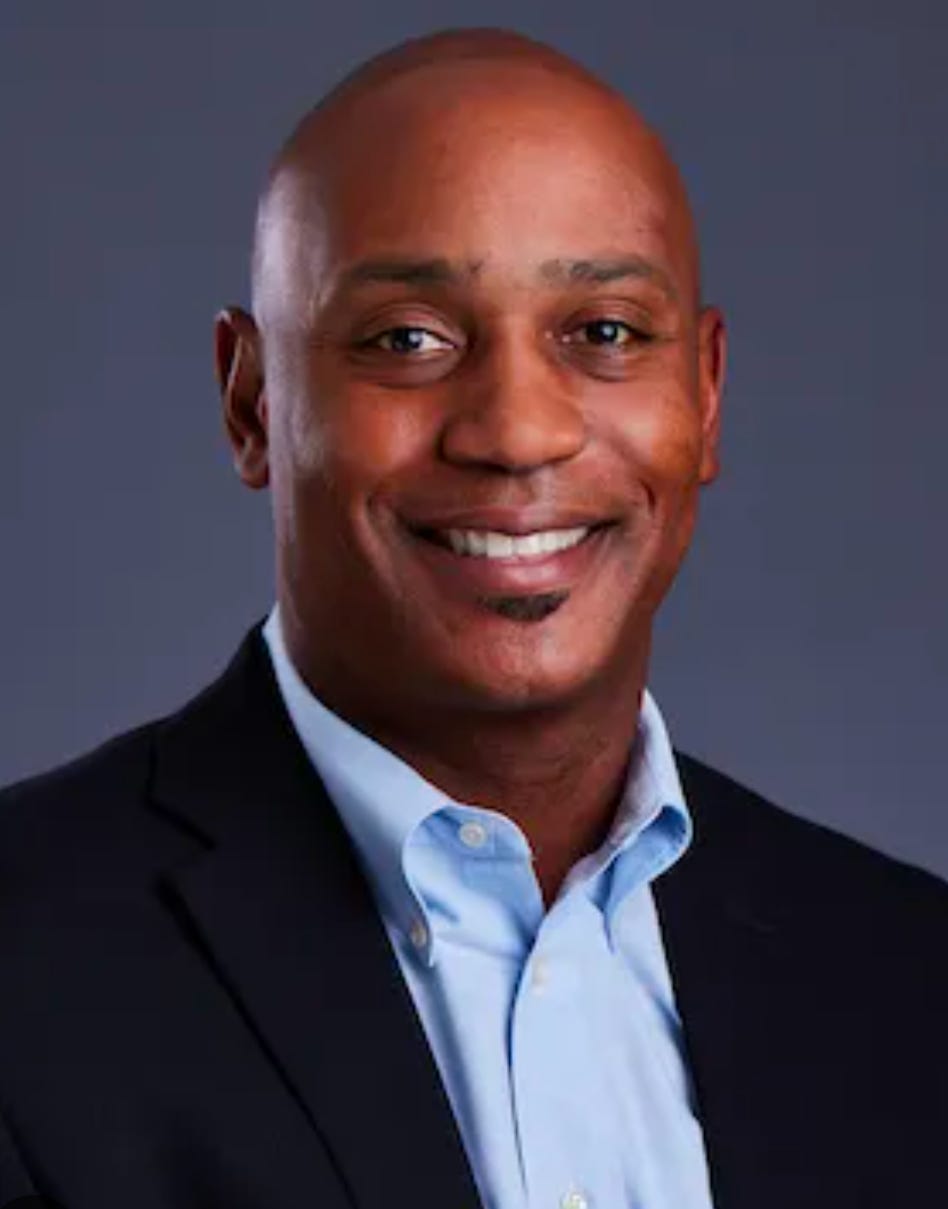
Vennard Wright has two jobs. One of them is public: Chief Information Officer and Director of Information Technology for Prince George’s County, one of the largest local governments in Maryland. The other is private: CEO and founder of PerVista AI, a technology company selling AI-driven threat-detection hardware.
Holding a private job while serving in government is not, by itself, a scandal. Prince George’s County has a process for it — supervisory approval, ethics review, conditions. What makes Wright’s situation worth a closer look is how publicly the two roles have been braided together, and how squarely his private company sits in the lane of his public duties.
The county put both titles on the same page
The county itself has acknowledged both roles. A September 2025 county business-roundtable announcement introduced Wright as “Prince George’s County CIO” and “also CEO & Founder of PerVista,” describing the company in glowing terms while advertising his presentation on a government contracting vehicle.
He promoted the company in his own name
Wright has promoted the company himself, in his own name. In an April 2026 LinkedIn post, he announced a “major milestone for PerVista AI,” introduced its Flurrent hardware, and described “our” threat-detection platform. Another April post described PerVista’s platinum sponsorship of the National School Boards Association conference — its logo on the conference tote bags, his conversations with school-board members, his appearance in a fireside chat. In May 2026, a company post announced that “our CEO, Vennard Wright” had traveled to Cebu, in the Philippines, for the opening of PerVista’s operations center.
His day job covers the county’s technology buying
Meanwhile, his public role includes technology-vendor engagement. In January 2026, Wright appeared at a county event alongside his own Office of Information Technology and the county’s Procurement office to discuss technology priorities and procurement forecasts — the county’s buying plans, presented in part by a man selling technology on the side.
This is not an accusation of a crime
None of this establishes that Wright has done anything wrong. That distinction matters, and this article does not accuse him of a crime or an ethics violation. No executed county contract with PerVista has been documented. No ethics finding exists. What exists is a set of questions the county’s own rules require to be answered.
But this stopped being about one man a while ago
Here is what the county needs to understand: the question is no longer whether Wright’s two jobs get a formal look. It is who does the looking, and how far they go. Because when a procurement-adjacent office draws a formal question — from a losing bidder, an inspector general, a reporter, a prosecutor — the inquiry does not stay where it started. Investigators pull records. They pull emails. They pull every technology contract the office touched, and then they look at who approved them, who competed for them, and who won. That is not speculation. That is how investigations work.
Everybody who touched county tech money is in the blast radius
The vendors who won fair and square get re-examined. The officials who ran clean procurements get interviewed. Careers built over decades get reviewed through the lens of a single unanswered question: was the process clean? It does not matter that you never met Wright or never heard of PerVista. If your contract passed through his office, you are in the file. That is what “under the microscope” actually means — not one man sweating, but an entire procurement ecosystem holding its breath.
The county’s own rulebook drew these lines for a reason
Prince George’s County’s ethics code draws lines that matter here. Section 2-293(c) bars officials from intentionally using the prestige of county office for private gain. In a 2021 opinion, the county’s Board of Ethics told another official he could not use his county title or reference to county employment in “literature, solicitations, advertising and other materials” promoting his private business. The county’s outside-employment rules require supervisory approval and review by the Office of Ethics and Accountability, with conditions where conflicts may arise. These rules exist precisely because of situations like this.
The questions that need answers
The questions, then, are straightforward: Did Wright obtain that approval, and under what conditions? Has he recused himself from technology procurement decisions touching his company’s market? Did he authorize the joint county-company publicity? Those are records questions, and records questions have answers.
The way out is in his hands — and the clock is running
Wright can still close this down. Produce the outside-employment approval. Show the recusals. Account for the publicity. Transparency is the cheapest disinfectant in government, and it is entirely in his hands.
Until then, the questions sit there — documented, specific, and unanswered. And unanswered questions in a procurement-adjacent office are how small stories become big ones.
I appreciate the questions and welcome the opportunity to address them directly, openly, and unequivocally.
When I was approached about returning to County Government, I made it abundantly clear that I could not and would not walk away from the company I founded and invested hundreds of thousands of my own dollars into. I went to the additional step of obtaining a separate approval directly from our County Executive to serve in both capacities, provided there was no conflict of interest.
For your readers who are fair and impartial, there is no such conflict, regardless of what this article attempts to insinuate.
For the record, I have an approved secondary employment form on file with the County’s Ethics Office, which I renew annually. I also submit my required annual financial disclosures, which explicitly identify my ownership of PerVista. Nothing about my involvement with the company has been concealed, misrepresented, or withheld.
More importantly, PerVista does not conduct business with Prince George's County and never has. Furthermore, procurement decisions are the responsibility of the Office of Procurement, not the department I oversee. These are material facts that should not be overlooked in an effort to manufacture a controversy where none exists.
I take my integrity, reputation, and commitment to public service extremely seriously. I returned to County Government for one reason: to leverage more than three decades of technology leadership and experience to help Prince George's County navigate an increasingly complex and challenging environment. I did not return to enrich myself, advance my company, or exploit my position for personal gain.
In fact, returning to public service has come at a significant financial and personal cost to me. I accepted those sacrifices because I believe in the importance of serving my community and making a meaningful difference.
What I will not accept, however, is having my character or motives called into question through misleading implications, incomplete information, or irresponsible speculation.
I have spent decades building a reputation grounded in service, integrity, transparency, and results. I will not allow that reputation to be casually undermined by a narrative that ignores the facts.
That is precisely why I chose to respond to you directly rather than dismiss an article that, in my view, is both misleading, uninformed, and fundamentally unfair.
I welcome legitimate scrutiny and accountability. They come with the responsibility of public service. But accountability must be grounded in facts, not insinuations. There is a significant difference between asking tough questions and manufacturing the appearance of wrongdoing.