

Is Chesapeake Employers Crooked
THE DEAL THAT NEVER DIED: How a 1990 Power Struggle Built Maryland’s 34‑Year Workers’ Comp Monopoly
Maryland politics has never lacked for mythology — whispered stories of backroom deals, power plays, and the quiet ruthlessness of men who believed the state ran best when they ran it. But every so often, one of those old stories turns out not to be myth at all. It turns out to be the foundation of a system still governing hundreds of millions of dollars today.
This is the story of how a Senate leadership fight in 1990 created a workers’ compensation arrangement that has survived untouched for 34 years — through new governors, new treasurers, new laws, and even the collapse of the political machine that built it.
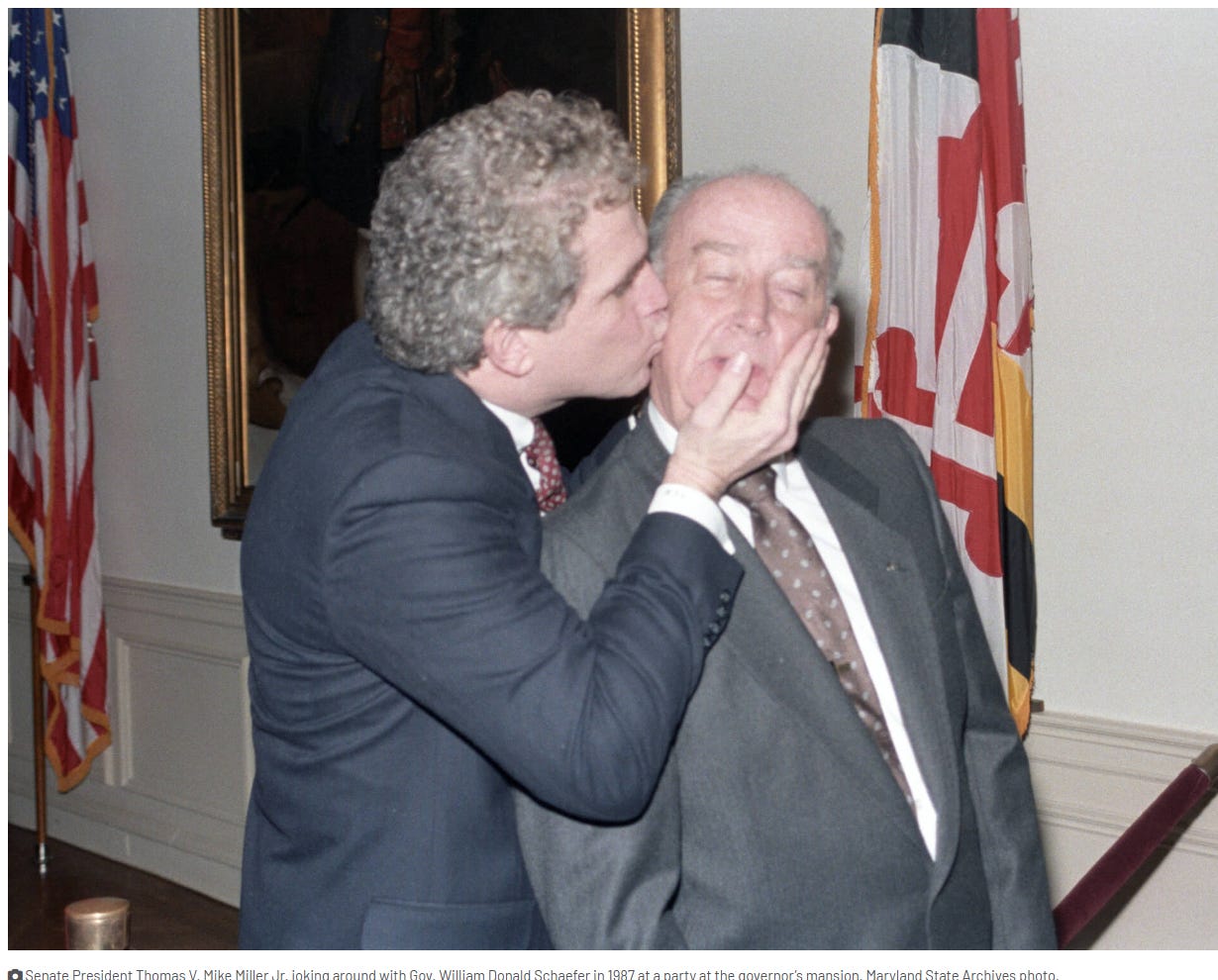
It begins with two men: Senate President Mike Miller and Senator Tommy Bromwell.
The Challenge
In the late 1980s, Tommy Bromwell was young, ambitious, and convinced he had the votes to knock off Mike Miller for Senate President. Bromwell believed he had the Black Caucus locked down. He believed he had the momentum. He believed he could win.
He was wrong.
Miller, a master of personal politics, went to the caucus members one by one, cutting deals, offering favors, reminding them who controlled committee assignments and legislative futures. By the time the vote came, Bromwell’s support had evaporated. Miller survived — but he did not forget how close he came to losing.
Bromwell remained in the Senate, wounded but dangerous. And Miller, who understood power better than anyone in Annapolis, knew that leaving a rival in place was a mistake. Rivals regroup. Rivals wait. Rivals try again.
Miller needed Bromwell gone.
The Golden Parachute
What happened next is not corruption. It is not fraud. It is not criminal. It is simply Maryland machine politics, executed by the man who perfected it.
Miller helped engineer a landing spot for Bromwell — a soft exit, a prestigious role, a six‑figure salar


y, and a way out of the Senate that didn’t look like defeat. The vehicle was the Injured Workers’ Insurance Fund, better known as IWIF, a quasi‑public insurer with a board structure that could be influenced and a mission broad enough to justify almost any administrative arrangement.
To make the move work, Miller needed two things:
- A cooperative Speaker
- A cooperative Treasurer
He had both.
Speaker Clay Mitchell, an old‑school Eastern Shore Democrat, was no reformer and no bomb‑thrower. He was not involved in any wrongdoing here, and nothing about this deal reflects badly on him. He simply went along with a consensus among leadership — as Speakers often do.
Treasurer Lucille Maurer, respected and competent, likewise did nothing improper. She executed the agreement because it was the agreement the legislative leadership wanted. She did her job.
And so, in July 1990, the State of Maryland and IWIF entered into a Memorandum of Understanding — an administrative contract that would quietly become one of the most enduring artifacts of Maryland’s political machine.
The Structure Miller Built
The 1990 MOU created a system with several unusual features:
- IWIF became the exclusive administrator of state workers’ compensation claims.
- The arrangement did not require competitive bidding.
- The Treasurer could extend or modify the agreement without BPW approval.
- IWIF could draw claims money directly from a state trust without pre‑verification.
- The contract had no sunset, no rebid requirement, and no independent audit enforcement.
It was not illegal. It was simply bad law, written for political convenience rather than long‑term governance.
And it worked exactly as intended: Bromwell left the Senate, Miller kept his power, and IWIF became a permanent fixture of Maryland’s workers’ comp landscape.
Years later, Bromwell went to prison — but not for anything related to IWIF. His conviction involved construction kickbacks, not workers’ compensation. The IWIF parachute was never part of his criminal case.
The 2012 Conversion: IWIF Becomes Chesapeake
In 2012, the General Assembly passed legislation converting IWIF into Chesapeake Employers Insurance Company, a private, nonprofit, nonstock corporation. The law preserved:
- IWIF/Chesapeake’s role as insurer of last resort
- The Governor’s power to appoint the board
- The existing administrative arrangement with the State
Crucially, the law did not require:
- rebidding
- BPW review
- competitive procurement
- restructuring of the 1990 MOU
The old Miller‑era structure was simply carried forward.
Chesapeake became a modern corporation — but the contract governing state workers’ comp remained the same 1990 framework.
The Modern System: A Legacy That Never Changed
Today, Chesapeake administers roughly $82 million per year in state workers’ comp claims and administrative fees. The MOU has been updated, but never fundamentally altered. It still:
- allows Chesapeake to contest claims aggressively
- allows Chesapeake to pull funds from the trust without pre‑authorization
- allows the Treasurer to execute MOUs without BPW involvement
- allows the monopoly to continue without competition
This is not fraud.
This is not corruption.
This is the law, written 34 years ago and never revisited.
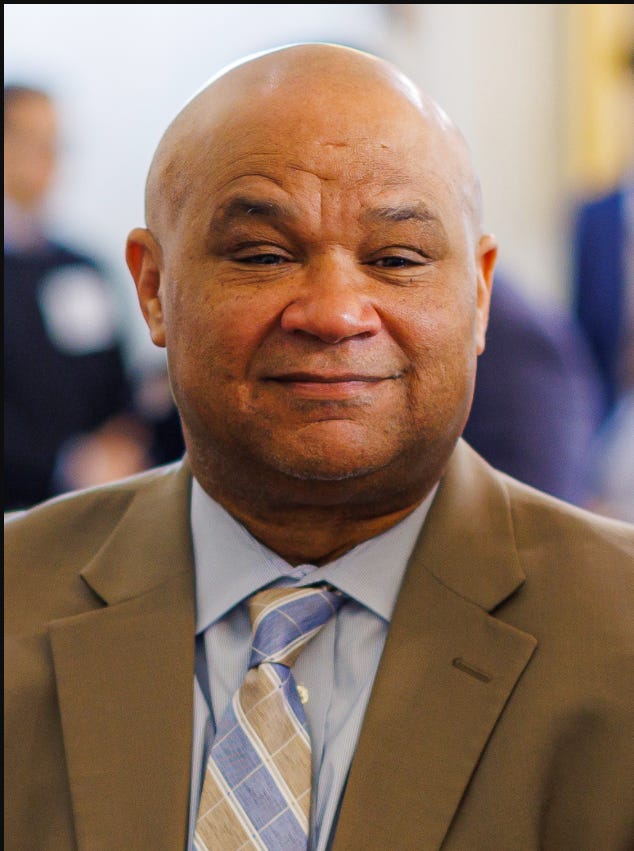
The Treasurer Today: Dereck E. Davis
Treasurer Dereck E. Davis inherited this system. He did not create it. He did not expand it. He did not manipulate it. He simply followed the law exactly as written — the same way every Treasurer before him did.
Every MOU he signed was reviewed and approved by his legal counsel, including the Deputy Attorney General assigned to the Treasurer’s Office. Every action he took was within the bounds of statute and COMAR. He broke no law, bent no rule, and took no shortcut.
If anything, Davis is the first Treasurer in decades to face public scrutiny for a system he did not design.
The problem is not the Treasurer.
The problem is the structure.
The Real Scandal: A System Built for Politics, Not Policy
Maryland’s workers’ compensation system is not corrupt. It is broken — and it was built that way on purpose.
The 1990 MOU was designed to solve a political problem, not a policy problem. The 2012 conversion preserved that structure instead of reforming it. And for 34 years, the State has operated under a contract that:
- lacks transparency
- lacks competition
- lacks modern oversight
- lacks independent claim verification
- lacks accountability for audit failures
This is not a crime.
It is a policy failure, rooted in a political moment long forgotten by most Marylanders.
The Truth That Matters
Some lobbyists want this story told as corruption.
Some want it told as fraud.
Some want it told as a scandal that implicates the Treasurer.
But the truth is simpler — and more interesting.
Maryland is living with the consequences of a deal made in 1990 to solve a political problem between two powerful men. That deal became law. That law became structure. That structure became tradition. And tradition became inertia.
The system persists not because anyone is crooked, but because no one has ever bothered to change it. Sadly this is not theonly dirt Mike Miller left in place.