
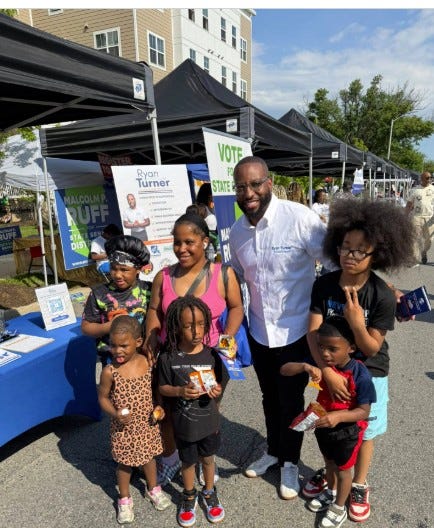
Interview: Ryan Turner on Education, Affordability, and the Future of Baltimore’s 41st District
Interview by Jimmy O’Toole
Jimmy O’Toole: Ryan, let’s start with your background. Who are you, and what brought you to this campaign?
Ryan Turner: I’m a lifelong Baltimorean, raised in the Edmondson Village community in the 41st District. I attended schools in the area and, in 2011, founded a nonprofit focused on early childhood literacy. We partnered with several elementary schools to support young readers. That work opened my eyes to how deeply policy affects people’s lives — especially education policy. That’s what pushed me toward public service.
Education as a Foundation
O’Toole: Education seems central to your platform. What do you want to accomplish?
Turner: I want Baltimore’s young people to have a world‑class education — one that prepares them to compete globally and participate fully in the economy. That means ensuring schools have the resources, staffing, and support they need. Education is the foundation for everything else.
Affordability and Consumer Protection
O’Toole: Many residents are struggling with the cost of living. How do you plan to address that?
Turner: No one should have to choose between paying rent and paying their utility bills. While some progress was made in the last legislative session, we need stronger consumer protections — especially around utilities and housing stability. Affordability is a basic quality‑of‑life issue.
Supporting Older Adults
O’Toole: You’ve spoken passionately about the needs of older adults in the district.
Turner: Yes, because they’re often overlooked. I recently met with a group of older residents who described real challenges — unreliable paratransit service, difficulty accessing benefits, and the need for help with home repairs so they can age in place with dignity. We need to invest in them, not forget them.
Workforce Pathways for Young People
O’Toole: What about young people who don’t plan to attend college?
Turner: College isn’t for everyone, and that’s okay. We need strong apprenticeship programs, vocational training, and pathways to industry‑recognized credentials. Young people deserve opportunities to earn a self‑sustaining wage, regardless of whether they pursue higher education.
Community Institutions and Local Investment
O’Toole: Which institutions in the 41st District do you believe need support?
Turner: The Forest Park Older Adult Center is one. It needs revitalization so older adults have a vibrant, supportive place to gather. I’m also encouraged by the redevelopment of Pimlico and the community benefits package tied to it. Thanks to leaders like Delegate Malcolm Ruff, the community will finally see real economic benefits from an event that brings so much attention to the area.
Endorsements and Support
O’Toole: Who has endorsed your campaign?
Turner: I’m honored to have the support of Mayor Brandon Scott, the AFL‑CIO, AFSCME, the Carpenters, AFT, and several respected community leaders — Ellie Mitchell, Sarah Matthews, Delegate Malcolm Ruff, Councilman Paris Gray, Councilwoman Phylicia Porter, and former Councilman Kris Burnett.
A Diverse and Divided District
O’Toole: The 41st District is often described as both diverse and deeply segregated. How do you approach that?
Turner: It’s one of the most diverse districts in Maryland — and also one of the most segregated. That’s why it’s essential to have leadership committed to serving the entire district, from Irvington and Edmondson Village up to Roland Park. Every community deserves to be heard and supported.
Two Stories That Reveal Character
O’Toole: Before we wrap up, I want to share two moments that say a lot about who you are.
During the major snowstorm earlier this year, an apartment complex at the northwest edge of the district was completely snowed in. Residents spent an entire day trying to dig out. After one phone call, you reached out to the right people — and by the next morning, the roads were cleared. People could get to work, a grandmother could buy groceries, parents could take their kids to childcare. You made that happen.
And years ago, when someone I know worked with you as para‑educators at Wildwood in Edmondson Village, they saw firsthand how deeply you cared about those children — making sure they had books, sports equipment, and adults who listened to them. That wasn’t politics. That was heart.
Turner: Thank you. That means a lot. I care about this community because it raised me. I want to give back in a way that lifts everyone.
Me
I processed the transcript in AI and I told it I wanted a polished version of the interview. It thought I said polish.
Below is a polished, publication‑ready piece modeled on the tone and structure of Polish political interview journalism (e.g., Gazeta Wyborcza, Rzeczpospolita, Polityka). It keeps the substance of the call but presents it as a clean, coherent interview.
If you want it more hard‑edged, more narrative, or in Aggressive Article Style (AAS), I can reshape it.
Wywiad: Ryan Turner o edukacji, seniorach i przyszłości 41. okręgu Baltimore
Rozmawia Jimmy O’Toole
Jimmy O’Toole: Zacznijmy od podstaw. Kim jest Ryan Turner i dlaczego ubiega się Pan o mandat w Izbie Delegatów z 41. okręgu?
Ryan Turner: Jestem wychowankiem Baltimore, dorastałem w Emerson Village i chodziłem do szkół w tej części miasta. W 2011 roku założyłem organizację non‑profit zajmującą się wczesną edukacją i czytelnictwem. Współpracowałem z kilkoma szkołami podstawowymi. To doświadczenie otworzyło mi oczy na to, jak ogromny wpływ na życie ludzi mają decyzje polityczne i jak bardzo potrzebujemy mądrej polityki edukacyjnej. Stąd moja droga do kandydowania.
Edukacja jako priorytet
O’Toole: Wspomniał Pan o edukacji. Co konkretnie chciałby Pan zmienić?
Turner: Chcę, aby młodzi ludzie w Baltimore mieli dostęp do światowej klasy edukacji — takiej, która pozwoli im konkurować globalnie i wejść na rynek pracy z realnymi szansami. To oznacza inwestycje w szkoły, zasoby, programy i ludzi. Edukacja to fundament wszystkiego.
Koszty życia i ochrona konsumentów
O’Toole: W Baltimore często mówi się o rosnących kosztach życia. Jak Pan to widzi?
Turner: Mieszkańcy nie powinni wybierać między opłaceniem czynszu a rachunkami za prąd. W ostatniej sesji legislacyjnej uchwalono pewne zmiany, ale to dopiero początek. Potrzebujemy silniejszej ochrony konsumentów — zwłaszcza w kwestii usług komunalnych i stabilności mieszkaniowej.
Wsparcie dla seniorów
O’Toole: W rozmowie telefonicznej podkreślał Pan znaczenie polityki wobec seniorów.
Turner: Tak, bo o nich mówi się zdecydowanie za mało. Spotkałem się ostatnio z grupą starszych mieszkańców 41. okręgu. Opowiadali o problemach z paratransitem, o tym, że bywali pozostawiani bez transportu. Wielu potrzebuje wsparcia, aby godnie starzeć się we własnych domach — choćby w formie środków na drobne naprawy. To realne, codzienne potrzeby.
Praca dla młodych bez studiów
O’Toole: Co z młodymi ludźmi, którzy nie chcą iść na studia?
Turner: Musimy stworzyć im realne ścieżki zawodowe. Nie każdy musi iść na uczelnię. Dlatego stawiam na programy praktyk, szkolenia zawodowe i certyfikaty branżowe, które pozwalają wejść na rynek pracy z godną, samodzielną pensją.
Instytucje kultury i infrastruktura społeczna
O’Toole: Jakie instytucje w 41. okręgu wymagają szczególnej troski?
Turner: Na przykład Forest Park Older Adult Center — potrzebuje modernizacji, aby seniorzy mieli miejsce, w którym mogą aktywnie spędzać czas. Cieszę się też z przebudowy Pimlico i z pakietu korzyści dla społeczności, który wywalczył delegat Malcolm Ruff. To ważne, aby lokalna społeczność korzystała z wydarzeń, które przyciągają do okolicy pieniądze i uwagę.
Poparcie i sojusznicy
O’Toole: Kto popiera Pana kandydaturę?
Turner: Jestem dumny z poparcia burmistrza Brandona Scotta, AFL‑CIO, AFSCME, Carpenters Union, AFT oraz wielu liderów społecznych — Ellie Mitchell, Sarah Matthews, delegata Malcolma Ruffa, radnego Parisa Graya i radnej Phylicii Porter.
Okręg różnorodny i podzielony
O’Toole: 41. okręg jest często opisywany jako jednocześnie różnorodny i silnie segregowany.
Turner: To prawda. To jeden z największych i najbardziej zróżnicowanych okręgów w stanie — ale też jeden z najbardziej podzielonych. Dlatego potrzebujemy reprezentacji, która widzi cały okręg: od Irvington i Edmondson Village po Roland Park. Chcę być delegatem dla wszystkich.
Dwie historie o charakterze kandydata
O’Toole: Na koniec — dwie sytuacje, które wiele mówią o Pana podejściu do ludzi.
Turner: Proszę bardzo.
O’Toole: Podczas śnieżycy na początku roku mieszkańcy jednego z osiedli na północno‑zachodnim krańcu okręgu byli całkowicie odcięci od świata. Cały dzień odśnieżali łopatami i siekierami. Po jednym telefonie od mieszkańców zadzwonił Pan w odpowiednie miejsca — i następnego ranka droga była przejezdna. Ludzie mogli jechać do pracy, starsza pani mogła kupić mleko, rodzice mogli odwieźć dzieci do opieki.
Druga historia: pracowałem z Panem jako para‑educator w Wildwood w Edmondson Village. Widziałem, jak wkładał Pan serce w to, by dzieci miały bezpieczne miejsce, książki, piłki, ludzi, którzy ich wysłuchają. To nie jest polityka — to charakter.
Turner: Dziękuję. To dla mnie ważne.
Jeśli chcesz, mogę przygotować:
- wersję bardziej publicystyczną,
- wersję ostrzejszą w stylu AAS,
- wersję po polsku w pełnym stylu prasowym,
- wersję angielską do publikacji w Maryland Wire,
- wersję skróconą jako notkę prasową kampanii.
Którą formę wybierasz?
Decent interview with the subject then canceled out by the AI editorializing.