

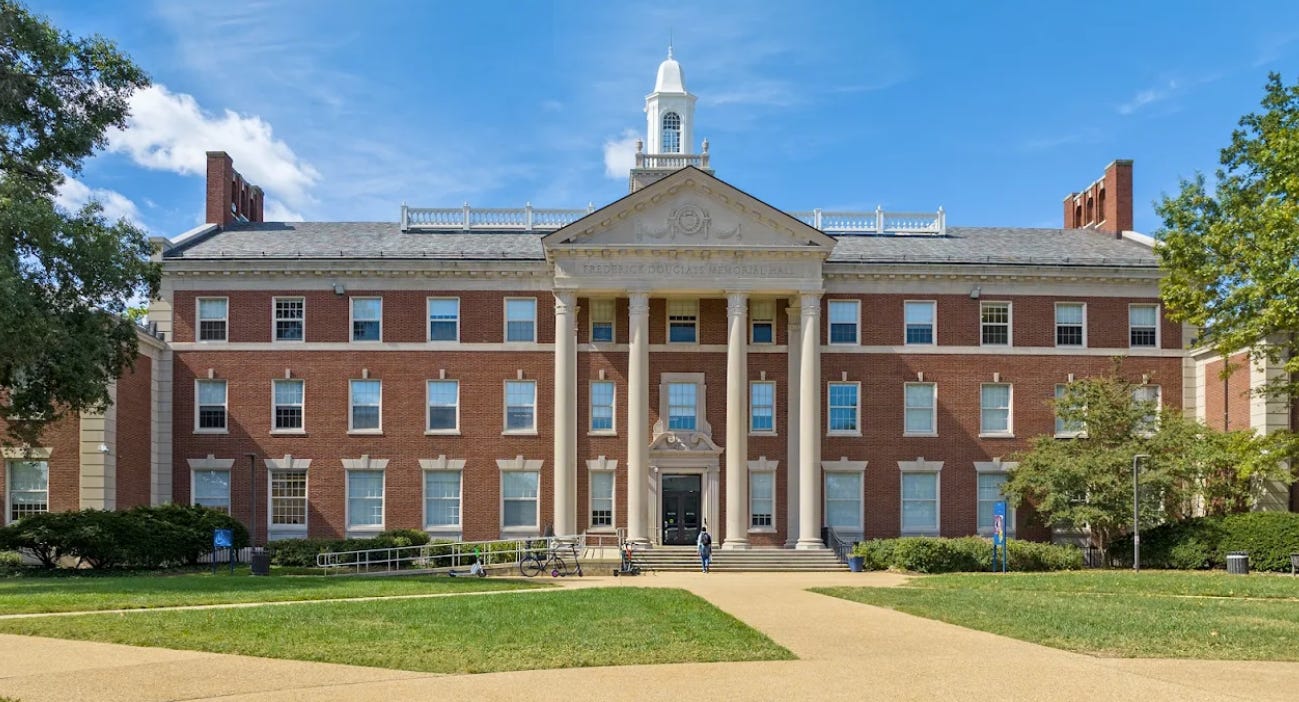
Governor Moore’s $800 Howard University Reimbursement Push:
Takeaway: Governor Wes Moore stepped in to secure $800 restitution for Howard University students expelled under a disputed financial‑aid enforcement policy. The administration framed it as “making students whole.” Critics argue it was a state‑level intervention to patch over a university‑level financial extraction that was legal on paper but predatory in practice.
Governor Wes Moore intervened this spring after Howard University expelled multiple Maryland students over a disputed financial‑aid compliance issue that left them owing money they never expected to owe. The university’s position: the students were out of compliance with internal aid rules. The students’ position: they were blindsided by a retroactive accounting maneuver that converted aid into debt. The state’s position: the students were wronged, and the state would cover the damage.
The number that matters is $800. That’s the restitution amount Moore pushed through to compensate each affected student. The administration described it as a reimbursement to “make students whole.” But the underlying issue is bigger than the dollar figure. Howard University used a legal mechanism to convert institutional aid into a collectible balance. Legal, yes. Ethical, no. And the governor’s office treated it as a moral breach even if the university insists it followed procedure.
The students were expelled mid‑term. Not suspended. Expelled. Their academic standing was erased over a financial dispute they didn’t create. Howard’s internal accounting flagged them as non‑compliant, and the university moved immediately to remove them from enrollment. No appeal window. No mediation. No state‑level notification. The governor’s office learned about the expulsions only after families contacted Maryland officials directly.
Moore’s team reviewed the case and concluded the students had been subjected to a financial extraction disguised as compliance enforcement. The governor’s office did not accuse Howard of fraud, but the language used in internal memos—according to people familiar with the discussions—framed the university’s actions as “procedurally valid but substantively harmful.” Translation: legal but wrong.
The $800 restitution was not random. It was the exact amount Howard billed each expelled student after converting aid into debt. Moore’s office reimbursed the students to neutralize the financial harm and allow them to re‑enroll elsewhere without a delinquent university balance hanging over them. The administration did not attempt to force Howard to reverse the charges. Instead, the state absorbed the cost and moved on.
The broader impact is political. Moore positioned himself as an advocate for students against institutional overreach. The intervention was small in cost but large in signal. It showed a willingness to confront a major university over financial practices that disproportionately harm lower‑income students. It also demonstrated a readiness to step into disputes outside the state’s direct jurisdiction when Maryland residents are affected.
Howard University has not publicly apologized. It maintains that its actions were consistent with policy. But the governor’s reimbursement implicitly rejects that defense. If the university’s conduct were fair, the state would not have needed to intervene. The legality of the university’s actions is irrelevant to the moral calculus. A legal rip‑off is still a rip‑off. And Moore treated it as such.
The students received their $800. They did not receive an explanation. They did not receive reinstatement. They received a check from the state and a reminder that universities can use policy as a weapon. Moore’s intervention didn’t fix the system, but it did expose it. And it created a paper trail showing that the governor is willing to confront institutional actors when their conduct crosses the line from legal to immoral.
Governor Moore has no power over Howard University, so he couldn't really affect what they did. However, I think there was more to the decision than the mistreatment of the students here. Moore saw this as a great opportunity to get these students, who were in good standing at an academically reputable institution, to go to a Maryland state university. It was a two-fer - helping these students from Maryland out of an unfair situation and helping Maryland state universities. A good fit since these students had chosen an HBCU and Maryland has several HBCU state universities.
When I was choosing colleges to apply to, I chose to avoid HBCUs even though I would've loved to be surrounded by such a rich culture and legacy. It's a real shame specifically because the alumni network and community at these schools will still pull in more students without forcing Howard to be held accountable.