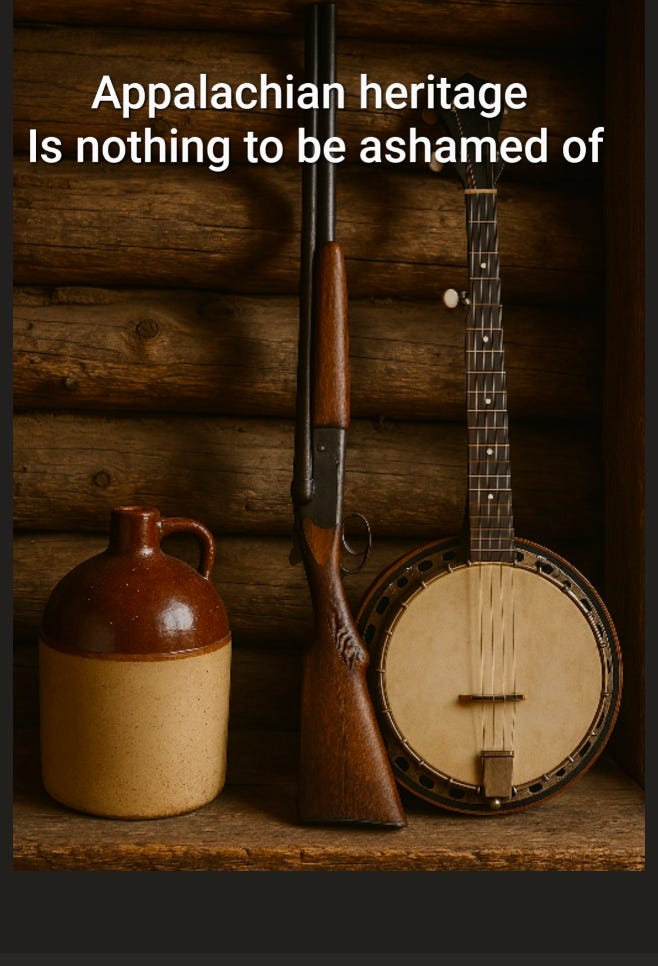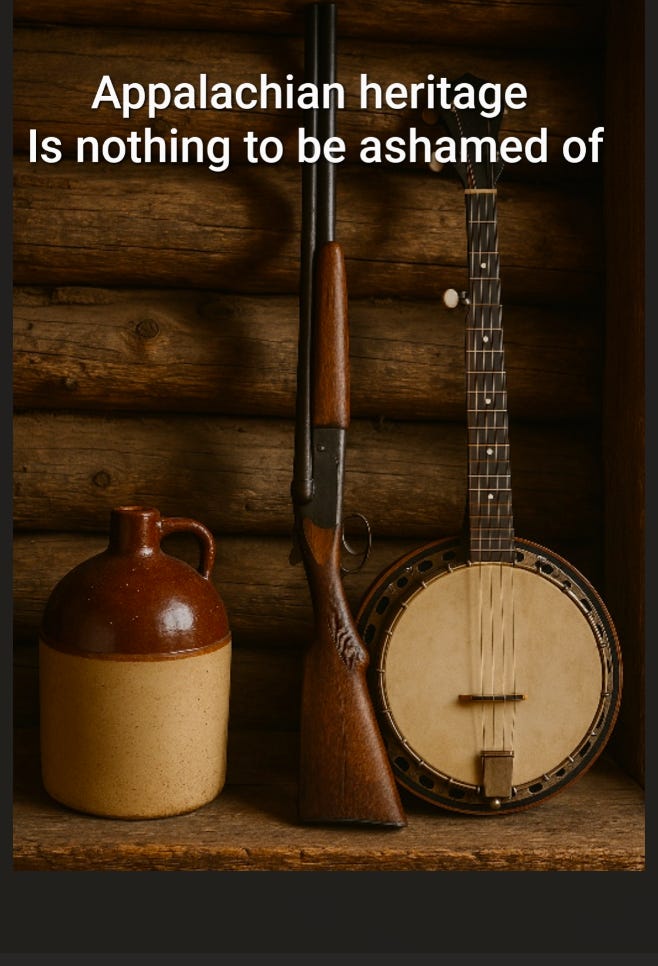
Let’s set the record straight. Somebody contacted me and threatened me. He was upset that he said that I used the term hillbilly. I might have used the term. I don't remember but I don't see how it's an insult. It's a regional colloquialism describing people of Appalachian Mountain ancestry. It's a group that spreads out through West Virginia, Kentucky, Tennessee into Southern Ohio State, Pennsylvania and parts of Maryland. It wouldn't be an insult unless you thought those people were inferior which was not at all what I was saying. But I don't like being threatened so I kicked him out. So we shall miss Thomas. But if he's that sensitive about his roots this may not be the best group for him.j
In my group Everybody’s Maryland Politics, it’s been suggested I used the term hillbilly. I don’t recall doing so, and after combing through the site, I couldn’t find it. But if I did, let me be clear: I never meant it as a slur. I used it—as many do—as a colloquial shorthand for a proud, distinct American ethno-linguistic subculture rooted in the Appalachian Mountains. A people defined not by caricature, but by resilience, music, labor, and community.
🪕 Who Are the Appalachian People?
Appalachians hail from a vast region stretching across 13 states, including West Virginia, Kentucky, Pennsylvania, and parts of western Maryland. Their heritage blends Scots-Irish, German, Welsh, and Native American traditions. They are coal miners, farmers, bluegrass musicians, storytellers, and churchgoers. They are not a monolith—but they share a deep connection to land, labor, and kin.
The term hillbilly, while historically weaponized, has also been reclaimed by many within the community. It evokes a sense of place and pride, much like Okie or Yankee. But context matters. And in this context, I use it with respect.
🚂 The Migration: From Hollers to Hampden
Between the 1920s and 1960s, thousands of Appalachian families left the mountains in search of industrial jobs. They followed the Baltimore & Ohio Railroad into Baltimore, settling in working-class neighborhoods like Hampden, Pigtown, Remington, and Highlandtown. This migration mirrored the Great Migration of African Americans from the Deep South—and together, these movements reshaped the city’s cultural fabric.
Baltimore’s mills and factories—especially during WWII—drew Appalachian workers from coal towns in West Virginia, hollers in Kentucky, and valleys in Pennsylvania. Aero Acres in Middle River was built specifically to house defense plant workers, earning the nickname Little Appalachia.
🏘️ Suburban Shift: Dundalk, Middle River, Harford County
As Baltimore’s industrial base declined, Appalachian families moved outward. Dundalk, Essex, and Middle River became enclaves of Appalachian diaspora. By the 1980s, many descendants still lived in these areas, preserving traditions even as economic hardship set in.
Some moved further north into Harford County, drawn by affordable housing and proximity to jobs in Aberdeen and Edgewood. Today, Harford’s cultural landscape still bears Appalachian fingerprints—in its churches, bluegrass festivals, and family-run diners.
🎶 Cultural Impact: Bluegrass, Labor, and Legacy
Baltimore was once the capital of bluegrass. Appalachian migrants brought their music, dialects, and folkways. Hazel Dickens, born in West Virginia and raised in Baltimore, became a pioneering voice for labor rights and women in bluegrass.
Their legacy lives on in the Charm City Bluegrass Festival, in the twang of local bands, and in the stories passed down in neighborhoods like Remington and Pigtown.
🧠 Misunderstood, But Not Forgotten
Appalachian migrants faced discrimination—sometimes labeled hillbillies in derogatory terms. Signs reading “No dogs or hillbillies” were reportedly posted on apartment buildings. Yet they built communities, raised families, and contributed to Maryland’s economy and culture.
To call someone a hillbilly with contempt is to ignore the dignity of a people who endured poverty, mechanization, and cultural erasure. To use it with reverence is to acknowledge their place in the American story.
📝 Final Word
If I used the term, it was never to insult—it was to honor. To recognize a group whose migration shaped Baltimore and beyond. To tell the story of a people who came from the mountains and made Maryland their home.
Let’s not erase them. Let’s understand them.