

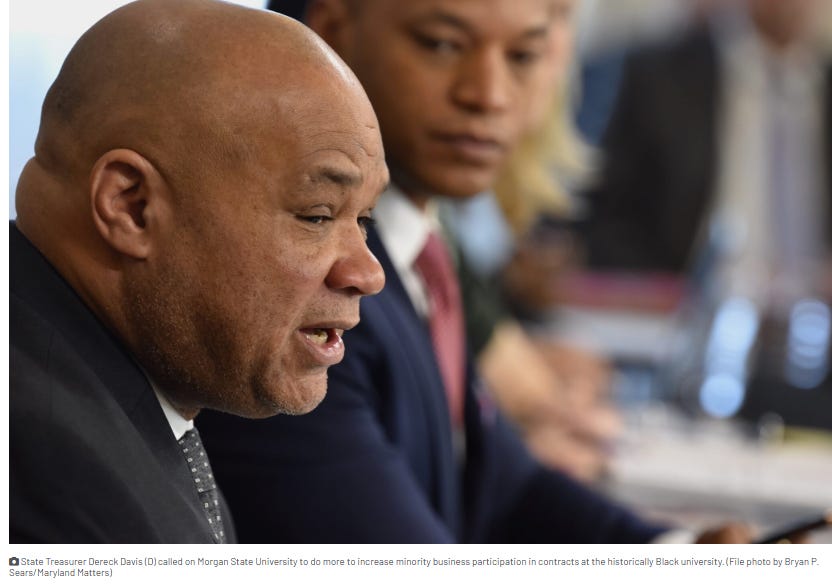
Very good news for Maryland and Dereck E. Davis. Here’s why: Deputy State Treasurer Courtney Finklea Green survived emergency surgery and thee bond sale…
1. Strong Investor Demand
· Each bidding group received 6 or 7 bids — competitive bidding like this means investors are eager to buy Maryland’s bonds. High demand typically lowers borrowing costs.
2. Low True Interest Cost (TIC)
· The overall TIC was 3.31%, with Group 1 bonds (2029–2036) going for just 2.71%.
· For a government bond sale, these are attractive, low rates, especially given the economic climate mentioned in the release. Lower interest costs mean Maryland taxpayers pay less over time for capital projects.
3. $108.3 Million in Bond Premium
· Bonds sold at a premium means investors paid more than face value because the coupon rate was higher than current market rates. That premium acts like upfront cash for Maryland — effectively reducing the net borrowing cost even further.
4. All Bonds Sold Competitively, Not Negotiated
· Competitive sales (vs. negotiated deals) generally signal strong market confidence because underwriters have to compete on price. Maryland didn’t have to rely on a pre-arranged deal.
5. Funding for Capital Improvements Without Immediate Tax Hikes
· The money funds infrastructure, schools, parks, grants — things that boost the economy and quality of life — without needing to raise taxes today.
One Subtle Check (Not a Negative)
· Group 3 (2039–2041) had a TIC of 3.76%, higher than Group 1’s 2.71%. That’s normal — longer-term bonds usually carry higher rates due to inflation and interest rate risk. It doesn’t indicate weakness.
Bottom Line
The sale shows Wall Street views Maryland as a low-risk, well-managed borrower. For residents, that means cheaper financing for public projects and a vote of confidence in the state’s fiscal health. Definitely good news.