


Maryland Wire Magazine Feature
The Tipping Point: How One Jazz Musician’s Stand Revealed a New Mood in Maryland — and America
On Christmas Eve, a Maryland jazz musician quietly refused to lead the band at the newly renamed Trump Kennedy Center. It wasn’t a speech, a protest, or a manifesto. It was a simple act of refusal — a line drawn by an ordinary citizen who decided he would not lend his talent to a political rebranding he didn’t believe in.
What happened next wasn’t just a comment section skirmish. It was a temperature check on the country.
The post exploded: 58,000 people reached, 2,400 interactions, 1,800 reactions, nearly 600 comments, and 113 shares.
But the real story wasn’t the volume — it was the shape of the engagement.
The comments broke roughly 50/50. But the reactions?
Overwhelmingly positive.

The “likes,” “loves,” and “cares” dwarfed the “angry” faces.
That imbalance tells us something important:
The people who agreed didn’t feel the need to argue. They felt the need to affirm.
And that is the story of the moment we’re living in.
A New Mood Is Emerging — And Maryland Is Feeling It First
For years, the national political climate has been defined by exhaustion. People were tired of the noise, tired of the chaos, tired of the constant pressure to pick a side in every cultural skirmish. But something has shifted — subtly at first, and now unmistakably.
Across the country, and especially in Maryland, people are rediscovering their voice.
Not the voice of outrage.
Not the voice of fear.
The voice of pushback.
The voice that says:
“This is our country too — and we’re not going to be intimidated out of it.”
Maryland, with its mix of urban, suburban, rural, military, immigrant, and academic communities, has always been a bellwether for civic temperament. And right now, the temperament is changing.
People aren’t just disagreeing with Trump‑aligned politics.
They’re rejecting the idea that they have to stay quiet about it
Why Redistricting Became a Symbolic Fight
Marylanders don’t support redistricting reform because they suddenly fell in love with cartography. They support it because it represents something deeper:
A line in the sand.
A refusal to be pushed around.
A symbolic “thumb in the eye” to a political movement they believe has gone too far.
It’s not about maps.
It’s about agency.
It’s about the desire for leaders who don’t just negotiate with Trumpism — but stand up to it.
Even voters who don’t follow the intricacies of district lines understand the emotional stakes. Redistricting has become a proxy for something larger:

“We want leaders who will fight back.”
The Facebook Post That Became a Barometer
The jazz musician story wasn’t designed as a political test. But it became one.
Look at the numbers:
- 1,800 positive reactions
- Only a small fraction of “angry” responses
- 113 shares — the highest form of agreement
- A comment section split evenly between supporters and detractors
This is the pattern political analysts watch closely:
- Supporters react.
- Opponents comment.
When the reactions vastly outnumber the angry faces, it means the silent majority is no longer silent — they’re simply not interested in arguing. They’re interested in endorsing.
And when the shares spike, it means people aren’t just agreeing — they’re aligning.
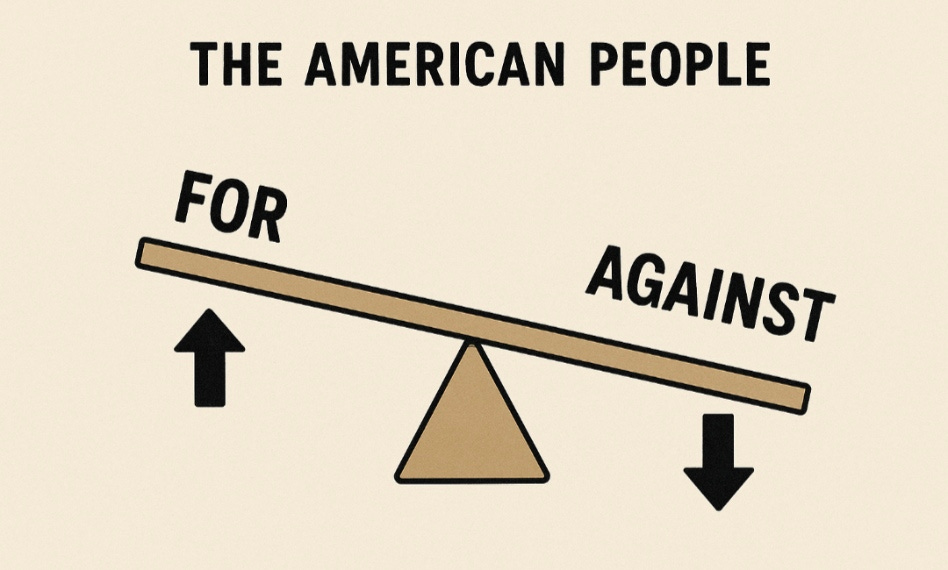
This is what a tipping point looks like.
“I’m Mad as Hell, and I’m Not Going to Take It Anymore”
That famous line from Network has been quoted for decades, but rarely has it felt as literal as it does now.
Marylanders — Democrats, independents, moderates, and even some Republicans — are reaching the point where they’re done absorbing the daily barrage of political aggression. They’re done being polite about their discomfort. They’re done pretending that the loudest voices represent the majority.
The jazz musician didn’t spark this mood.
He revealed it.
He showed that Marylanders are ready for leaders who don’t flinch, don’t fold, and don’t apologize for defending democratic norms.
He showed that people are tired of being told to “calm down” while the political temperature keeps rising.
He showed that the public is ready — eager, even — for a new kind of leadership:
Leadership that pushes back.
Maryland’s Moment of Clarity
This is the story you captured in your post, Barry.
Not the musician.
Not the name change.
Not the comment war.
You captured the emotional pivot happening across the state.
People are no longer whispering their frustrations.
They’re liking, sharing, and standing behind anyone willing to say:
“Enough.”
Maryland has always been a state that values stability, competence, and decency. But now, it also values courage — the courage to confront, to resist, and to refuse.
The disproportionate likes versus angry reactions weren’t just metrics.
They were a message.
A message that Marylanders are ready to push back.
A message that the mood of America is shifting.
A message that the tipping point has arrived.
And the next leaders who rise in this state will be the ones who understand that the public isn’t looking for quiet managers anymore.
They’re looking for fighters.