

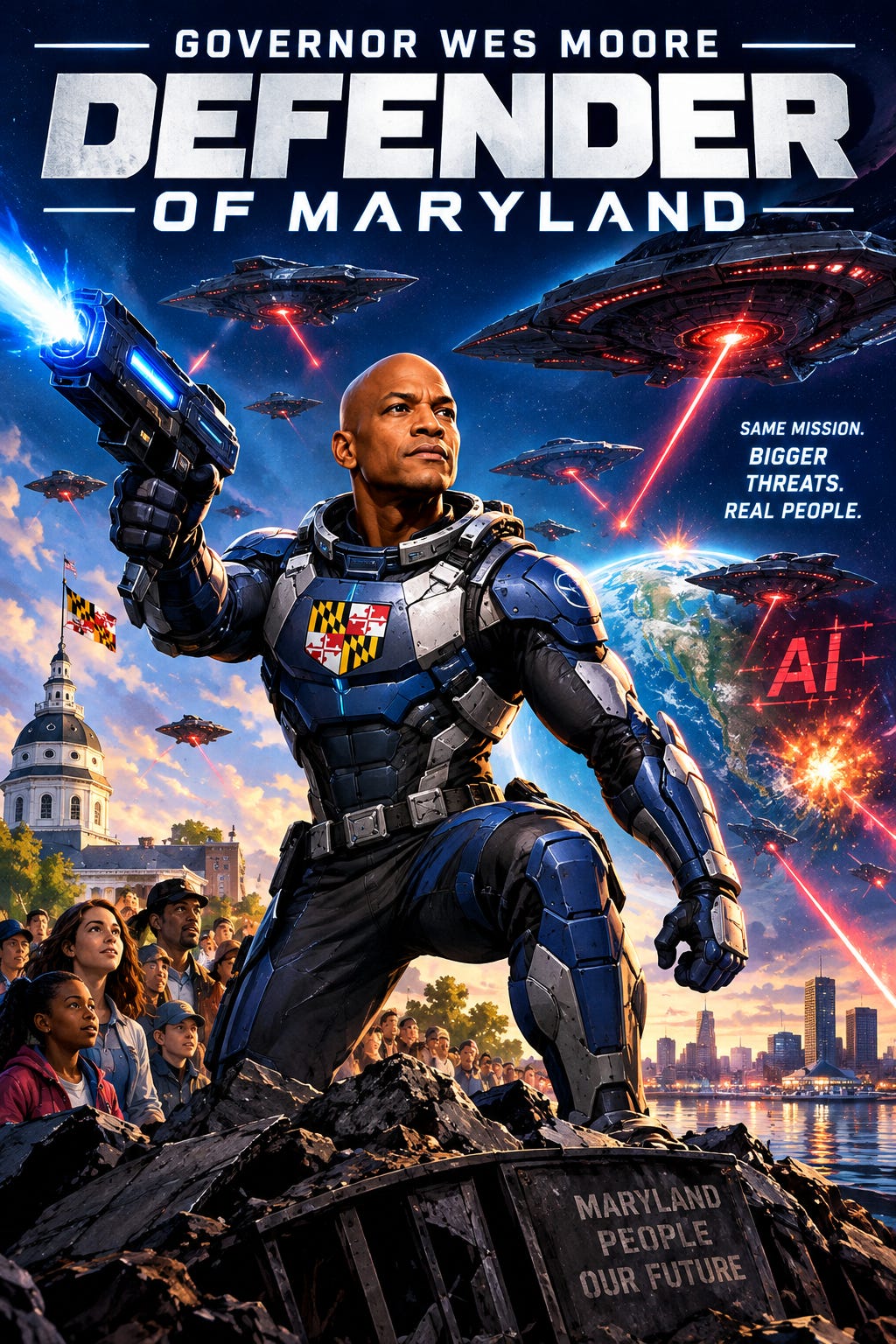
Governor Moore’s AI Playbook, Part 2: Worker Voice, Likeness Rights, and Protecting Kids
By Barry O’Connell
Yesterday, Governor Wes Moore unveiled his administration’s core principles for artificial intelligence regulation. In our initial coverage, we examined what this means for state IT procurement, vendor risk audits, and government contractors.
However, the administration’s framework extends far beyond tech contracts and eMMA commodity codes. Addressing what it frames as federal inaction in Washington, the Moore-Miller administration outlined three core pillars designed to establish state-level guardrails around community rights, labor protections, and youth safety.
Here is a breakdown of the public-facing policy initiatives and what to watch as these proposals move toward the General Assembly.
1. Protecting Our People: Likeness Rights and Predatory Tech
While federal AI legislation remains stalled, Maryland is pushing forward with state-level safeguards:
Digital Likeness as Property: The administration plans to introduce and support legislation recognizing an individual’s image, voice, and likeness as a legally protected property right, establishing clearer legal recourse against unauthorized deepfakes and AI synthetic replicas.
Housing and Labor Discrimination: Following up on previous measures regulating dynamic pricing and algorithmic healthcare denials, the framework targets discriminatory practices in automated hiring systems and housing algorithms.
Frontier AI Company Regulation: The state aims to impose direct guardrails on frontier AI developers operating or deploying high-risk systems within Maryland.
2. Centering Our Workers: Labor Committees and Upskilling
A central component of the framework involves giving organized labor a direct seat at the table as automated tools enter the workplace:
Standing Labor-Management Committee: The administration is creating a standing committee to ensure workers and union leadership actively participate in decisions surrounding technological deployment in state and private sector workplaces.
Targeted Workforce Transition: The state is directing workforce development funding toward worker-centered retraining and upskilling, aiming to mitigate job displacement caused by automation.
3. Keeping Our Kids Safe: Classroom Tools and Digital Guardrails
Focusing on younger Marylanders, the framework establishes specific protections for schools and online spaces:
Online Safety Mandates: Actions aimed at protecting children from unsafe, predatory, or addictive AI features and algorithms.
Safe AI in Classrooms: Guidance to ensure schools adopt vetted, secure AI tools while preparing students with the skills needed for an AI-driven workforce.
What to Watch Heading into the Next Session
With the General Assembly approaching, expect these principles to translate into specific statutory proposals, particularly around publicity rights and algorithmic discrimination.
While Silicon Valley and Washington debate abstract long-term risks, Maryland continues to stake out its position as a first-mover in practical, consumer-focused AI oversight.
I'm glad our governor is working to protect Marylanders when the federal government will not. Please dont use Trump-like AI pictures of the Governor. Its ridiculous when Trump or anyone uses doctored AI pics to make them look like a super hero.