

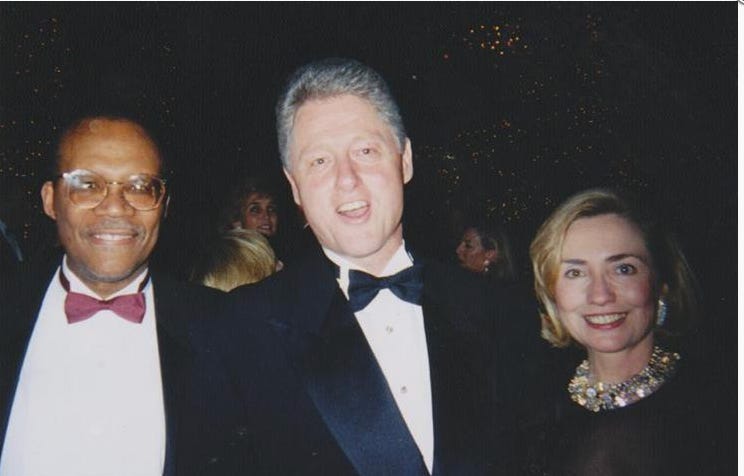
Professor Larry S. Gibson is one of the most quietly influential figures in Maryland political history—a legal scholar, campaign strategist, and civil rights historian whose fingerprints are on decades of Black political advancement across the state.
📚 Academic Legacy
- Born in Washington, D.C. in 1942, Gibson moved to Baltimore and graduated from Baltimore City College High School in 1960 as its first Black class president.
- He earned his undergraduate degree from Howard University (where he was student body president) and his law degree from Columbia University in 1967.
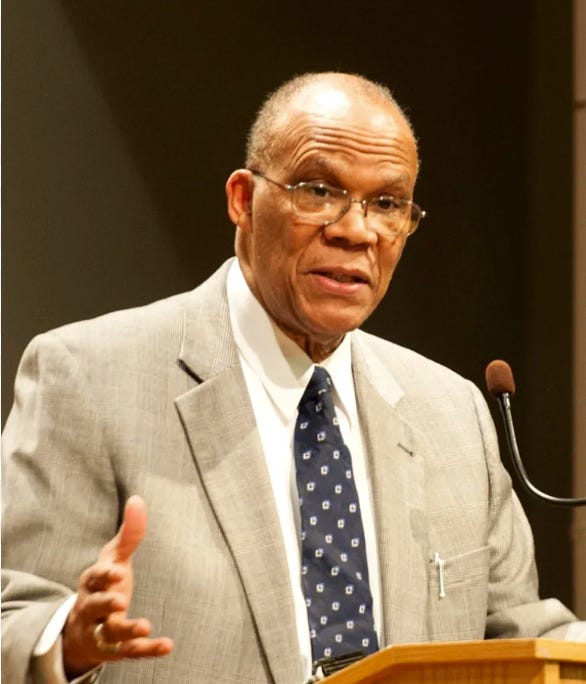
- In 1972, he became the first Black law professor at the University of Virginia, and two years later joined the University of Maryland School of Law, where he still teaches courses on Evidence, Civil Procedure, Race and the Law, and Election Law.
🗳️ Political Architect
Gibson’s political work began in the late 1960s and has shaped Maryland’s electoral landscape ever since:
- He managed campaigns for Joseph Howard, the first Black judge elected citywide in Baltimore, and Milton Allen, the first Black State’s Attorney in a major U.S. city.
- He was the campaign manager for Kurt Schmoke in all three of his successful mayoral runs (1987, 1991, 1995), helping elect Baltimore’s first Black mayor.
- Gibson served as Maryland State Chairman for the Clinton-Gore presidential campaigns in 1992 and was involved in Hillary Clinton’s later runs as well.
- He’s known for backing promising Black candidates across Maryland—including in Prince George’s County (Wayne Curry), Anne Arundel County (PeteSmith), and beyond—often offering strategic advice and campaign infrastructure.
✊ Civil Rights and Legal Reform
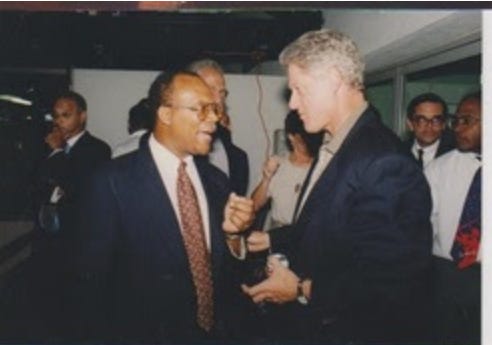
- Under President Jimmy Carter, Gibson served as Associate Deputy Attorney General and Director of the National Economic Crimes Project, coordinating federal counter-terrorism efforts and economic crime policy.
- He was instrumental in renaming Baltimore-Washington International Airport after Thurgood Marshall, and authored the acclaimed biography Young Thurgood: The Making of a Supreme Court Justice (2012).
- He’s currently working on a second book chronicling Marshall’s early legal career from 1935 to 1955.
🧠 Influence and Style
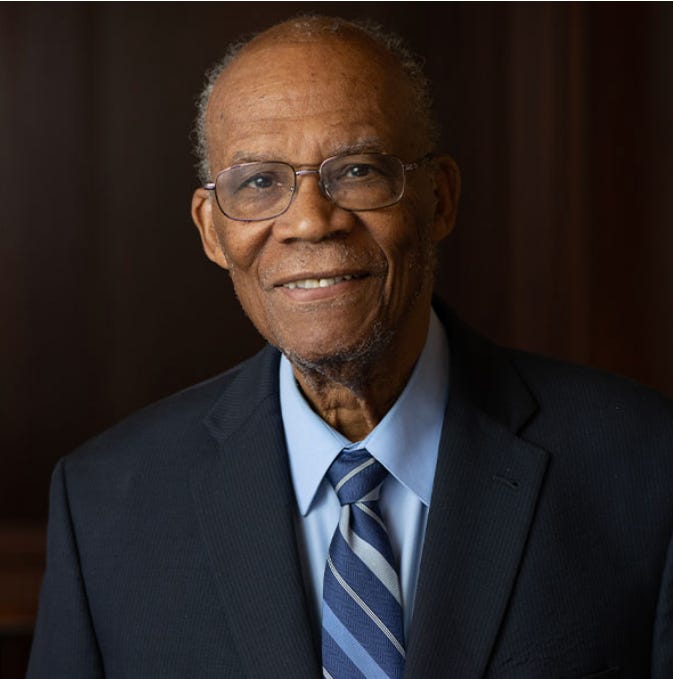
Gibson is known for his strategic brilliance, historical depth, and unapologetic loyalty to Black political empowerment. He’s not a front-facing power broker—he’s the man behind the curtain, shaping narratives, building coalitions, and mentoring generations of leaders.
He’s also a photographer, historian, and preservationist, serving on the Maryland Historical Trust and the Baltimore City Commission for Historical and Architectural Preservation. One thing that always struck me as remarkable is that even up into his '80s he's out there putting up signs. He's not telling other people what to do and sitting back and waiting. He does the work himself. He is inspirational.
1: Young Thurgood: The Making of a Supreme Court Justice, by Larry S. Gibson (Prometheus Books, 2012).
URL: https://www.amazon.com/Young-Thurgood-Making-Supreme-Justice/dp/1616145715
2: Larry S. Gibson Faculty Profile, University of Maryland Francis King Carey School of Law.
URL: https://www.law.umaryland.edu/faculty--research/faculty-directory/larry-s-gibson/
3: Campaign Strategist Behind the Scenes: Professor Larry Gibson, Maryland Daily Record.
URL: https://thedailyrecord.com/2022/10/11/behind-the-scenes-campaign-strategist-larry-gibson/
4 Thurgood Marshall Honored with BWI Airport Renaming, Washington Post.
5: Maryland Historical Trust Board Members, Maryland Department of Planning.