

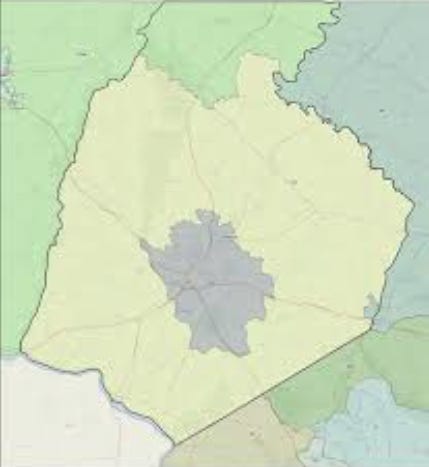
Frederick County’s political geography is exactly as you framed it—Democratic in the urban core, Republican in the surrounding rural ring. That “donut” dynamic has made Frederick one of Maryland’s most closely watched swing counties, and 2026 is shaping up to be no exception.
🗳️ 2026 Candidates and Incumbents
As of September 2025, here’s what’s publicly filed for Frederick County’s local races:
County Council
- District 3: Josh Bokee (Democrat) has filed for reelection. He represents part of the urban core and is known for progressive stances on housing and infrastructure.
- District 5: Johnny Mercer (Democrat) has filed. His district includes more rural areas, suggesting Dems are contesting the outer ring.
- At-Large and other districts: No filings yet, but that’s not unusual this early.
County Executive
- No candidates have filed yet. Incumbent Jessica Fitzwater (Democrat) was elected in 2022, so she’s eligible for reelection unless she opts out. No public announcement yet.
Sheriff
- No filings yet, but incumbent Chuck Jenkins (Republican) has held the office since 2006. If he runs again, it’ll be his sixth term. No retirement announcement so far.
State’s Attorney
- Charlie Smith (Republican) has filed for reelection. He’s been in office since 2007 and remains a strong GOP figure in the county.
🔄 Term Limits and Opt-Outs
Frederick County doesn’t impose term limits on most local offices, so long-serving incumbents like Jenkins and Smith can run again. No major figures have publicly announced they’re stepping down yet, but that could change as the filing deadline approaches in early 2026.
📊 Political Mood and Trends
Frederick is definitely trending Democratic—but slowly and unevenly:
- Urban growth in Frederick City and surrounding suburbs is bringing in younger, more diverse, and left-leaning voters.
- Redistricting battles and school board fights have energized both sides, but Democrats have made gains in recent cycles.
- 2022 County Executive race went to Democrat Fitzwater, signaling a shift in executive leadership.
- Council composition is still mixed, but Democrats are increasingly competitive in outer districts.
The GOP still holds sway in northern and western parts of the county—places like Thurmont and Middletown—but the Democratic “hole” is expanding outward.

I asked former Deputy State Comptroller Len Foxwell now of Tred Avon Strategies and Johns Hopkins University about Jessica Fitzwate's chances ofreelection.
From Foxwell:
I do. Especially in a Trump midterm. She has managed the government and her politics effectively and I see no evidence of electoral weakness.

The only risk she would ever incur is in a Democratic primary where over development becomes a flashpoint or a populist seizes on data centers, development or the Piedmont line for progressive mobilization. I don’t see that happening.
Frederick’s Shifting Electorate It’s Not Your Father’s Frederick County Anymore
🗳️ Frederick County’s Shifting Electorate: Voter Trends and Turnout Over Time
Frederick County, Maryland, long considered a political bellwether, is undergoing a quiet but consequential transformation. Once a Republican stronghold with a few blue pockets, it now resembles a political donut: a Democratic urban center surrounded by a conservative rural ring. But the edges of that ring are softening.
1. 📈 Voter Registration Trends: The Urban Surge
Frederick County’s voter registration data reveals a steady Democratic climb, especially in and around Frederick City:
- As of August 2025, Democrats account for roughly 39% of registered voters, Republicans 36%, and Unaffiliated voters 23%.
- In 2016, Republicans held a 5-point lead countywide. That gap has not only closed—it’s reversed in the city and its immediate suburbs.
- The fastest-growing precincts are in Ballenger Creek, Spring Ridge, and the Route 15 corridor, where new housing developments are attracting younger, more diverse residents.
By 2026 Democrats should be up by 1% to 2% over the RRepublicans. However the fastest growing segment is unaffiliated voters and the race will be decided by tturnouut and the unaffiliated voters.
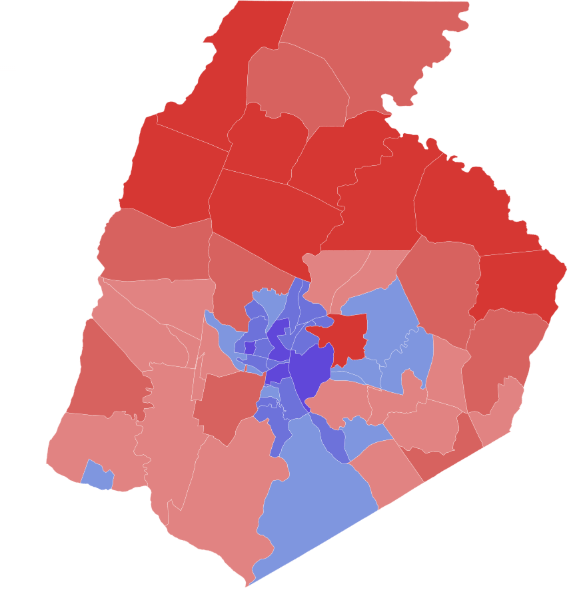
2. 🗺️ Historic Turnout Maps: The Red Ring Holds, But Cracks Are Forming
Turnout data from the past three general elections shows a consistent pattern:
- Frederick City precincts (e.g., 02-001, 02-002) deliver 60–70% Democratic votes, with turnout rates above 65%.
- Northern and western precincts (e.g., Thurmont, Middletown) remain solidly Republican, often exceeding 70% GOP support.
- Swing zones like Urbana and New Market have shifted from red to purple, with Democratic candidates winning narrow pluralities in 2022 and 2024.
Archived precinct-level maps and results are available via Frederick County’s election results portal.
3. 🔄 The Donut Is Filling In: Suburban Drift and Issue-Based Realignment
Several factors are accelerating the Democratic trend:
- School board politics have galvanized progressive voters, especially around curriculum transparency and LGBTQ+ inclusion.
- Housing and infrastructure debates are drawing younger professionals into local politics, particularly in growth corridors like Route 70 and Route 15.
- Ultra Right Wing Sheriff Chuck Jenkins’ controversies have mobilized civil rights advocates and shifted law enforcement politics into the electoral spotlight.
4. 🧠 Strategic Implications for 2026
If the Democratic trend continues, Frederick could become a model for suburban realignment in Maryland. The GOP still dominates in turnout-heavy rural precincts, but their margin is shrinking. Democrats, meanwhile, are building coalitions across generational and racial lines, especially in precincts with new development. New houses especially town houses are likely Democrats.
The 2026 races—especially for County Executive and Sheriff—will test whether Frederick’s transformation is cosmetic or structural. County Executive Jessica Fitzwater is rumored to be thinking about a run fur State Comptroller in 2030. To do that she needs to top her 50.4% win in 2022.