


Welcome to the most expensive political guessing game in Maryland: Baltimore County’s 2026 executive race, where ambition is measured not just by votes—but by what’s in the bank and where it came from.
With four candidates and four very different financial DNA profiles, the story of this race isn’t written in slogans. It’s written in dollar signs.
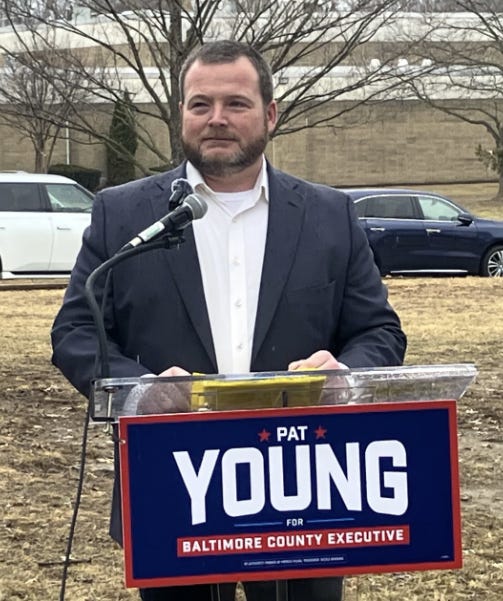
💸 Pat Young: The Subsidized Crusader
Former delegate Pat Young is all-in on public financing. His roughly $228,000 campaign fund is modest, and that’s the point—he’s opted into the county’s new Fair Election Fund, which caps his spending but matches contributions with up to $750,000 for both the primary and general election. Some call him the welfare candidate and dismiss his chances. But not all agree with Izzy.
Young positions this choice as democratic reform. But it feels more like a startup pitch for government venture capital. He needs 550 qualifying donations from residents and at least $50,000 raised to unlock the matching funds. He’s almost there.
In a race poised to shatter $5 million in total spending, Young’s is a publicly sponsored candidacy—a subsidized run with moral overtones and strategic limitations. Will voters see it as ethical innovation, or fiscal hand-holding?
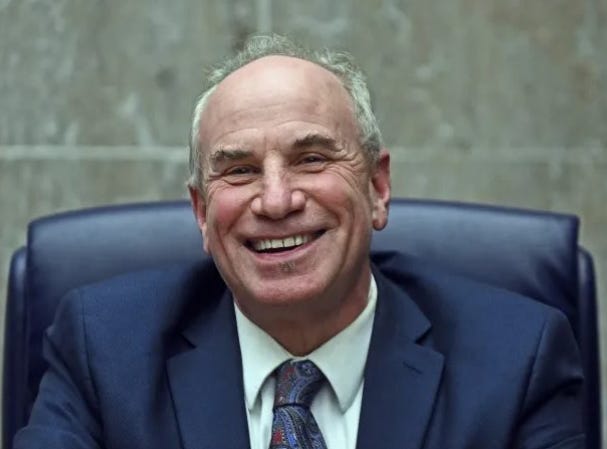
🌐 Izzy Patoka: The National Portfolio
Councilman Izzy Patoka sits atop the largest war chest—$1.3 million—a signal not just of intent, but of reach. His donor base is not confined to Baltimore County. Rumors and finance filings suggest Patoka’s contributions span multiple states and include donors connected to national advocacy networks, charitable foundations, and political bundlers well beyond the Beltway.
It’s not illegal. It’s not even uncommon. But it does beg the question: If your donors don’t know the district, how do they shape your priorities?
Patoka’s campaign has hinted that “all mechanisms are in place,” a tacit acknowledgment that infrastructure, especially financial, is already assembled. But does that structure reflect the community, or someone else’s blueprint? I am speaking to a growing network of Jewish women from Pikesville who did not apprecite his style as their Councilman. There are those who say he supports Kelly Madigan because she ignored projects related to Izzy.
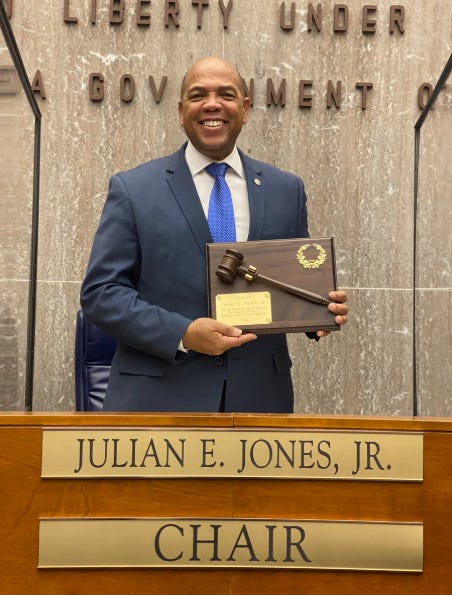
🧱 Julian Jones: The Loyal Local
Councilman Julian Jones doesn’t flirt with national networks or rely on government matching funds. His $1 million campaign account is built on Baltimore County donors, making him the race’s most “organic” fundraiser.
Jones sees his financial base as proof of community confidence. These aren’t just contributors—they’re stakeholders. Teachers, small business owners, retirees with skin in the game.
In an era of parachute donors and performative populism, Jones is what he looks like: a veteran councilmember with strong local ties and a well-padded account to prove it.
🕵️♂️ Nick Stewart: The Sleeper Contender
Then there’s Nick Stewart, the late entry who’s put Halethorpe and housing reform at the center of his campaign—but whose financial status is still a mystery.
Stewart didn’t file early. He didn’t submit a January report. No donor lists, no burn rate, no receipts. His April announcement came with policy vision—but no spreadsheet.
Yet whispers persist:
He may have the ability to loan himself $1 million from personal reserves.
He’s reportedly working to raise another million from local donors.
His ties to Martin O’Malley’s former administration, from both city and state government, could translate into dormant networks ready to reactivate.
During the primary election for Attorney General in 2022. Anthony Brown raised $944,000 for a statewide race. Katie Curran O'Malley raised $ $630,000 total. It's unclear to what extent the O'Malley ties can be cashed in for contributions by Nick Stewart.
Stewart’s team says he’s “building a modern campaign around smart growth and structural reform.” But without financial transparency, he remains a cipher—half reformer, half financier, all question mark.
⚖️ Show Me the Money—or Don't
Four candidates. Four funding philosophies.
Candidate
Estimated Cash-on-Hand
Funding Style
Pat Young
~$228K
Public financing, reform narrative
Izzy Patoka
~$1.3M
National donor networks
Julian Jones
~$1M
Local donor loyalty
Nick Stewart
Unknown (Speculated $1–2M)
Self-loan + TBD contributions
The drama isn't just electoral—it's fiscal. And the heart of the story isn’t who’s got money, but what kind of power that money buys.
So when the debates begin and the campaign flyers flood your mailbox, ask this:
Did this message come from your neighbor—or someone who thinks Woodlawn is part of D.C.?