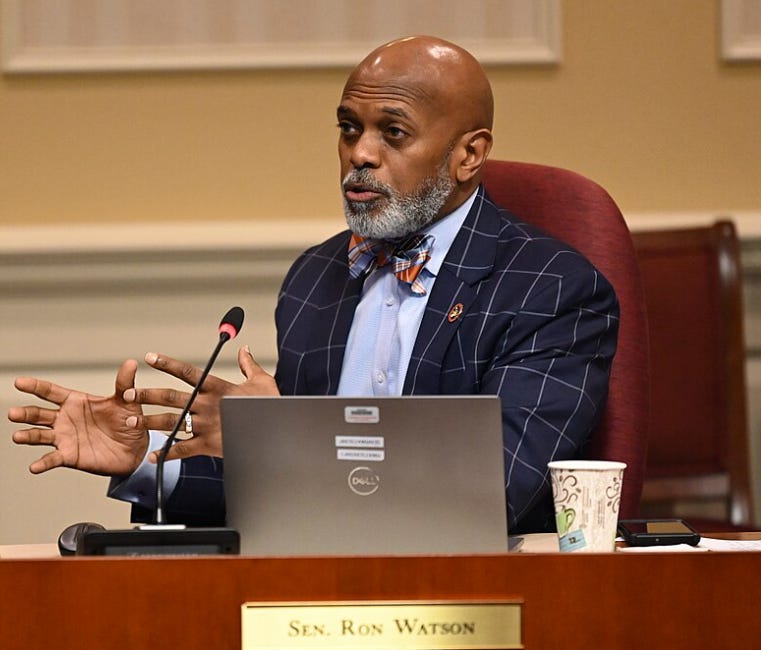
BREAKING: Watson Pushes Ethics Loophole as Family Compensation Soars
ANNAPOLIS — Senator Ron Watson is again under scrutiny after pushing legislation that would have dramatically expanded the ways Maryland lawmakers could take money from local governments — the same kind of arrangement he attempted to secure for himself in a $200,000 Prince George’s County Public Schools contract that Senate leadership forced him to abandon.
The bill, introduced in the House and cross‑filed in the Senate, would have allowed senators and delegates to hold high‑paying jobs with counties, municipalities, and school districts in their own jurisdictions. Ethics advocates immediately flagged the measure as a direct path to legalized conflicts of interest.
For Watson, the implications were personal. His household already collects roughly $300,000 a year through his wife’s county position. His own abandoned school‑system contract would have pushed the family’s taxpayer‑funded income toward half a million dollars annually.
The legislation would have made such arrangements permissible going forward.
Senate President Bill Ferguson quietly shut the effort down, according to multiple lawmakers familiar with the internal discussions. The bill has not advanced and is not expected to.
Watson’s push comes after the Senate’s ethics counsel warned him last year that his school‑system contract was incompatible with his legislative role. He resigned the position only after being told he could not simultaneously serve in the Senate and collect the six‑figure salary.
The new bill would have rewritten that rule.
Critics say the move reflects a pattern: Watson attempting to convert public office into private financial gain, even after being formally cautioned. The optics — a legislator crafting a bill that would personally benefit him — have fueled bipartisan discomfort.
The measure is effectively dead for the session. But the episode has reopened questions about ethics, influence, and the growing compensation culture around Prince George’s County government.
For now, the Watson bill sits where Ferguson left it: nowhere.