

When Staff Worlds Overlap: Questions Raised by David Trone’s 2026 Campaign Team
When a senior congressional staffer leaves Capitol Hill to join a campaign, there is usually nothing remarkable about it. It happens all the time. The system anticipates it.
But when multiple senior staffers appear to move through overlapping roles across different offices and campaigns within the same compressed time window, the public is entitled to ask basic governance questions. Not accusations. Questions.
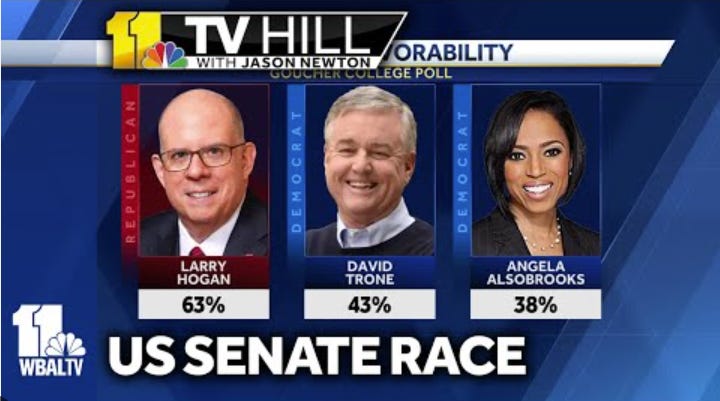
That is the situation now emerging around the newly announced campaign team for David Trone, who in 2024 chose to run unsuccessfully for the U.S. Senate rather than seek re-election to Maryland’s 6th Congressional District.
According to a Trone campaign press release, the campaign’s senior staff includes a number of figures who recently held paid House positions for April Mcclain Delaney, Trone’s successor in the 6th District, as well as long-time Trone staffers who appear to have moved between official and political roles.
None of this is illegal on its face. But it does raise clear ethics and timing questions under longstanding House Rules governing staff conduct.

THE CAMPAIGN ROSTER, AS ANNOUNCED
According to the campaign:
Sonny Holding, campaign manager
Holding previously served as Chief Of Staff to Rep. McClain Delaney from January 2025 to January 2026. Before that, he was deputy chief of staff and district director for David Trone. Earlier still, Holding served as district director for John Delaney, who represented the 6th District before Trone.
Nathaniel McCarthy, communications director and chief of staff
McCarthy previously served as communications director for Rob Menendez and worked for Trone in various roles dating back to 2017.
SARAH DREYER, deputy campaign manager for political and voter outreach
Dreyer served as a district director for McClain Delaney from January to December 2025. Prior to that, she was director of outreach for Trone.
Tyler Jessee, deputy campaign manager for operations and scheduling
Jessee previously worked as director of scheduling and operations for Johnny Olszewski, and before that as director of operations for Trone.
SASHA GALBREATH, senior strategic advisor
Galbreath served as communications director and senior advisor to McClain Delaney from January to October 2025, after previously holding senior communications and chief-of-staff roles for Trone.
Again, none of this is unusual IF the transitions were clean, sequential, and fully compliant with House rules.
The question is whether they were.
What the House Rules Actually Say
It is important to be precise here.
These are House Rules, not criminal statutes. But they are binding, enforced internally, and taken seriously.
In plain English, House staff:
1. Must perform official duties during the hours they are paid
Congressional salaries are for congressional work, not campaign work.
2. May not work for two bosses at the same time
A staffer cannot be simultaneously serving a Member of Congress while working for another campaign or political effort.
3. May engage in campaign activity only on personal time
Nights, weekends, leave time. Never on government time, never using government resources.
4. Must avoid conflicts of loyalty
It is explicitly frowned upon for a staffer to accept future employment with a political rival and then use their official position to undermine their current Member or advance a future employer.
This last point is often the least discussed but the most sensitive. Congress runs on trust. Staffers are expected to act in the best interests of the Member they serve, not the next job they hope to land.
The Core Question
The tip received by MARYLAND WIRE comes from a source with deep familiarity with congressional staffing norms and insists on anonymity to avoid professional retaliation.
The question they raise is not dramatic, but it is serious:
> Were any of these campaign commitments made while individuals were still serving in paid House roles, and if so, were all campaign activities strictly confined to personal time?
That is the line. Nothing more. Nothing less.
If the answer is yes, everything was clean and sequential, the matter ends there.
If the answer is unclear, the House Ethics Committee traditionally expects clarification.
What We Know, and What We Don’t
What We Know:
Multiple senior staffers moved between Trone, McClain Delaney, and other congressional offices in a short time frame.
The Trone campaign publicly announced them as a unified team.
House rules prohibit overlapping paid roles or on-the-clock campaign work.
What we do not yet know:
The precise dates on which campaign commitments were made.
Whether any campaign strategy work occurred while staffers were still on congressional payrolls.
Whether any waivers, leave arrangements, or ethics guidance were sought or granted.
Those facts matter.
Why This Matters
Congressional staff are public servants. Their salaries are paid by taxpayers. The rules exist not to punish ambition, but to protect public trust.
This is not about personalities. It is about process.
And in politics, process is substance.
Maryland Wire will continue to seek clarification and welcomes on-the-record responses from the Trone campaign or any of the individuals named above.
Transparency resolves these questions quickly. Silence rarely does.
If he wants to help State and National Democrats, he should spend his millions running for the First District seat. Or he could spend millions supporting Dan Schwarz in the First.