

High Stakes in Annapolis
Title: Annapolis Under Pressure: Supreme Court Hearing Exposes Limits of Democratic Power Play
ANNAPOLIS — Inside the State House corridors, the atmosphere leading up to Thursday’s high-stakes hearing at the Supreme Court of Maryland is thick with anxiety.
When lawmakers were called to State Circle for an August special session to push through House Bill 2100, the narrative was framed around national defense—a constitutional amendment to give Maryland the flexibility to counter aggressive mid-decade redistricting in red states. But after two separate circuit courts threw out Question 3 for violating state election law and single-subject rules, the state’s political establishment finds itself backed into a legal corner.
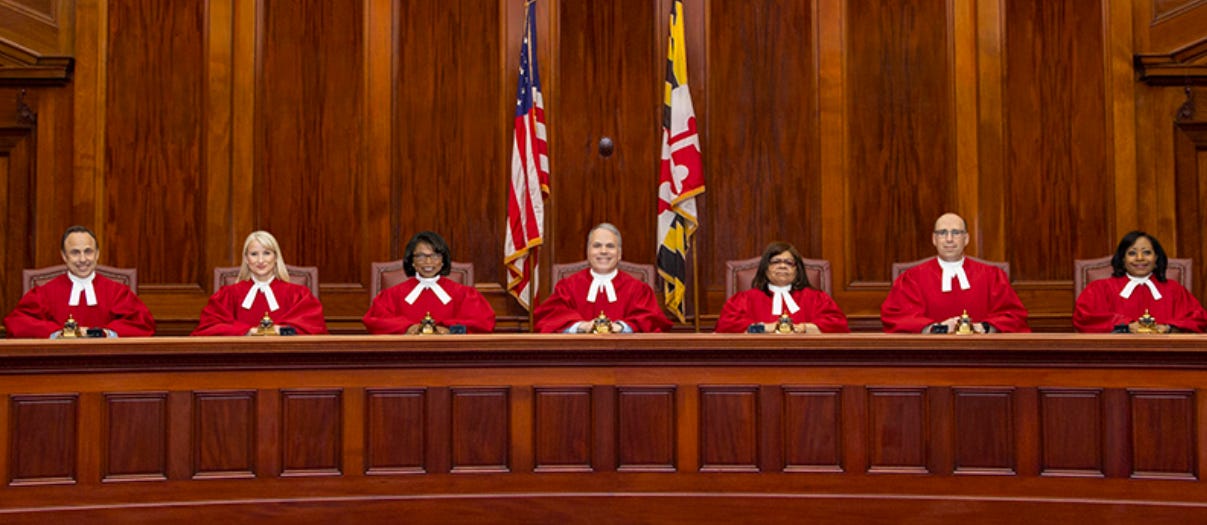
Thursday’s oral arguments before the state’s newly renamed high court will test whether the supermajority’s procedural maneuvers can withstand constitutional scrutiny. Yet, veteran Annapolis observers note that while the legal fight has reached a fever pitch, the underlying political reality is far more subtle than headline-writers suggest.
Should the justices side with the Republican plaintiffs and strike Question 3 from the November ballot, the immediate practical impact on Maryland’s congressional delegation will be zero. The existing map—delivering a comfortable 7-to-1 Democratic dominance—remains firmly in place.
The real damage of an adverse ruling would be political and institutional, not structural. For legislative leadership and the administration, losing a signature special-session initiative on procedural technicalities would be a stinging rebuke. It paints a picture of a legislature so focused on national political posturing that it bypassed fundamental election deadlines.
For the governor, however, any fallout will likely be short-lived. National political trajectories—whether aimed at national tickets or cabinet posts down the line—are built on broader economic and legislative records, not procedural setbacks in state court. Still, not all long-time State House observers share that forgiving view. Some in Annapolis argue that a loss on Thursday would deal a lasting blow to his national ambitions, framing it as a self-inflicted wound that undermines the image of executive competence required for higher office. Yet, the governor has repeatedly shown an ability to walk through a rainstorm without getting wet, and there is little reason to doubt he can dodge the drops once more while legislative leadership absorbs the real heat.
As the state’s highest jurists prepare to take the bench on Thursday, the tension in Annapolis isn't about losing congressional seats—it is about avoiding an unforced error that leaves statehouse leaders looking less like political strategists and more like overzealous partisans who moved too fast.
Barry; admit it. Moore Buffoonery of the first order from start to finish when the court whacks the effort to redraw the congressional district. Now you can elevate Wes Moore for a Medal of Dishonor to go along with his fake Bronze Star. Nonetheless, you wrote as good a piece as is possible to frame this codwallop.