

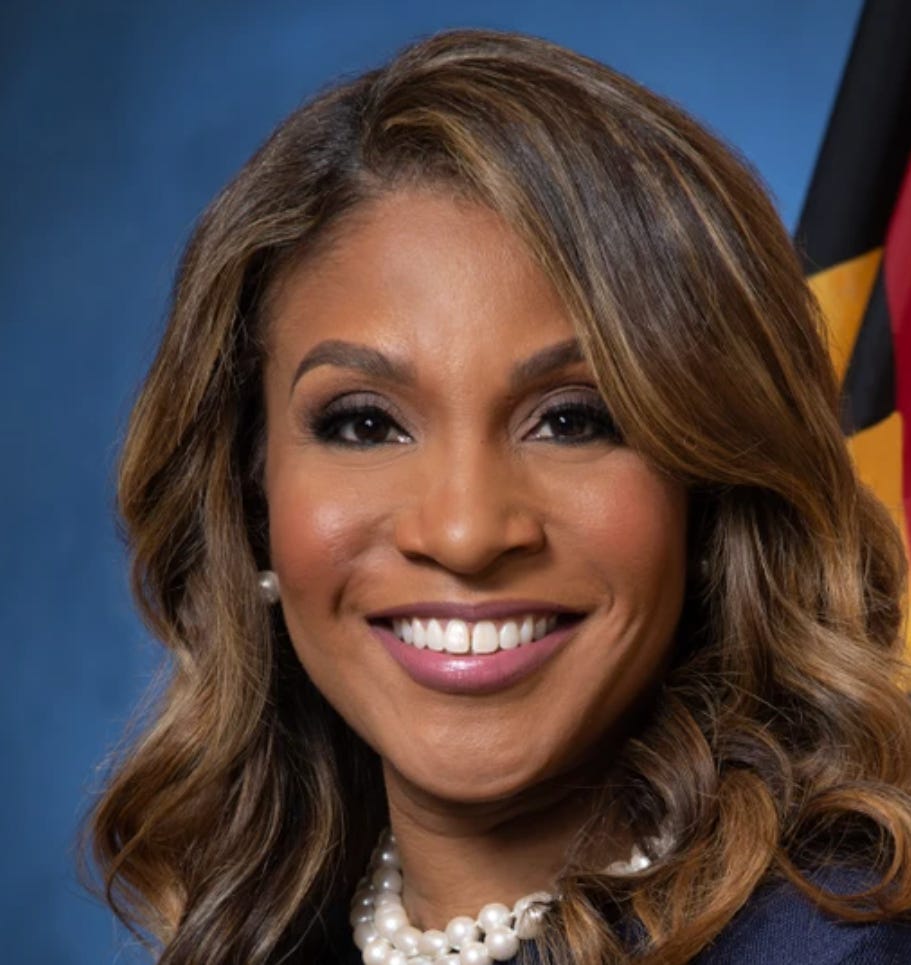
Dawn Flythe Moore: A Political Dynamo In Pumps
Maryland’s First Lady did not acquire her political power through marriage. She brought it with her to State House.
By FuQuasha Piper Richardson, Maryland Wire Staff Writer
Governor Wes Moore may be the man delivering the speeches from the podium but beside him stands a woman who understood the machinery of Maryland politics long before his name appeared on a ballot.
Dawn Flythe Moore is polished, glamorous and impeccably composed. Yet reducing her to the stylish woman accompanying Maryland’s first Black governor would be a spectacular misreading of the political résumé standing in those pumps.
She has worked for governors, lieutenant governors and statewide campaigns. She has managed relationships among government officials, nonprofit leaders, business executives, donors and community organizations. She helped engineer her husband’s improbable ascent from political newcomer to the governorship.
Now she is transforming the traditionally ceremonial office of First Lady into a platform for policy advocacy, cultural diplomacy and political coalition building.
Dawn Moore is more than Maryland’s First Lady.
She is one of the most politically experienced people living in Government House.
The Daughter of a Crane Operator and a Music Teacher
Dawn Chanté Flythe was raised in Queens, New York by Earl and Pandora Flythe.
Her father was a union crane operator and operating engineer. Her mother was a music teacher in the New York City public school system. The Maryland State Archives identifies her as their daughter while Moore’s interviews provide a fuller portrait of the working household that shaped her.
Her parents gave her two complementary political inheritances.
From her father came organized labor, economic dignity and the understanding that working people sometimes must organize before anyone in power agrees to listen. From her mother came public education, creativity and the lesson that service is not an abstract campaign slogan. It is work performed every day in classrooms and communities.
The arts were central to the Flythe household. Her mother sang in a band while her father played drums. Young Dawn danced, listened to Motown and attended Broadway performances with her family.
Years later, those memories would help shape her campaign to bring a broader and more representative collection of Maryland art into Government House. The Baltimore Banner
There were no governors at the Flythe dinner table and no family political machine waiting to install her in Annapolis. There were two working parents who taught their daughter about labor, education, culture and civic responsibility.
Dawn Moore’s political identity did not begin with her marriage.
It began at home.
Maryland Was Her Political Classroom
After leaving Queens, Moore enrolled at the University of Maryland, College Park. She earned a degree in government and politics as well as a certificate in women’s studies.
Maryland did not merely give her a degree.
It became her political laboratory.
Moore entered state government during the administration of Governor Parris Glendening, working in the office of Secretary of State John T. Willis. She later served as a senior policy adviser to Lieutenant Governor Kathleen Kennedy Townsend.
When Townsend ran for governor in 2002, Moore worked in the political trenches as a field director responsible for Prince George’s County.
That was not a decorative assignment.
Prince George’s County contains one of Maryland’s largest concentrations of Democratic and Black voters. Organizing it requires more than distributing signs and exchanging pleasantries with elected officials. It demands an understanding of churches, unions, community organizations, local rivalries and the people capable of producing votes when a campaign needs them.
The Townsend campaign lost but Moore emerged with invaluable experience. She had seen a statewide political operation from the inside and learned what happens when even a formidable campaign falls short.
She returned to statewide politics as deputy campaign manager for the successful O’Malley-Brown gubernatorial campaign in 2006. Following the victory, Lieutenant Governor-elect Anthony Brown selected her as director of intergovernmental affairs. She would also serve Brown as chief of staff and senior adviser.
Contemporary reporting documents another revealing stop in her career: economic-development work for B&W Solutions, where she helped broker the launch of the Prince George’s Classic at FedEx Field. Capital News Service
The work placed her near several generations of Maryland Democratic power: Glendening, Townsend, O’Malley and Brown. She learned how campaigns are built, how administrations operate and how political relationships survive after Election Day.
Dawn Moore did not arrive in Annapolis as the governor’s wife trying to learn where the committee rooms were.
She had already worked the building.
The Candidate Before the Candidate
Moore has also put her own name before Maryland voters.
In 2004, Dawn C. Flythe ran to become a Democratic National Convention delegate pledged to presidential candidate John Edwards. She won with 17,480 votes across portions of Montgomery and Prince George’s counties, according to the Maryland State Board of Elections.
There is an unresolved footnote. Capital News Service reported that she had not checked in with the Maryland delegation when the convention opened in Boston and that party officials were prepared to seat an alternate. The available report does not explain her absence. Capital News Service
It is a small but legitimate part of her history. A serious political profile should include the inconvenient paragraph along with the glamorous ones.
The larger point remains: Dawn Flythe was not simply helping other candidates. She had persuaded thousands of Marylanders to vote for her.
That distinction would become important nearly two decades later.
A Five-Hour Coffee Date and a Wedding by Elvis
Dawn Flythe met Wes Moore in 2002 on a blind date arranged through their aunts and family friends.
At the time, she was consumed by the Townsend campaign. They planned a brief coffee meeting that could end quickly if the chemistry was missing.
The coffee lasted approximately five hours.
Their relationship later faced the extraordinary pressures of military service. Wes deployed to Afghanistan with the Army’s 82nd Airborne Division. During a period of leave, they married in Las Vegas in a ceremony conducted by an Elvis impersonator.
The decision was more practical than whimsical. As Dawn later explained, Wes wanted the Army to recognize her as his wife rather than treat her differently as a fiancée if he were injured or killed.
After his deployment, they held their formal wedding in Washington on July 6, 2007. They eventually settled in Baltimore and became the parents of Mia and James. Baltimore Style
The marriage is usually presented as part of Wes Moore’s remarkable biography. Yet the partnership can be understood another way.
Wes brought military service, finance, writing, nonprofit leadership and extraordinary communication skills. Dawn brought Maryland governmental experience, campaign strategy, donor relationships and a working knowledge of the state’s political ecosystem.
He possessed the national narrative.
She knew the Maryland terrain.
“This Was Really My Wheelhouse”
When Wes Moore considered running for governor, he faced an obvious challenge. He was accomplished and charismatic but had never held elected office. The 2022 Democratic primary was crowded with candidates possessing deeper political histories and established constituencies.
Dawn understood exactly what would be required.
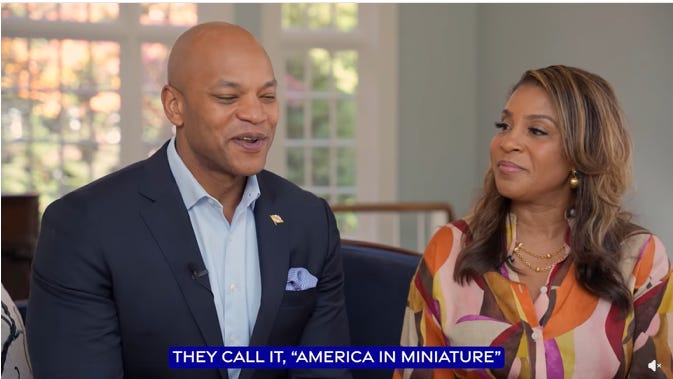
“When he decided to run, I was like, this was really my wheelhouse,” she told Vogue. “I was a thousand percent in.” Vogue
The Governor’s Office describes her as one of the architects of the 2022 campaign. That is an unusually substantive description for a first spouse and it reflects what Maryland’s political observers could see.
Dawn was not simply introducing her husband at rallies. She was lending the campaign her relationships, credibility and institutional memory. Office of the First Lady
After the election, Maryland Matters noted that her former colleagues and political contacts had served Wes Moore well because the governor-elect did not initially have a large group of close advisers with deep Annapolis experience. Maryland Matters
That may be the clearest evidence of her political importance.
She helped connect the promise of Wes Moore to the people who understood how Maryland government and Democratic politics actually worked.
Oprah Winfrey’s endorsement brought national electricity.
Dawn Moore helped make sure the campaign was plugged into a Maryland outlet.
Turning Government House Into Political Real Estate
When Wes Moore was inaugurated on January 18, 2023, Dawn Moore became Maryland’s first Black First Lady.
She immediately began changing the meaning of the space she occupied.
Government House is a residence but it is also one of Maryland’s most valuable instruments of soft power. Invitations create access. Receptions build relationships. Cultural programs communicate values. A guest list can reveal who an administration considers important long before a press release does.
Moore calls it the “people’s house.” She has opened it to arts, educational, religious and LGBTQ organizations while introducing artwork and historical references that better reflect Black Marylanders.
A portrait of Frederick Douglass greets visitors. A space has been designated the Tubman Room. Works by artists including David Driskell, Derrick Adams and Roberto Lugo have expanded the stories told inside the residence.
This is not merely interior decoration.
When Maryland’s first Black First Family places Frederick Douglass where visitors cannot overlook him, it makes an institutional declaration: Maryland’s official history will no longer be presented as though only one group built it.
Dawn Moore understands that power is not exercised only through budgets and legislation. It is also exercised by deciding who is welcomed, who is displayed and whose history becomes part of the room.
A First Lady With a Policy Portfolio
Moore has organized her work around military families, children’s mental health, women’s economic empowerment and access to arts and culture.
These priorities are connected to her life rather than selected from a ceremonial menu.
She is the wife of a combat veteran. She is raising two children under intense public scrutiny. She studied women’s issues at the University of Maryland and grew up in a home filled with music and performance.
Moore has partnered with Blue Star Families and the Children’s Mental Health Matters campaign. She supports Maryland’s cultural institutions and serves on the board of Baltimore Center Stage. She also testified in support of legislation permitting employers to create hiring preferences for military spouses.
A governor’s spouse holds no independent constitutional authority. Dawn Moore cannot sign a bill, issue an executive order or direct a state agency.
Her influence operates differently.
She can convene decision-makers, attract financial support, elevate overlooked issues and introduce organizations to audiences that might otherwise remain inaccessible.
That is soft power but soft should never be confused with insignificant.
Cashmere is soft too. It still costs money.
The Private Battle She Made Public
Behind Moore’s disciplined public presence is a health struggle she kept private for many years.
She was diagnosed with multiple sclerosis in her late twenties after experiencing double vision, loss of taste and changes in her gait.
In 2023, she disclosed that she had lived with MS for more than 20 years and said the disease was in remission. Moore explained that she had initially hesitated to speak publicly because other people had experienced more debilitating forms of the illness.
She eventually shared her story to challenge assumptions about living with MS and other autoimmune conditions. Office of the Governor, WUSA9
The disclosure revealed something the polished photographs could not.
While building a career, supporting campaigns, sustaining a marriage and raising children, Dawn Moore was also living with the uncertainty of a chronic neurological illness.
Her grace did not come from an absence of difficulty.
It came from discipline practiced in its presence.
The Inauguration as an Economic Statement
Following the election, Moore chaired the Moore-Miller Inaugural Committee.
According to the National Governors Association, the committee’s inclusive contracting strategy supported 34 jobs involving minority-owned, women-owned and locally owned businesses and generated more than $1.5 million in labor income. Black-owned businesses reportedly experienced a 30 to 40 percent increase in activity during inauguration week. National Governors Association
An inauguration could have been treated as an expensive victory party for political insiders.
Dawn Moore treated it as an economic-development opportunity.
That is the difference between attending an event and understanding what an event can do.
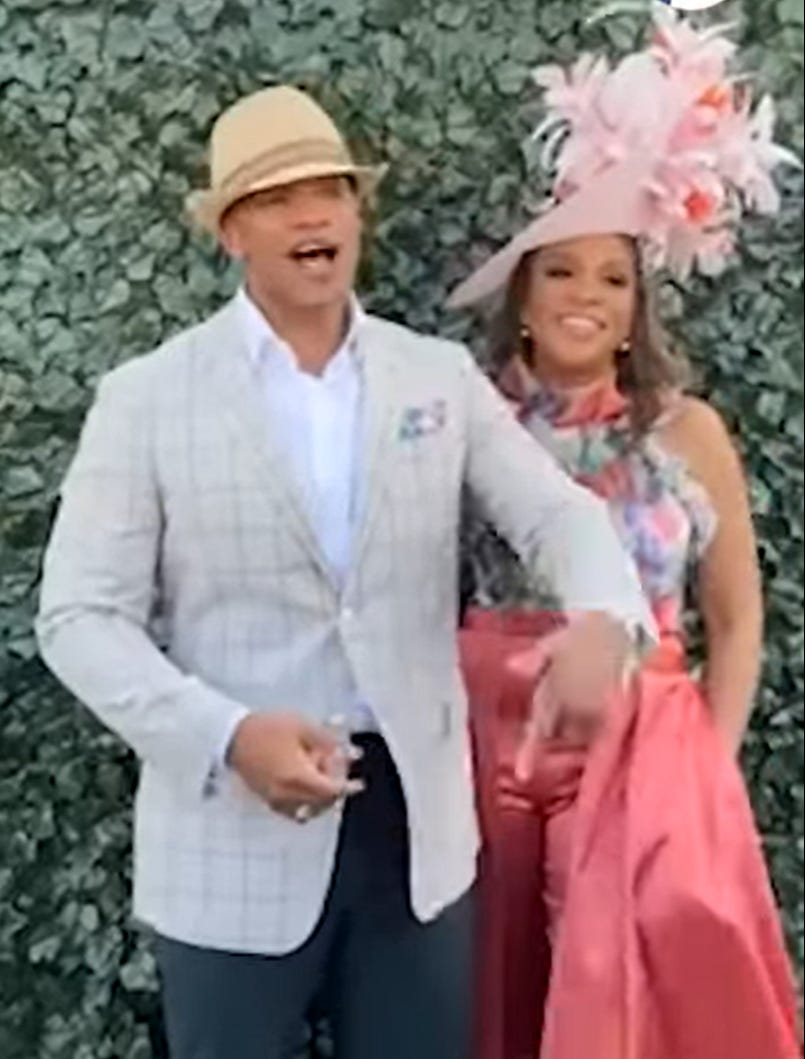
She now serves as co-chair of the Preakness Festival, bringing government, tourism, business and culture together around one of Maryland’s most recognizable institutions.
Her expertise in fundraising, event production and coalition building makes the position a continuation of her political work rather than a decorative appointment.
The Political Dynamo in Pumps
Calling Dawn Moore the “power behind the throne” would be tempting but wrong.
First, Maryland does not have a throne.
Second, that tired phrase reduces an accomplished woman to a mysterious figure whispering instructions into a powerful man’s ear.
Dawn Moore’s résumé is neither mysterious nor dependent on whispers. It is public, professional and measurable.
She worked in Maryland government before Wes Moore became a political candidate. She helped manage campaigns before he ran one. She had relationships in Annapolis before he needed them. She understood Prince George’s County politics, statewide coalition building and executive-branch operations before her family moved into Government House.
The available evidence does not establish that she secretly controls appointments, dictates policy or runs the administration. Claims of that nature would require proof.
What the public record establishes is powerful enough: Dawn Moore is a veteran strategist, fundraiser, connector and civic leader whose experience helped make the Moore administration politically possible.
She can host the reception, understand the donor, recognize the county leader, discuss the policy and read the room. She moves comfortably among campaign headquarters, nonprofit boardrooms, arts institutions and the formal parlors of Government House.
That is not simply elegance.
That is political fluency.
Dawn Flythe Moore did not become important when Maryland gave her the title of First Lady. The title finally gave Maryland permission to notice how important she already was.
She is the daughter of a crane operator and a music teacher. A product of Queens, organized labor and public education. A University of Maryland graduate. A woman living with multiple sclerosis. A mother, wife, campaign architect and veteran of Annapolis politics.
She is Maryland’s First Lady.
She is also a political dynamo in pumps.
Sources
Official and Government Sources
Maryland State Archives: Dawn Chanté Flythe Moore biography
Maryland State Board of Elections: 2004 Democratic National Convention delegate results
Office of the First Lady, State of Maryland
Office of the Governor: Dawn Moore shares her multiple sclerosis journey
National Governors Association: Dawn Moore
News and Political Reporting
The Baltimore Banner: Dawn Moore and the Government House art collection
Capital News Service: O’Malley’s staff and Maryland political appointments
Capital News Service: Maryland convention delegate absent in Boston
Maryland Matters: Speculation on Wes Moore’s administration and advisers
WUSA9: Dawn Moore discusses living with multiple sclerosis
Interviews and Profiles