

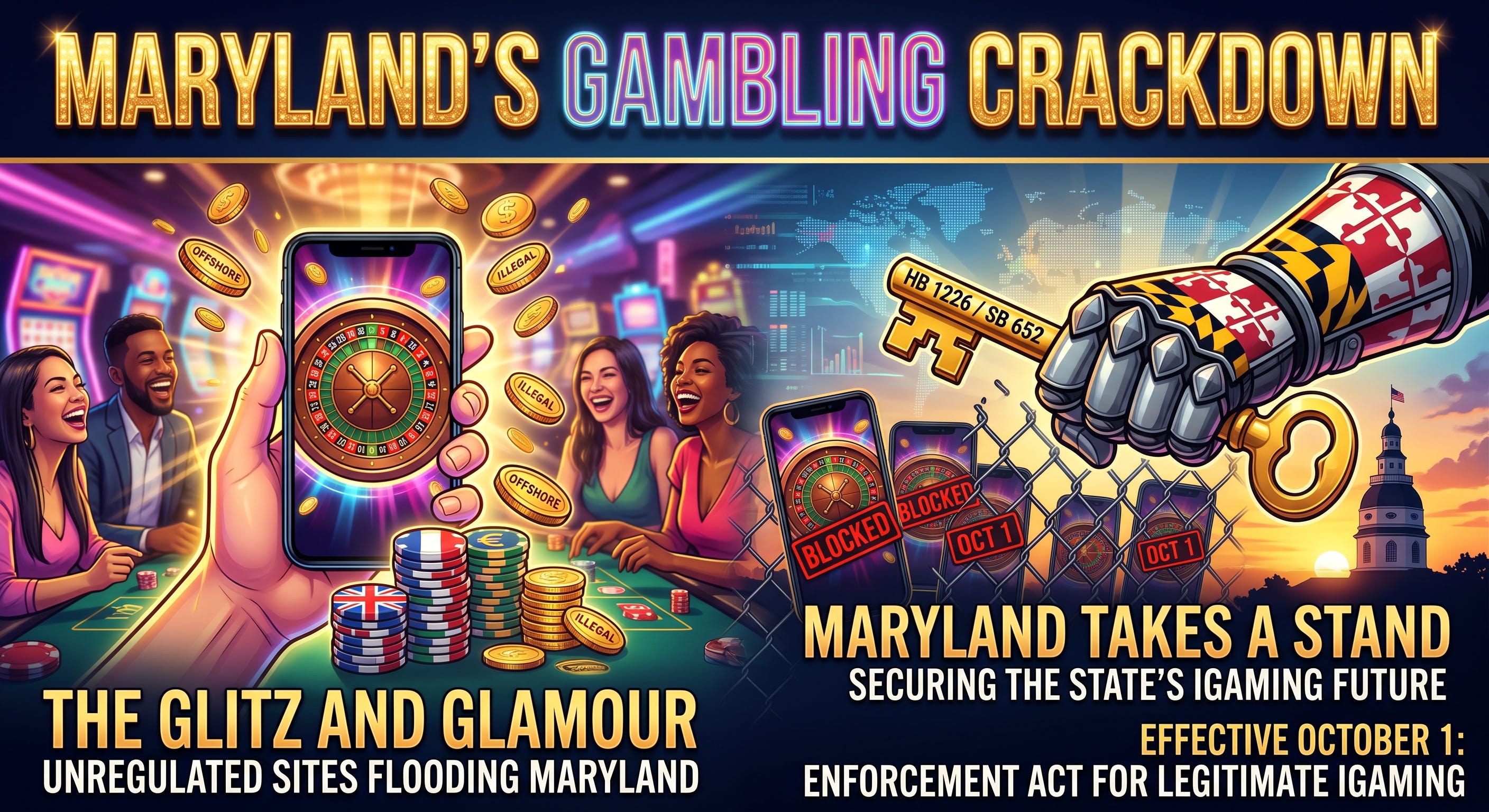
The legislative trail reveals that major regulated operators—led by the Sports Betting Alliance (which represents heavyweight platforms like FanDuel, DraftKings, and BetMGM)—were front and center submitting testimony in support. Licensed operators wanted to plug the black-market drain on local tax dollars and market share. Financial and technology advocates, like the Maryland Bankers Association represented by Evan Richards, engaged directly to iron out execution details around liability and payment transaction blocking.
The Annapolis Blueprint: Who Pushed HB 1226 Across the Line
A policy shift of this magnitude rarely happens by accident. The Maryland Illegal Online Gambling Enforcement Act was driven through the General Assembly by key legislative leaders who recognized that protecting the state’s digital border is essential to securing its fiscal future.
Leading the charge in the House, Delegate J. Sandy Bartlett (D-Anne Arundel)—Vice Chair of the House Judiciary Committee—co-sponsored HB 1226. Delegate Bartlett handles complex statutory mechanics with sharp precision, steering the enforcement tools smoothly through committee. She was joined by Delegate Frank M. Conaway Jr. (D-Baltimore City). Beyond his distinctive, unfiltered worldview, Conaway remains a remarkably effective legislator who quietly knows how to move critical policy through the chamber.
On the Senate side, Vice Chair of Judicial Proceedings Senator Jeff Waldstreicher teamed up with Senator Chris West to shepherd the cross-filed SB 652. Legal insiders across the Senate continuously point out that Waldstreicher is easily the sharpest legal mind in the entire chamber. While Senate leadership dynamics often lean heavily into regional, gender, and racial balancing when handing out committee chairs, Waldstreicher’s intellectual heavy lifting in Judicial Proceedings remains the backbone of complex state legal policy.
Working alongside Attorney General Anthony Brown’s office and major industry stakeholders—including the Sports Betting Alliance representing regulated giants like DraftKings, FanDuel, and BetMGM—these lawmakers built a clean regulatory standard.
This in-depth reporting and analysis is available exclusively to paid subscribers of The Maryland Wire. To read the rest of this article and access our full archive of executive briefings and investigative reporting, upgrade your subscription below.
The State’s Strategy: Squeezing the Offshore Supply Chain
When dealing with illegal online casinos and sportsbooks operated out of off-jurisdiction havens (such as Curaçao, Costa Rica, or Antigua), the state faces a stark reality: Maryland state law enforcement cannot serve a warrant or enforce a subpoena on an offshore entity that ignores international treaties or U.S. tariffs.
Instead of chasing bad actors overseas, Maryland is turning to a chokepoint strategy:
Targeting the Domestic Infrastructure: The new law empowers the Office of the Attorney General (OAG) to issue administrative Cease and Desist orders not just to the illegal operators, but to the middleware—the web hosts, domain registrars, geofencing providers, and advertising platforms facilitating access.
Financial Chokeholds: Under the statute, payment processors, credit card networks, and banks face formal notification to block transactions to flagged accounts. If an offshore site cannot process a card transaction or clear a wire, its local business model collapses.
Consumer Protection Framework: Violations fall under the Maryland Consumer Protection Act as unfair or deceptive trade practices, giving the OAG civil and criminal tools to freeze assets, claw back illicit profits, and issue ex parte injunctions.
The Viewpoints: How Key Players Are Positioning
1. The Brick-and-Mortar Casinos (MGM National Harbor, Live! Casino, Horseshoe, etc.)
The Reality: Maryland’s commercial casinos watched legislative efforts to legalize full iGaming (online slots and table games) stall out.
The Stance: Land-based operators view the October 1 enforcement law as a necessary defense. Unregulated offshore sites and unregulated “sweepstakes-style” platforms drain potential foot traffic and gaming volume without paying state taxes or contributing to local education funds. Shutting down black-market digital leaks protects their physical floors and keeps mobile sports betting dollars within authorized, licensed channels.
2. The Licensed Gambling Platforms & Industry Lobbyists
The Reality: Licensed operators pay state tax rates and enforce mandatory responsible-gaming controls.
The Stance: Through advocacy groups like the Sports Betting Alliance, legal sportsbooks strongly backed aggressive action against grey-market and black-market operators. Every dollar diverted from an offshore book to a regulated platform increases taxable handle and keeps the market clean.
3. The Banking & Fintech Compromise
The Strategy: Financial advocates, led in committee hearings by the Maryland Bankers Association, actively negotiated implementation details. Financial institutions worked to ensure clean statutory wording so banks aren’t penalized when shutting down complex, mislabeled transaction attempts.
4. The Government Relations Angle & Long Game
The Long Game: Lobbyists pushing for full iGaming know they cannot win a statewide referendum in future sessions if lawmakers believe the online space is an unpoliced Wild West. By helping the state clean up illegal online operators now, advocates build the regulatory argument that Maryland can safely manage, tax, and police a fully legalized online casino market down the road.