

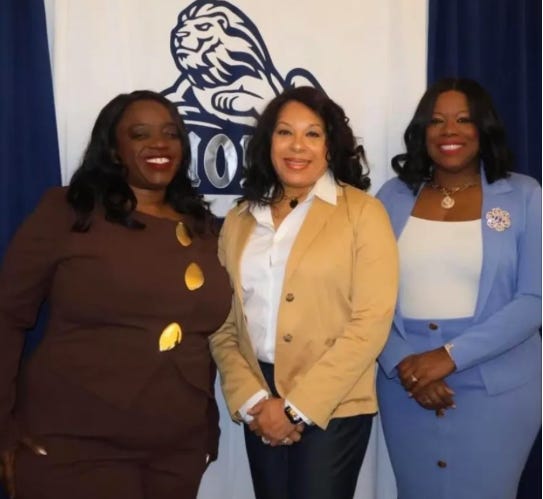
The Politically Connected Housewife Who Cooked Her Way to the Council
How Danielle Hunter Went From Neighborhood Hostess to Prince George’s County’s Newest Power Player
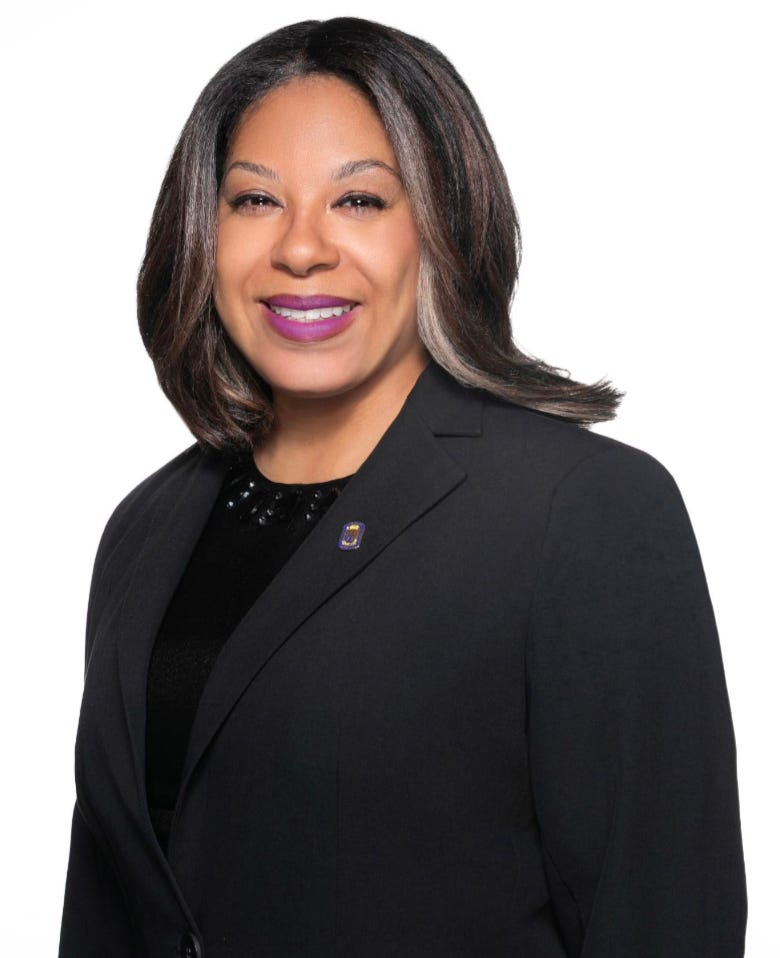
When the Prince George’s County Council convened Friday to fill the District 6 vacancy left by Wala Blegay’s elevation to an at‑large seat, even seasoned political hands were caught off guard by the outcome. Out of nearly two dozen applicants, the council selected Danielle Hunter, a woman who—until very recently—was known far more for her hospitality than for any public-facing political résumé.
Hunter’s appointment was framed by her best friend County Executive Aisha Braveboy as the elevation of a community servant: someone who buys winter coats for schoolchildren, shows up for seniors, and “commits her money, her time, her resources, her heart, her love to her community”. All of that may be true. But it is only part of the story.
Because long before she was sworn in, Hunter had already become a quiet but consequential figure in the county’s political orbit—one whose kitchen table, living room, and dinner parties became informal staging grounds for campaigns, alliances, and the subtle choreography of Prince George’s County power.
A Housewife With Nerve — and a Guest List
Hunter first appeared on the political radar not through a campaign job or a board appointment, but through something far more intimate: she opened her home.
During the 2024 U.S. Senate primary, she hosted a gathering for David Trone, a bold move in a county where Angela Alsobrooks was not just the favorite but the hometown executive. For a politically unaffiliated “housewife,” as some described her at the time, it was an unusually daring act. But because she wasn’t a known operative, it was chalked up to personal preference rather than political rebellion.
Still, people noticed.
The Braveboy Connection
Hunter’s real entrée into the county’s political bloodstream came during Aisha Braveboy’s campaign for County Executive. While she held no formal title, her home became a recurring venue for campaign meetings, strategy sessions, and the kind of off‑the‑record conversations that shape the emotional and interpersonal core of a political operation.
Multiple campaign insiders—speaking broadly and anonymously—describe Hunter’s home as a place where volunteers, staff, and loyalists gathered for meals, planning, and morale‑building. These weren’t fundraisers or public events. They were the private, trust‑building spaces where campaigns become families.
And that matters, because some of those same insiders now feel deeply betrayed.
The Disappointed Loyalists
A significant bloc of Braveboy supporters—people who volunteered for months, in some cases more than a year—believed they were being groomed for county jobs once she won. When the administration took office, many were told the positions they expected were going to someone else. The emotional fallout was severe: people who had given their time, labor, and loyalty walked away feeling misled.
This group is not loud, but it is real. And it is watching.
Their recollections of Hunter’s role are consistent: she was present, she was welcoming, and she was close enough to the campaign’s inner workings to be seen as part of the trusted circle. Whether she sought that role or simply offered her home is almost beside the point. In politics, proximity is power.
From Hostess to Gatekeeper
What makes Hunter’s appointment especially notable is that she was already serving as Director of Appointments for Braveboy’s administration—a position that places her at the center of who gets hired, who gets elevated, and who gets access.
That job alone would have made her a quiet but influential figure. Now, as the District 6 councilmember, she moves from behind-the-scenes facilitator to public decision-maker.
It is a remarkable ascent:
- No prior elected office.
- No long résumé of board appointments.
- No public-facing political identity.
- But a deep well of private relationships, hospitality-driven trust, and strategic proximity.
A New Kind of Insider
Prince George’s County has long produced political figures who rise through traditional channels—activism, civic associations, party committees, or long apprenticeships in Annapolis. Hunter represents something different: the social insider whose influence grows through networks, not titles.
Her appointment signals that in today’s Prince George’s County, political capital can be accumulated not only through legislation or organizing, but through something as simple—and as powerful—as opening your home.
Whether Hunter becomes a transformative representative for District 6 or a loyal extension of the executive branch remains to be seen. But one thing is clear: she didn’t come out of nowhere. She came from the kitchen table where the county’s next generation of political stories was already being written.