


THE NEW EASTSIDE: WHAT REAL POLITICAL POWER LOOKmS LIKE
By Barry O’Connell — Everybody’s Maryland Politics
I’ve spent most of my adult life watching politicians talk about “bold ideas” while doing everything possible to avoid the hard decisions that bold ideas require. That’s why I keep coming back to something I saw up close as a teenager — something that shaped how I think about politics, leadership, and the difference between people who hold office and people who actually use power.
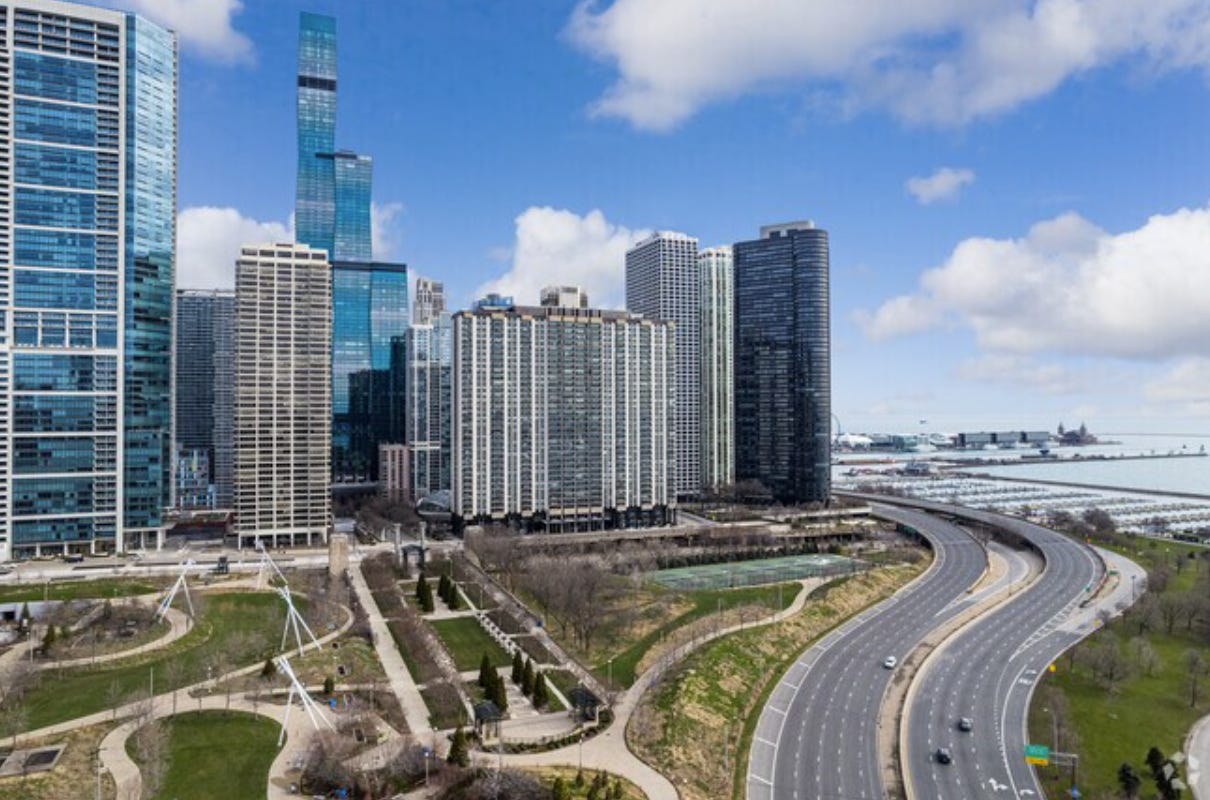
In 1973 and 1974, I was a junior at Gordon Tech in Chicago, living with my aunt and uncle in the only residential tower east of Lake Shore Drive — 400 East Randolph. It stood alone on a man‑made peninsula of broken concrete and old rail fill, a solitary building surrounded by 83 acres of nothing. No skyscrapers. No Millennium Park. No Lakeshore East. Just rubble, tracks, and the lake.
And from that unlikely vantage point, I watched one of the most ambitious urban development projects in American history get negotiated — not in City Hall, not in a committee room, not in front of cameras — but in my aunt and uncle’s living room.
This is the political story behind the New Eastside.
And it’s a lesson in what is possible when leaders stop worrying about what’s easy and start worrying about what’s necessary.
I. The Political Crisis Nobody Wanted to Admit
Chicago in the early 1970s was staring down the same barrel that would later hollow out Detroit, Cleveland, St. Louis, and Baltimore. The suburbs were booming. Downtowns were emptying out. Middle‑class families were fleeing. And the tax base was evaporating.
Mayor Richard J. Daley — the original one, the real one — understood something most modern politicians still refuse to say out loud:
> A city dies when the middle class decides it no longer belongs to them.
Daley wasn’t sentimental about it. He wasn’t ideological about it. He was practical in the way only a man who grew up in Bridgeport could be practical. He knew Chicago needed a downtown where people actually lived, not just worked. A place where families would move in, not move out. A place that would anchor the city’s tax base for the next fifty years.
And the only land big enough to do it was the Illinois Central rail yard — 83 acres of prime downtown real estate sitting empty because nobody could agree on what to do with it.
II. The Railroad With Assets It Couldn’t Touch
My Uncle Bob was the CFO of the Illinois Central Railroad. He and Bill Johnson had come over from Railway Express with a mandate: take the IC’s enormous land holdings, convert them into cash, and build a modern conglomerate. That’s how Whitman Corporation was born — the parent company of everything from Pepsi bottlers to a pantyhose manufacturer to a Mexican food company. The name “Whitman” came from focus groups who recognized the Whitman’s Sampler candy box.
But the railroad itself was trapped.
Federal law capped railroad profits at around 2%, a political payoff to rural Dixiecrats who wanted cheap freight rates for farmers. The IC was asset‑rich and cash‑poor — sitting on land worth hundreds of millions but unable to develop an inch of it without city approval.
And the city wasn’t approving anything.
Preservationists opposed building east of Lake Shore Drive.
Aldermen wanted concessions.
Civic groups wanted hearings.
Reporters wanted leaks.
State legislators wanted influence.
Federal regulators wanted oversight.
It was a political chokehold.
Nobody could move.
III. The Lone Tower That Froze a Decade
400 East Randolph — my temporary home — was built in 1959. It was so controversial that it froze development east of the Drive for more than a decade. Preservationists treated it like a betrayal of the lakefront. Developers treated it like a beachhead. Politicians treated it like a live grenade.
The result was paralysis.
For years, that building stood alone on a peninsula of fill, surrounded by nothing but rail yards and lake. I could walk out the basement door by the old German submarine and be at the water’s edge. That’s how close it was.
Everything around it was politically untouchable.
Daley wasn’t trying to build skyscrapers. He was trying to save the city.
He saw what was coming:
If Chicago didn’t create a new downtown neighborhood — a real one, with residents, shops, parks, and offices — the suburbs would take everything. Jobs. Families. Revenue. Influence.
Daley’s fear wasn’t crime or taxes.
His fear was irrelevance.
He needed a political counterstrike.
He needed the Illinois Central land.
And he needed the railroad to play ball.
But the public process was impossible.
Every meeting turned into a circus.
Every alderman wanted a piece.
Every civic group wanted a veto.
Every reporter wanted a scandal.
So Daley did something modern politicians would never dare.
He bypassed all of them.
V. The Living Room Where the City Was Rebuilt
This is the part no historian can write, because they weren’t there.
Daley would show up at our apartment — no entourage, no press, no ceremony — and sit down in the living room with my Uncle Bob. And the two of them would hash out the future of Chicago like two men negotiating a truce.
Sometimes they argued.
Sometimes they shouted.
Sometimes they paced the room like boxers between rounds.
But they kept talking.
Because they both understood the stakes.
Daley needed a downtown that would keep Chicago alive.
The railroad needed a way to monetize its land.
And neither of them could get what they needed through the public process.
So they did it the old-fashioned way:
privately, bluntly, and with the door closed.
This is the political lesson your readers will understand immediately:
> Big things only happen when the real negotiations happen where the cameras aren’t.
VI. The Deal That Broke the Logjam
The agreement they hammered out did four politically brilliant things:
1. It unlocked the 83 acres.
The IC could finally develop the land and convert it into cash.
2. It created a new downtown neighborhood.
Not just offices — but residences, parks, retail, and a multi-level street grid.
3. It fixed a public safety disaster.
The dangerous right-angle turn on Lake Shore Drive at the river — a daily crash site — was eliminated by extending the shoreline outward and curving the Drive around the new development.
4. It preserved the lakefront politically.
Daley insisted on parks, public access, and open space.
He didn’t “sell the lakefront.”
He expanded it.
VII. The Engineering Was Hard — The Politics Were Harder
Decking over active rail lines?
Hard.
Building multi-level streets?
Hard.
Creating a new shoreline?
Hard.
But none of it was as hard as the politics.
Daley had to:
- Neutralize preservationists
- Outmaneuver aldermen
- Keep the press in the dark
- Manage state regulators
- Keep federal regulators at bay
- Deliver a win for the railroad
- Deliver a win for the city
- Deliver a win for the future
This wasn’t a development project.
It was a political masterclass.
VIII. The Outcome: A City Saved
Today, the New Eastside is one of the most successful urban redevelopment districts in the United States. It’s a thriving residential neighborhood, a major employment center, and a tax engine that has paid dividends for half a century.
Daley didn’t just build a neighborhood.
He prevented Chicago from becoming Detroit.
He kept the middle class downtown.
He kept employers downtown.
He kept the tax base downtown.
He kept the city alive.
And he did it by refusing to accept what was “practical,” “easy,” or “politically safe.”
IX. The Lesson for Modern Politics
This is the part I want my readers to hear:
> Real political leadership means doing the hard thing, the controversial thing, the necessary thing — even when it can’t be done in public.
Daley didn’t govern by press release.
He governed by results.
He didn’t chase applause.
He chased outcomes.
He didn’t fear controversy.
He feared decline.
And he didn’t wait for consensus.
He created it.
The New Eastside isn’t just a Chicago story.
It’s a political story about what is possible when leaders stop managing the news cycle and start managing the future.