

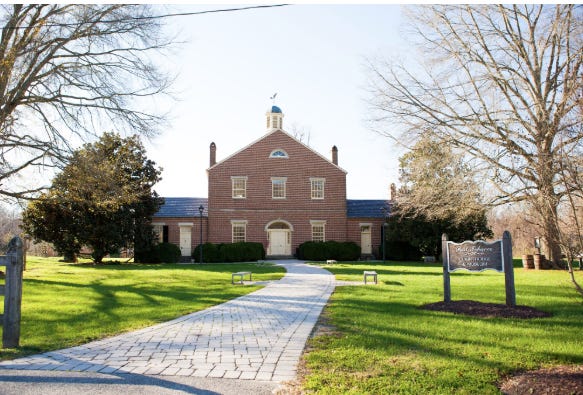
Charles County’s 2026 election cycle
Charles County’s 2026 election cycle is already heating up—and while it’s still early, the candidate filings are starting to sketch out the local battlefield. Here’s a breakdown of what’s in motion so far:

🗳️ County-Level Races in Play
According to the Maryland State Board of Elections, several key positions are up for grabs in Charles County:
Commissioner President
- Lenny Proctor (D) has filed to run.
- Amanda Stewart (D) has also filed—suggesting a potential primary showdown between two active Democrats.
County Commissioners (Districts 1–4)
All four districts have active Democratic candidates filed:
- District 1: Gilbert “BJ” Bowling
- District 2: Brenda Thomas and Donta Varney (potential primary here)
- District 3: Courtney J. Edmonds
- District 4: Ralph E. Patterson II
So far, no Republicans or independents have filed, but that could change as the deadline approaches.
Other County Offices
- State’s Attorney and Clerk of the Circuit Court: No candidates have filed yet.
- Board of Education: Not listed in the current filings, but typically appears later in the cycle.
🔍 Who's Bowing Out?
As of the latest update (September 1, 2025), no incumbents have publicly announced they’re not seeking reelection. That said, the absence of filings for certain offices may hint at retirements or late entries.
🏛️ State-Level Races
Maryland State Senate and House of Delegates seats are up in 2026. These races will be crucial, especially in districts wherel demographic shifts have altered the playing field.
🗺️ Election Logistics
- Primary Election: June 23, 2026
- General Election: November 3, 2026
- Polling Place Change: Precinct 6-1 will temporarily move to St. Joseph’s Parish Center due to renovations at McDonough High School
Charles County is a fascinating case study in suburban transformation, demographic realignment, and political recalibration. Let’s break it down across three axes: 🗳️ Election cycles, 🏘️ Population and housing trends, and ⚖️ Shifts in political power and party dynamics.
🗳️ Election Cycles: 2014 → 2018 → 2022
2022
- Democrats dominated countywide: Wes Moore (D) won 68.5% of the gubernatorial vote.
- Steny Hoyer (D) retained his congressional seat with 69.2%.
- Republicans consistently hovered around 30% in major races, but didn’t win any county-level offices.
2018
- Reuben B. Collins II (D), a Black Democrat, won County Commissioner President with 43,098 votes vs. 18,442 for the Republican.
- All four commissioner districts went to Democrats, many of them Black candidates.
- Republicans were largely absent from down-ballot races—no GOP candidates for State’s Attorney, Sheriff, or Clerk of Court.
2014
- Peter Murphy (D), a white Democrat, won Commissioner President with 29,586 votes.
- Democrats swept all commissioner districts, but the margins were narrower than in 2018.
- GOP candidates were more visible, but still unsuccessful in countywide races.
📊 Trendline: From 2014 to 2022, Charles County has become more solidly Democratic, with increasing representation by Black Democrats and diminishing Republican competitiveness.

🏘️ Population Growth & Housing Boom
- Charles County’s population grew from 146,551 in 2010 to over 168,000 by 2025, a 15%+ increase.
- Waldorf and Bryans Road have seen explosive townhouse and single-family development, driven by:
- Lower housing costs than Prince George’s or Montgomery.
- Larger lots and newer construction.
- Commuter access to D.C. via Route 5 and 301.
🧭 Migration Patterns:
- Many new residents are Black middle-class families relocating from Prince George’s County.
- This has reinforced Democratic dominance, but also shifted the party’s internal dynamics—more progressive, more diverse, and less reliant on legacy white Democratic leadership.
⚖️ Political Power & Party Dynamics
Black Democratic Ascendancy
- The rise of leaders like Reuben Collins and Amanda Stewart reflects a generational and demographic shift.
- Black Democrats now hold most key county offices, and their base is expanding with new arrivals.
White Democrats
- Still present, but increasingly challenged in primaries and less dominant in party leadership.
- Some have pivoted to coalition-building or focused on nonpartisan roles (e.g., education boards).
Republicans
- Marginalized in countywide races.
- Occasionally competitive in state legislative districts, but rarely win.
- Their base is concentrated in southern and rural precincts, but shrinking relative to the suburban influx.
🧠 Strategic Takeaway
Charles County is no longer a swing county—it’s a Democratic stronghold, but with internal tensions between old-guard white Democrats and rising Black leadership. The housing boom has accelerated this shift, bringing in voters who are economically stable, civically engaged, and politically assertive.