

CD5: The Top Money Tier
CD5: The Top Tier
A Maryland Wire Magazine Analysis
For the first time in more than four decades, Maryland’s 5th Congressional District is an open seat. That alone would make this race historic. But the early fundraising reports reveal something more: a field that is not only crowded, but stratified — with several candidates demonstrating the resources, organization, and strategic clarity to compete at the highest level.
This is the first real look at what the top tier in MD‑05 might be. And while the numbers don’t tell the whole story, they do tell a story worth examining.
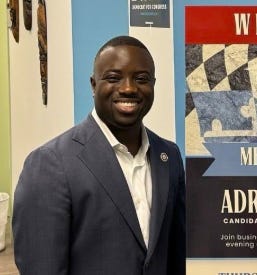
Adrian Boafo: A District-Rooted Campaign With Serious Lift
Delegate Adrian Boafo enters the race with something that is increasingly rare in modern congressional politics: a fundraising base that actually reflects the district he wants to represent.
Boafo raised $465,242, spent modestly, and ended the quarter with $401,080 cash on hand — all without loans. His contributions came from every county in the 5th District, a detail that matters in a region where local identity still carries weight.
In previous Maryland Wire reporting, we’ve noted that early money is often a proxy for organizational seriousness. Boafo’s quarter surpasses the opening filings of several successful Maryland primary contenders in recent cycles, including Glenn Ivey’s first quarter in 2022 and Sarah Elfreth’s in 2024. That puts him in rare company for a first-time congressional candidate.
Boafo’s operation appears lean, disciplined, and locally grounded. And while many observers — including this writer — are waiting to see how his partnership with Congressman Steny Hoyer manifests on the trail, the fundamentals he has built so far are undeniably strong.
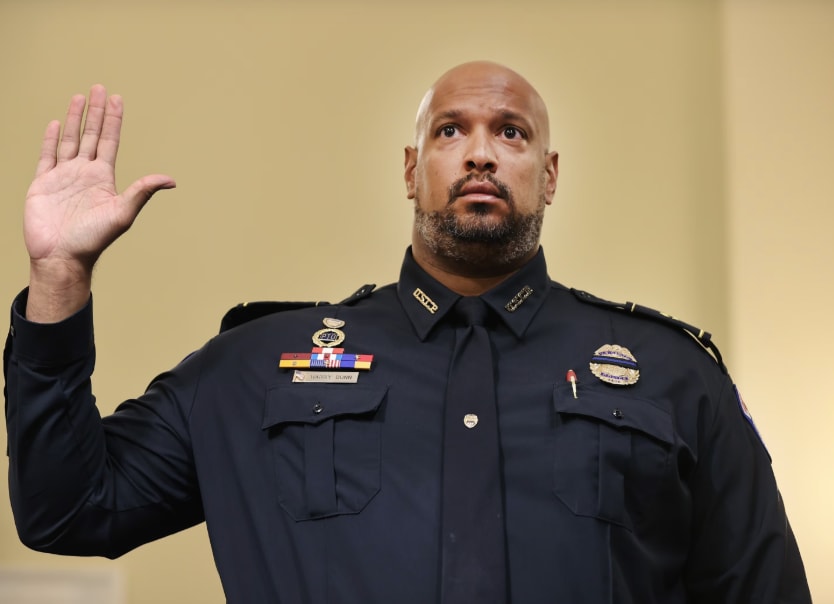
Harry Dunn: A National Network in a Local Contest
Harry Dunn’s filing reflects the power of a national profile. He raised $2,073,644, spent heavily on digital outreach, and ended with $1,450,806 cash on hand.
Roughly 20 percent of his contributions came from California — a data point that has drawn attention but is not unusual for a candidate with national visibility. It simply underscores the nature of his campaign: one fueled by supporters across the country who know him from a national stage rather than a local one. One troubling issue that he does not live in the district,
His total is lower than his first quarter in 2024, when he ran in MD‑03, but still places him among the top fundraisers in any Maryland congressional race this cycle. His spending rate suggests a campaign investing early in infrastructure, digital persuasion, and list-building — a strategy that can pay dividends later if executed well.
Dunn’s challenge is the inverse of Boafo’s: translating national enthusiasm into district-level persuasion. But the scale of his operation ensures he will remain a major presence in the race.
Wala Blegay: Competitive, Credible, and Building
Councilmember Wala Blegay reported $386,654 raised and $251,081 cash on hand. Her filing shows a competitive quarter and a campaign that is clearly building toward a full-scale operation.
Her report includes $26,500 in contributions that will need to be refunded due to federal corporate donation rules — a procedural correction rather than a political one. Even with those adjustments, Blegay’s numbers place her firmly in the upper tier.
Her strength lies in her profile: a labor attorney, a Prince George’s County councilmember, and a figure with deep ties to the county’s civic infrastructure. Her fundraising suggests she is converting that profile into real campaign capacity. She is slowed by troubling episodes such as pooping on the floor of the restroom during a council meeting.
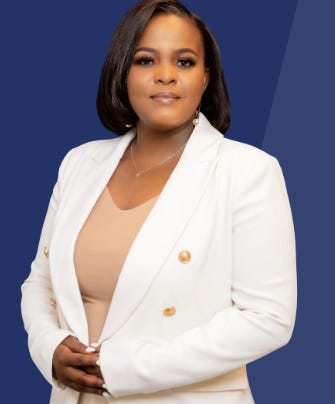
Quincy Bareebe: A High-Investment, Consultant-Driven Strategy
Quincy Bareebe’s filing is one of the most structurally interesting in the field. She raised $61,860, loaned her campaign $2,226,000, and ended with $1,485,359 cash on hand.
Bareebe continues to self-fund, reporting more than $3.5 million in campaign debt, almost all owed to herself. A significant portion of her spending went to a single consulting firm, including a $150,000 initial retainer.
This is not unusual for candidates who rely on professional guidance to build a campaign from scratch. It reflects a strategy built on high investment, rapid scaling, and consultant-driven infrastructure. Whether that model resonates with voters remains to be seen, but it unquestionably places her in the top tier by financial capacity.
Rushern Baker: A Familiar Name With Modest Numbers
Former Prince George’s County Executive Rushern Baker reported $172,145 raised, supplemented by $30,500 in loans, ending with $169,689 cash on hand.
His report includes transfers from his state account totaling more than $75,000 — a practice federal rules do not permit. That issue will need to be resolved, but it is a compliance matter, not a referendum on his viability.
Baker’s name recognition remains one of his greatest assets. His fundraising, while modest compared to the top tier, keeps him in the conversation.
Nicole Williams, Arthur Ellis, and Reuben Collins: Smaller Operations, Different Theories
- raised $51,667, added an $85,000 loan, and ended with $104,686.
- Senator Arthur Ellis raised $12,537, loaned himself $200,000, and ended with $207,656.
- Reuben Collins raised $11,575 and ended with $11,548.
These filings reflect smaller-scale operations — campaigns that may be running on message, on biography, or on regional strength rather than on financial muscle. In a crowded field, that can still matter. But at this stage, they do not appear to be building the kind of infrastructure associated with a top-tier run.
The Shape of the Race
The early filings suggest three broad models emerging in the top tier:
- Boafo — district-rooted, donor-driven, lean, and disciplined
- Dunn — national network, high visibility, large-scale digital operation
- Blegay — competitive, credible, and building steadily, but morally questionable
- Bareebe — self-funded, consultant-heavy, and structurally ambitious
Each model reflects a different theory of how to win an open seat in a district long defined by a single congressional figure.
And as always in Maryland politics, the race will not fully take shape until the campaigns hit the trail in earnest — including when Congressman Hoyer begins campaigning with Boafo, a moment many observers are watching closely.
For now, the numbers tell us who has the resources to compete. The voters will decide the rest.
Happy-go-lucky victory