

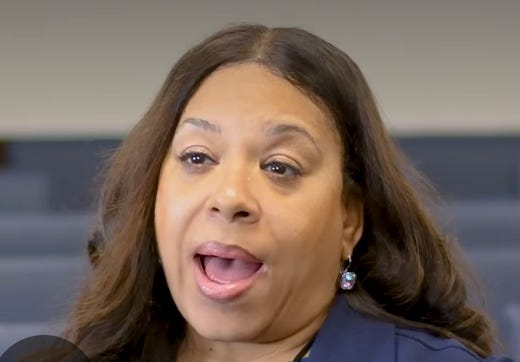
Candidate Hunter For PGC Council is Hiding!
The Candidate Voters Rarely See
An Appointed Incumbent Faces The Test Every Appointed Official Eventually Encounters
By Barry O’Connell
There is a fundamental difference between being appointed to office and being elected to office.
An appointment places someone in a seat.
An election gives them permission to keep it.
That is the challenge currently facing Prince George’s County Councilmember Danielle Hunter.
Hunter entered the District 6 seat through appointment rather than election. There is nothing improper about that. Vacancies occur. Governments fill them. The process worked exactly as intended.
But appointments come with a burden that elected officials do not face.
The voters did not choose you.
Not yet.
EVERY APPOINTED OFFICIAL STARTS WITH THE SAME QUESTION
When voters elect someone, they generally know who that person is.
They have seen the candidate at forums.
They have heard them debate.
They have watched them answer difficult questions.
They have observed how they react under pressure.
Appointed officials do not have that luxury.
Their first campaign is often less about persuading voters and more about introducing themselves to them.
Which is why public forums matter.
VISIBILITY IS THE FIRST JOB OF A CANDIDATE
This election cycle has featured numerous opportunities for candidates to appear before voters.
Forums.
Community meetings.
Candidate nights.
Question-and-answer sessions.
These events are not mere political theater.
They serve an important purpose.
They allow voters to compare candidates side by side and determine who has the strongest grasp of the issues facing their communities.
They also allow voters to test a candidate’s ability to think on their feet.
That is difficult to do when the candidate is not in the room.
INCUMBENCY IS NOT THE SAME THING AS FAMILIARITY
One advantage of appointment is incumbency.
The title.
The office.
The ability to cast votes and participate in official business.
But incumbency alone does not automatically create familiarity with voters.
In fact, many appointed officials discover that voters know surprisingly little about them.
What they stand for.
What they hope to accomplish.
What priorities they would pursue if elected to a full term.
These are questions voters deserve answered directly.
THE QUESTIONS VOTERS SHOULD BE ASKING
This race should not be about personalities.
It should not be about gossip.
It should not be about who supports whom behind the scenes.
It should be about representation.
District 6 voters have every right to hear from the people seeking to represent them.
What is their vision for the district?
What distinguishes them from their opponents?
How would they address public safety?
Economic development?
Housing?
Schools?
Infrastructure?
These questions are not unreasonable.
They are the minimum expectation of democratic accountability.
ELECTIONS ARE INTERVIEWS
At its core, an election is a job interview conducted by thousands of people at once.
Candidates ask voters for trust.
Voters ask candidates for answers.
The process only works when both sides participate.
An appointed incumbent begins with certain advantages.
Name recognition.
Official status.
The visibility that comes with holding office.
But those advantages are meaningful only if they are accompanied by public engagement.
The voters of District 6 will ultimately decide whether they know enough about Danielle Hunter to grant her a full term.
The best way to help them make that decision is simple:
Show up.
Answer questions.
Make the case.
And let the voters decide.
At this point Joel Peebles looks solid to beat the Snack Lady, 2 to 1.