

⚔️ Editorial: The Quiet Battles of Maryland’s Board of Public Works
By Barry O’Connell, Strategic Editorialist
In Maryland, the most consequential fiscal decisions aren’t made in the General Assembly—they’re made by three people seated at a long table in Annapolis. The Board of Public Works (BPW), composed of the Governor, Comptroller, and Treasurer, has the final say on billions in state spending. And while its meetings often pass without fanfare, history reveals moments of sharp conflict, strategic vetoes, and reputational brinkmanship.
🏛️ Schaefer’s Era: The Board as a Blunt Instrument
Governor William Donald Schaefer (1987–1995) treated the BPW not as a check on executive power—but as an extension of it. He used the Board to fast-track infrastructure projects, override legislative hesitations, and reward loyal contractors. His style was unapologetically direct: “Do it now,” he’d bark, and the Board often complied.
Schaefer’s clashes with Comptroller Louis Goldstein were legendary. Goldstein, a fiscal hawk, resisted Schaefer’s aggressive spending, especially on Baltimore redevelopment. Yet Schaefer often prevailed, using the Board’s structure—two votes to win—as a tactical advantage.
> Footnote 1: Biographical overview of William Donald Schaefer’s tenure and use of BPW power
> Footnote 2: Wikipedia entry detailing Schaefer’s roles and political style
> Footnote 3: WBAL tribute highlighting Schaefer’s BPW legacy and “Reach the Beach” program
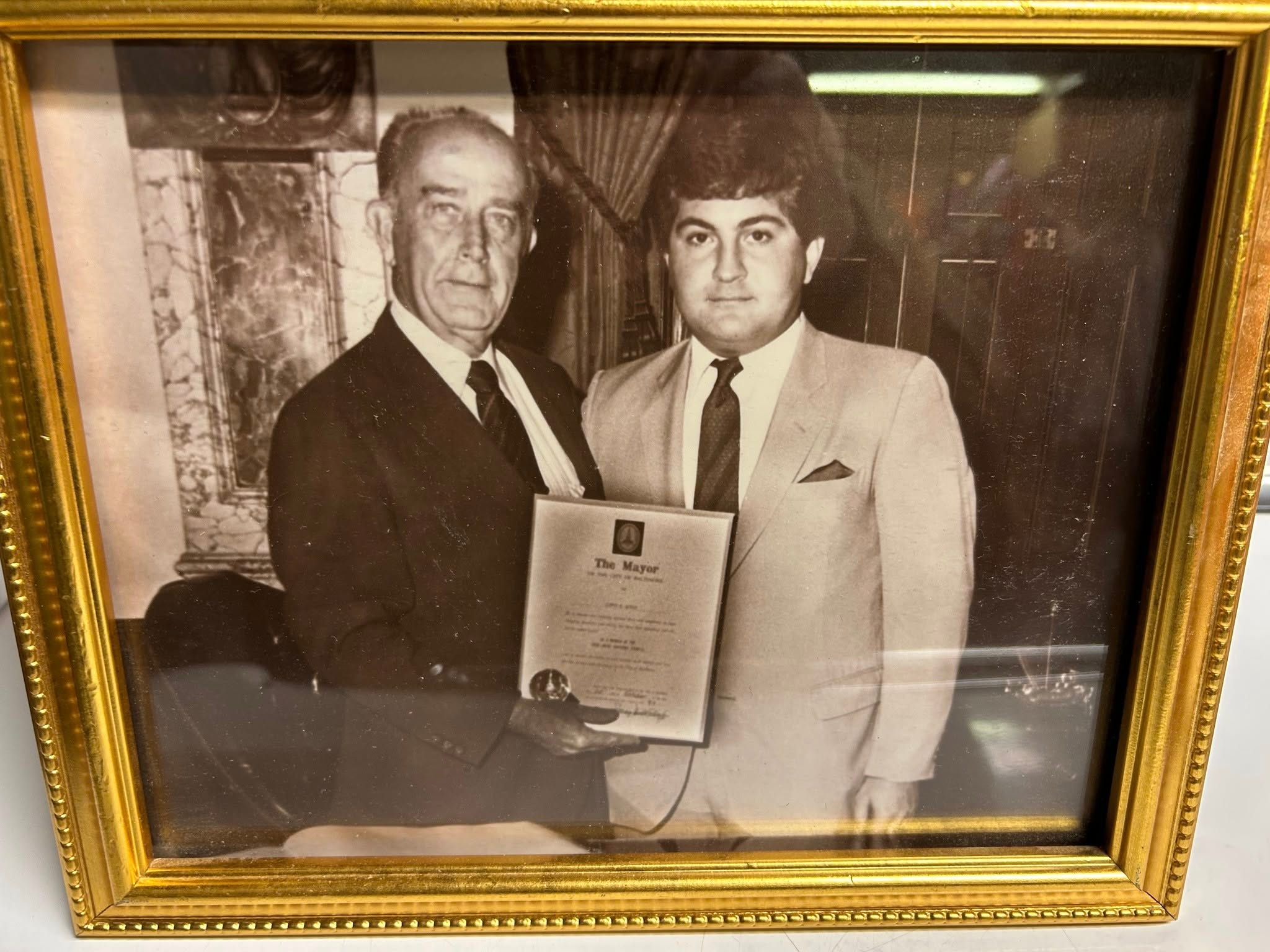
Willian Donald Schaefer and Clemis Kaikis
⚖️ Modern-Day Clashes: Transparency vs. Expediency
Under Governor Larry Hogan, the Board was used to delay school construction funds and block transit projects, often citing fiscal prudence. Hogan’s frequent clashes with Comptroller Peter Franchot revealed deep divides over procurement transparency and minority business inclusion.
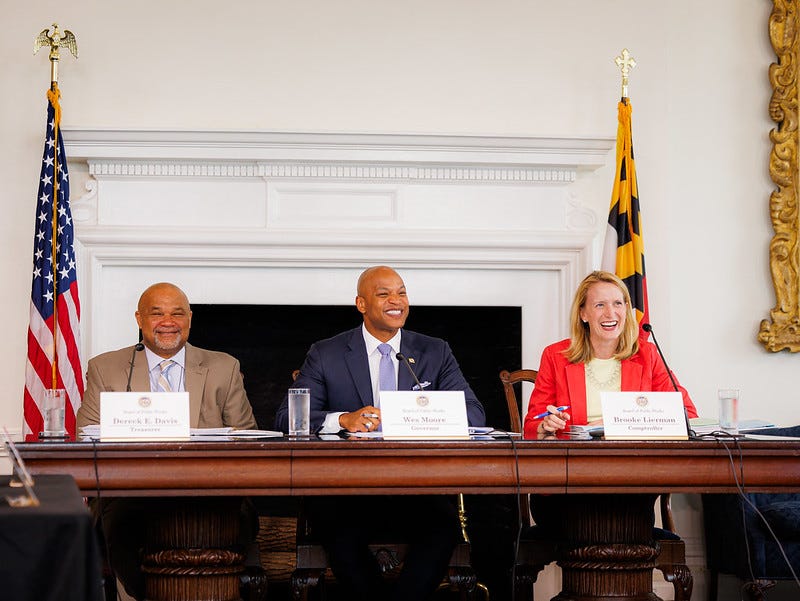
Now under Governor Wes Moore, the dynamic has shifted again. Treasurer Dereck Davis and Comptroller Brooke Lierman have occasionally aligned to push back on Moore’s proposals, particularly around equity in contracting and climate resilience. While Moore emphasizes urgency and vision, Davis and Lierman stress caution and accountability.
> Footnote 4: Overview of BPW structure and responsibilities from the Comptroller’s office
> Footnote 5: Official BPW site with meeting schedules and procurement reports
> Footnote 6: Daily Record article on the launch of the BPW transparency dashboard
> Footnote 7: BizMonthly coverage of the dashboard’s equity and accessibility features
> Footnote 8: PDF summary of BPW’s October 2025 meeting approving $432M in spending
🧠 Why These Battles Matter
The Board of Public Works is more than a procedural checkpoint—it’s a reputational crucible. Decisions made here shape who gets contracts, which communities receive investment, and how Maryland’s values are reflected in its spending. The Board’s structure—three members, two votes to win—means alliances matter more than titles.
Schaefer’s legacy looms large: a governor who bent the Board to his will. But today’s fights are quieter, more strategic, and often rooted in transparency, equity, and fiscal ethics. For editorialists and watchdogs, the BPW remains Maryland’s most underappreciated arena of power.