


It began in a kitchen. Not in Kabul or Managua, but in a modest home where the scent of coffee mingled with the quiet weight of memory. Barry O’Connell was just a boy, sitting at his grandmother’s table, when history cracked open. She spoke of her husband, Tom Conrad, with a bitterness that lingered like smoke: “When all the boys came home from the trenches of France (1919), not Tom. He had to go invade Russia. He spent a year over there before he came home.” That single line, half lament, half indictment, was Barry’s first real brush with the specter of communism.
From that moment, the Cold War wasn’t just a geopolitical abstraction. It was personal. Stalin’s atrocities, the proxy wars, the ideological rot became Barry's moral compass. Barry didn’t just oppose communism; he studied it, tracked it, and eventually fought it.
Nicaragua: The Sugar Packet That Shook a Regime
In the 1980s, Barry found himself deep in the trenches of Reagan-era foreign policy, not with a rifle, but with a press kit. As part of Citizens for America, a shadow network formed after Congress clipped the CIA’s wings, Barry helped raise funds and shape narratives for the Contras, the so-called “brave Freedom fighters” resisting the Sandinista regime.
One night, in a Howard Johnson’s off Interstate 80, Barry’s worldview collided with a sugar packet. Ricardo Z****”, a Guatemalan trade official, waved it in Barry’s face: “You say you’re against the Communists, but you buy sugar from them.” That moment sparked a campaign that reached the White House. Barry’s plea, “the sugar on your breakfast cereal could pay for the bullets to kill a Freedom fighter”. The message helped trigger an economic embargo that choked off food, medicine, and vaccines. Infant mortality spiked. And when Daniel Ortega finally called for elections, he cited the embargo’s toll on children as one of the reasons.
Barry didn’t feel guilt. But he felt something heavier: angst. The kind that lingers when ideals clash with unintended consequences.
🌍 From Managua to the Hindu Kush
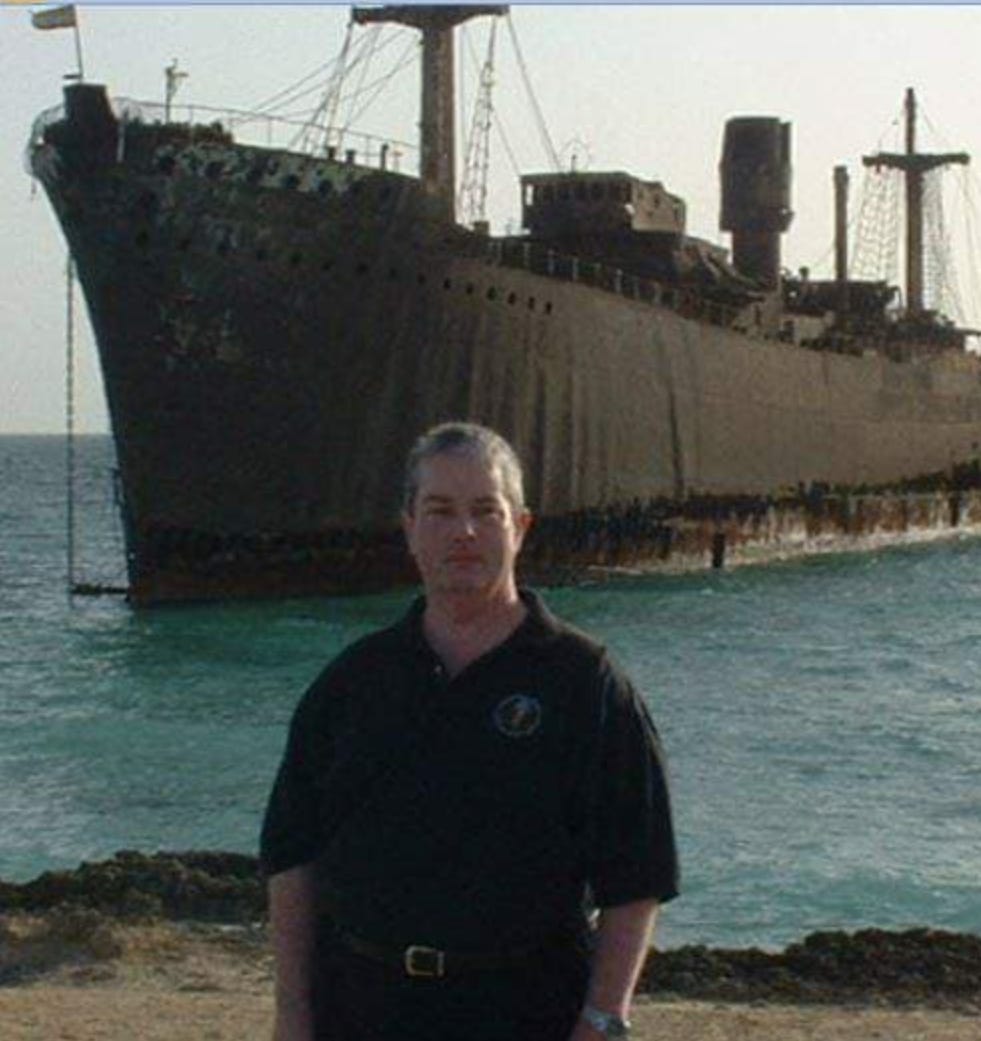
The lessons of Nicaragua followed Barry into the Middle East. Iran. Afghanistan. Places where ideology, tribalism, and foreign meddling collided in unpredictable ways. He became more cautious, more strategic. But the fire nevPersian Gulf, Iran, 2004
Persian Gulf, Iran 2004 at the Greek Freighter
In 2013, after being kicked out of Afghanistan, Barry made a decision: no more foreign adventures. The Cold Warrior turned his gaze inward, to the politics of his home state.


🗳️ Everybody’s Maryland Politics: A New Battlefield
Barry didn’t retire. He recalibrated. He founded Everybody’s Maryland Politics, a Facebook group that now boasts over 7,400 members. It’s not just a forum, it’s a movement. A place where systemic accountability, historical nuance, and sharp critique converge. Barry’s posts blend investigative instincts with theatrical flair, challenging narratives and amplifying voices that too often go unheard.
He’s still fighting communism, But now it’s the kind that hides in bureaucracy, corruption, and ideological laziness. He’s still a Cold Warrior, but older and colder now. Sharper. More deliberate.