


AUTOPSY OF A HATCHET JOB
When Desperate Candidates Do Desperate Things
Disclosure:
Several of the candidates and consultants involved in this press release are people I like, respect, and have known for years. Some are friends. But friendship doesn’t excuse bad work, and what they released today is bad work. It’s a hatchet job — and like most hatchet jobs, it contains elements of truth, stripped of context, fairness, and proportion until the end product bears little resemblance to reality.
This is an autopsy.
1. The Anatomy of a Coordinated Hit
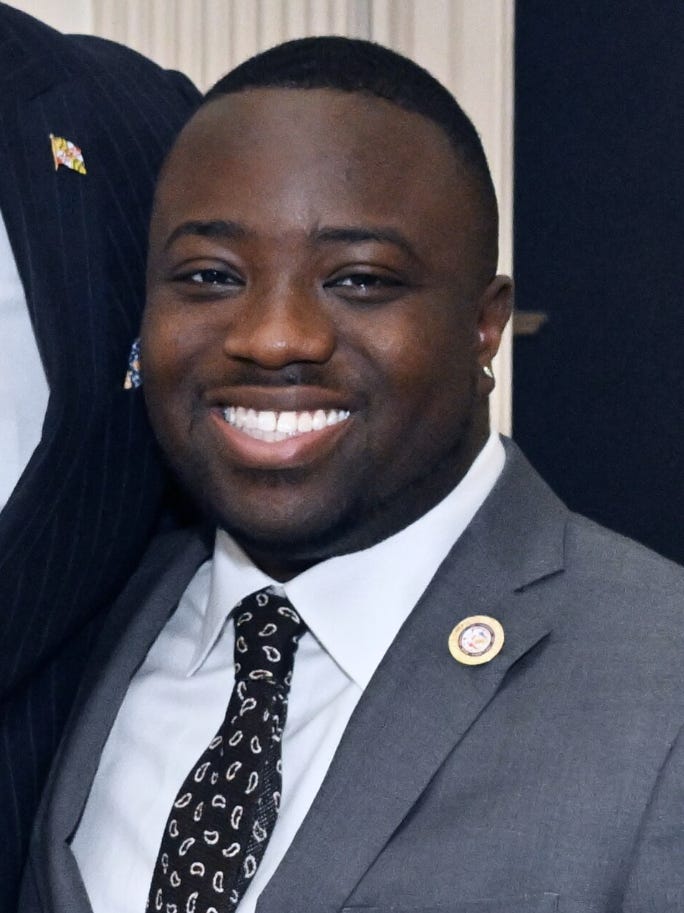
Four campaigns — Baker, Blegay, Bareebe, and Jarin — issued a joint press release accusing Adrian Boafo of everything short of kicking puppies.
The structure is familiar:
- Start with a kernel of truth
- Inflate it
- Remove context
- Add moral outrage
- Hope the public can’t tell the difference
This is the oldest trick in the political book. It’s also the clearest sign of a field that knows exactly what’s happening: Boafo is beating them.
Not because he’s a villain.
Not because he’s a corporate plant.
But because he’s the kind of common‑sense Democrat MD‑05 voters actually want.
And that — not ICE, not Oracle, not data centers — is the real source of their anger.
2. The ICE Claim:
A Truth Fragment Wrapped in Hysteria
Yes, Oracle has federal contracts.
Yes, some of those contracts touch DHS.
No, there is zero evidence that Adrian Boafo had anything to do with ICE operations, ICE technology, ICE procurement, or ICE policy.
The press release never claims he did — because they can’t.
Instead, they imply it.
Implication is the weapon of choice when the facts won’t cooperate.
3. The Lobbyist Claim:
Technically True, Functionally Misleading
Boafo appeared on a federal lobbying disclosure.
He says it was an internal error.
The article they cite acknowledges the dispute.
The press release does not.
That omission is not accidental.
4. The “Tens of Thousands” Claim:
Needs a Calculator
Oracle employees did donate to Boafo.
That’s public record.
But the release never cites:
- the total
- the dates
- the proportion of his fundraising
- whether these donors even work in the same division as the ICE‑related contracts
It’s guilt by association, not evidence of influence.
5. The Financial Disclosure Claim:
True, But Not the Whole Truth
Boafo did omit bonus income on a disclosure form.
He amended it.
The press release leaves out the amendment.
Again: omission is the point.
6. The Polling Claim:
The Most Dishonest Line in the Entire Release
“Polling at just three percent.”
This is the tell.
That “3%” number comes from an early name‑recognition test in a campaign‑commissioned poll — not a ballot test, not a vote share, not a current number.
The only independent poll showed:
- Boafo at 16%
- Everyone else below him
In a 20‑plus‑candidate field, 16% is not weakness.
It’s dominance.
This line alone tells you everything you need to know about the intent of the document.
7. The Data Center Claim: National Narrative, Zero Local Evidence
The release tries to tie Boafo to data centers, AI, and environmental impacts.
Two problems:
1. There is no evidence Oracle has ever built or operated a data center in Maryland.
2. MD‑05 voters do not rank data centers anywhere near the top of their concerns.
This is a Beltway‑Twitter issue, not a district issue.
The far‑left activist lane cares.
The Democratic Socialists care.
A handful of Anne Arundel progressives care.
The central and eastern parts of the district?
Not so much.
8. The Crypto PAC Claim:
Needs Verification
Protect Progress did spend in the race.
The amount cited may be accurate.
But the release does not cite the FEC filing.
This is another pattern:
assert first, source later — if ever.
9. The Real Story:
This Is About Fear, Not ICE
This press release is not about immigration.
It’s not about corporate influence.
It’s not about ethics.
It’s about four campaigns watching a candidate they underestimated pull ahead of them.
Boafo is not the candidate of the far left.
He is not the candidate of the Twitter left.
He is not the candidate of the activist left.
He is the candidate of the actual MD‑05 electorate:
- older
- moderate
- stability‑oriented
- pragmatic
- allergic to theatrics
That’s why they’re attacking him.
Not because he’s wrong for the district — but because he’s right for it.
CONCLUSION: A Hatchet Job, Not an Honest Critique
This press release is a political document, not a factual one.
It contains:
- fragments of truth
- wrapped in selective framing
- delivered without context
- designed to mislead
It is a desperate move by campaigns running out of time, running out of oxygen, and running out of patience with a candidate who refuses to collapse on schedule.
And because I respect the people involved, I’ll say this plainly:
You’re better than this.
But if you keep doing it, I will keep calling it out.
Jason, I’m always open to correction — but you haven’t actually corrected anything here.
If there’s a specific fact you believe is wrong, name it and cite it. I’ll address it directly.
A single town hall with high turnout doesn’t prove countywide sentiment. It proves that motivated people show up — which has been true in every Maryland land‑use fight for 40 years.
My argument has never been that “no one cares.” It’s that the loudest voices are not always the largest group, and that elected officials often confuse mobilized activists with representative public opinion.
If you want to have a real conversation about data centers in D5 or anywhere else, I’m here for it. But broad accusations without specifics don’t move the discussion forward.
Look, nothing in your comment actually touches anything I wrote. You keep saying I’m “factually incorrect,” but you never name a single fact. Not one. If you’ve got a correction, put it on the table. Otherwise it’s just noise.
And no, I never said “no one in D5 cares about data centers.” What I said — and what you keep dodging — is that the loudest people aren’t the largest group, and turnout at an activist‑organized town hall is not a proxy for countywide sentiment. You can’t wave around a pre‑selected RSVP list and call it “the community.” That’s not data, that’s a mailing list.
You’re also announcing demographic percentages for an event that hasn’t even happened yet. That’s not evidence. That’s marketing copy.
If you want to have an actual conversation about the politics of this issue, great. But “you’re wrong because I say so” isn’t an argument, and it doesn’t make anything I wrote less accurate.