

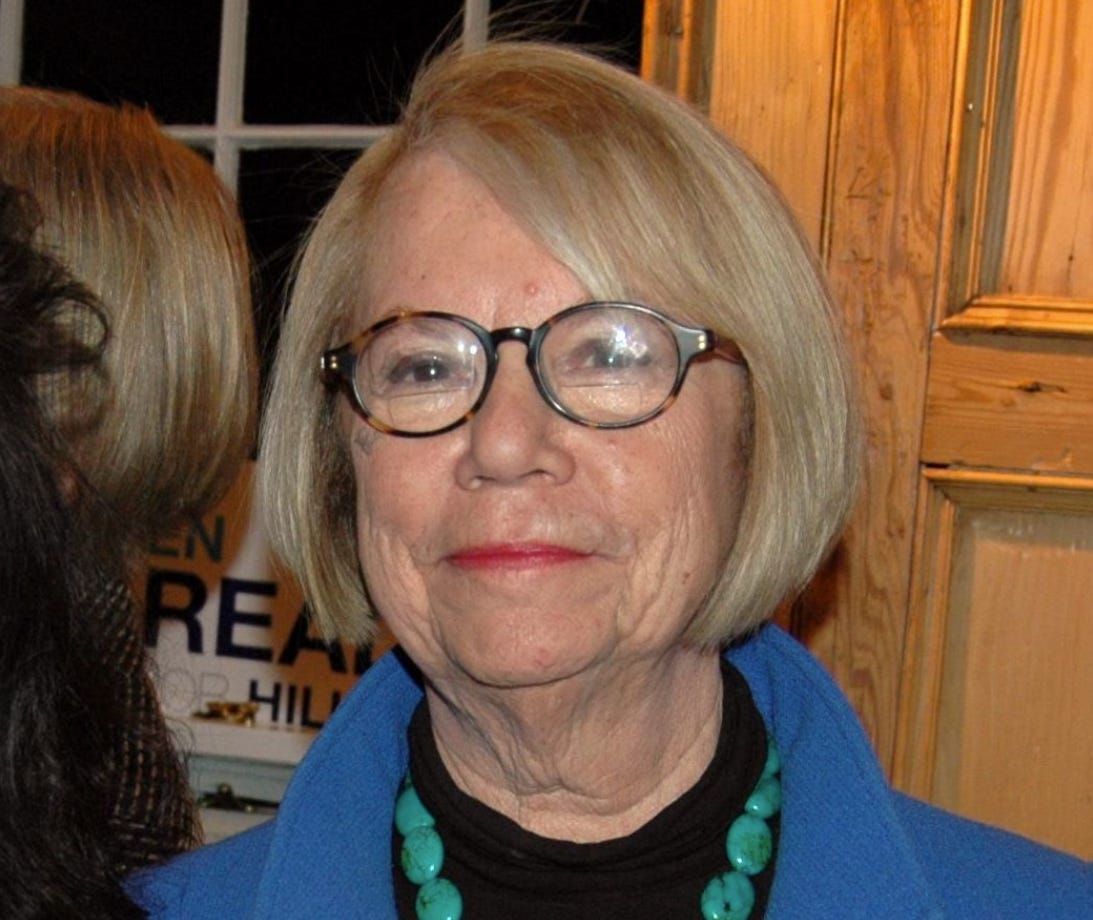
ANN LEWIS: THE QUIET ARCHITECT OF A GENERATION OF DEMOCRATIC POWER
In the long ledger of Democratic Party history, a few names appear not as footnotes or cameos but as architects — people who shaped the party’s voice, its message, and its internal compass across decades.
Ann C. Lewis is one of them.
Born in Jersey City in 1937, Lewis came of age in a political era that demanded toughness, clarity, and a willingness to fight for the coalition that would become modern Democratic politics. She brought all three. And she brought them for more than fifty years.
A strategist before the word became fashionable
Lewis built her reputation the old way:
inside the rooms where decisions were made, long before those rooms had cameras, hashtags, or curated narratives.
Her early work in Democratic politics — including a pivotal stretch as Political Director of the Democratic National Committee (1981–85) — placed her at the center of the party’s rebuilding years. These were the hard seasons, the years when Democrats were redefining themselves after national losses. Lewis was one of the people who kept the lights on and the message sharp.
Her skill was simple and rare:
She could explain Democratic values in a way that sounded like common sense.
Maryland ties that run deeper than geography
Lewis is often associated with Washington and national politics, but her Maryland footprint is unmistakable.
She served as Chief of Staff to then‑Congresswoman Barbara Mikulski, a role that plugged her directly into the state’s most durable political network. Mikulski’s circle — pragmatic, loyal, deeply rooted in Maryland’s civic life — became one of Lewis’s home bases.
Even today, many of the people who know her best are in Montgomery County, Chevy Chase, Bethesda, and Potomac, the corridor where national politics and Maryland politics blend into one ecosystem.
The Clinton years: where her national legacy was sealed
When Bill Clinton entered the White House, Lewis became one of the administration’s most trusted communicators.
She served as:
- White House Communications Director (1997–1999)
- Counselor to the President (1999–2001)
These were not ceremonial titles.
Lewis was one of the people who could take a complicated policy, a political crisis, or a national moment and translate it into language that resonated with ordinary Americans.
Her work helped define the tone of the late‑Clinton era: disciplined, message‑driven, and relentlessly focused on the middle class.
She later became a senior adviser to Hillary Clinton in multiple campaigns, including the 2000 Senate race and the 2008 presidential run. In Democratic circles, Lewis was known as someone who could steady the ship.
A leader in Jewish Democratic life
Lewis has long been a national figure in Jewish Democratic advocacy, serving as a prominent voice in outreach, coalition‑building, and community engagement.
Her work in this space has been consistent, principled, and deeply respected.
This is one of the reasons she remains so connected to Maryland’s political and philanthropic networks — especially in Montgomery County, where Jewish civic leadership has shaped the region’s political identity for generations.
A family footnote, not a headline
Yes, she is the older sister of Barney Frank, the longtime Massachusetts congressman.
But in Democratic circles, Ann Lewis is not known as “Barney’s sister.”
If anything, the reverse is true: Barney Frank is Ann Lewis’s brother.
Her career stands entirely on its own.
A Democratic war horse — in the best sense of the term
Ann Lewis belongs to a generation of Democratic operatives who:
- did the work
- kept the message tight
- built coalitions quietly
- and stayed loyal to the party through its hardest cycles
She is part of the institutional memory of the Democratic Party — the kind of figure who doesn’t need a spotlight because her influence is already baked into the party’s DNA.