

Unlocking the Backyard: How Maryland’s New Statewide ADU Law Promises Gentle Density, Family Wealth, and a Housing Breakthrough
Byline: The Maryland Wire Editorial Staff Category: Statehouse & Housing Policy Access: Free / Public
As Maryland approaches the October 1, 2026 deadline requiring every county and municipality with zoning authority to permit Accessory Dwelling Units (ADUs) on single-family properties, a quiet revolution in housing policy is sweeping through the Free State.
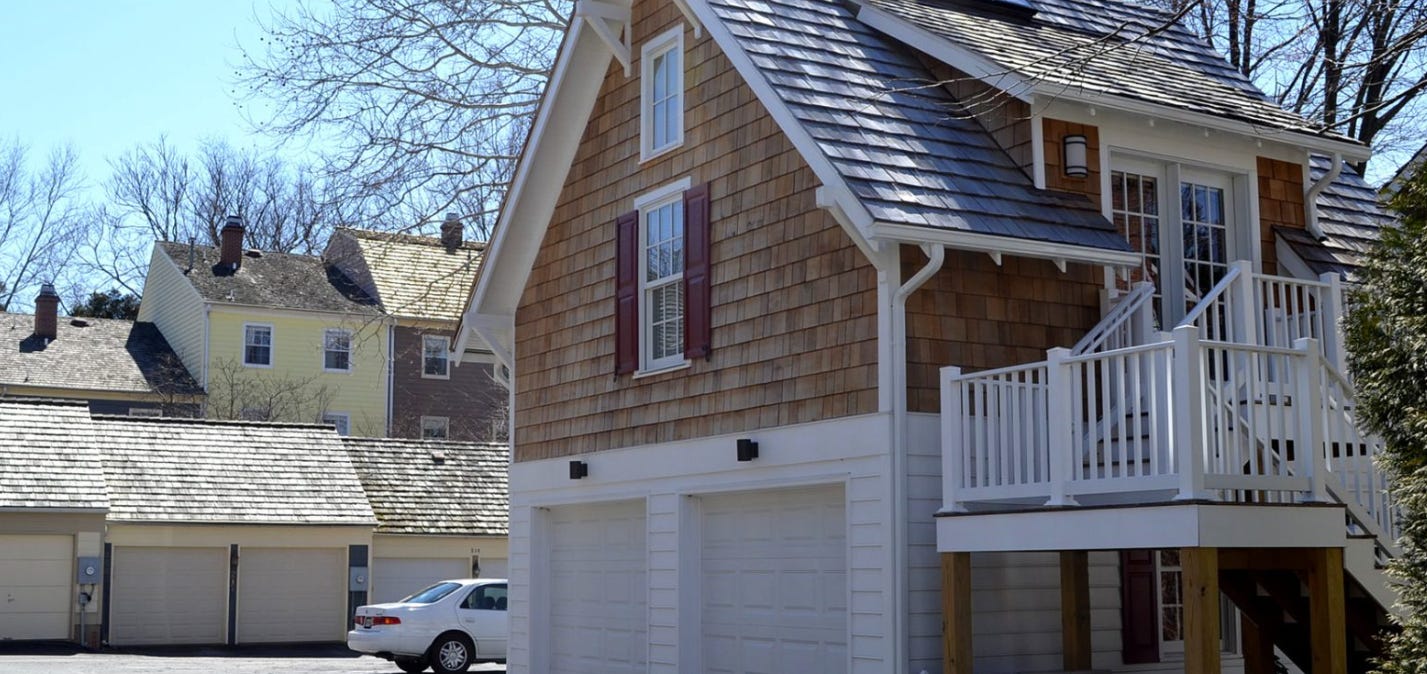
Passed as cross-filed measures Senate Bill 891 (sponsored by Senator Mary Washington and Senator Cheryl Kagan) and House Bill 1466 (sponsored by Delegate Vaughn Stewart), the landmark legislation fundamentally transforms how Marylanders can utilize their residential land. Signed into law by Governor Wes Moore on April 22, 2025, the legislation establishes a statewide framework for homeowners to build secondary units—whether an in-law suite over a garage, a converted basement apartment, or a standalone backyard cottage.
At the center of this transformative push is Jake Day, Secretary of the Maryland Department of Housing and Community Development (DHCD).
The Visionary Behind the Initiative: Secretary Jake Day
To understand how Maryland moved from a patchwork of restrictive local zoning codes to a unified statewide housing initiative, one needs to look no further than Secretary Jake Day.
Day brings a rare combination of executive municipal experience, urban planning expertise, and military discipline to state government. Before stepping up to lead DHCD, Day served as the transformative Mayor of Salisbury, where his downtown revitalization strategies turned the Eastern Shore hub into a regional blueprint for modern housing growth.
A decorated military officer serving in the Army National Guard—currently a Major on the cusp of promotion to Lieutenant Colonel—Day approaches statewide housing strategy with operational precision and deep public service values. Beyond his official duties, he is a devoted father to his two young daughters, embodying the multi-generational family focus that underpins the state's ADU strategy.
Serving as a key member of the state’s Accessory Dwelling Unit Policy Task Force, Day emerged as the chief champion for "missing middle" housing. Day and DHCD view ADUs not merely as secondary structures, but as an essential tool to help close Maryland's estimated 96,000-unit housing shortage.
"ADUs represent a sensible, practical, and fair approach to housing—giving Maryland homeowners the freedom to build smaller, affordable homes on their own land while strengthening family bonds and neighborhood vitality." — Jake Day, Secretary of Housing and Community Development
From one of Maryland's leading experts on affordable housing
Expanding our needed housing supply and protecting the health and safety of the people who live in Maryland is critically important. ADUs have always been a important tool in achieving this. However, they often go uninspected and escape code enforcement. They provide housing for older adults, young people, caregivers, and families who want to remain close to one another. However, in many communities, ADU’s have escaped proper and regular inspections thereby sacrificing safety for their residents. Beginning October 1, 2026, basic safety standards, such as proper air circulation, fire, electric, and plumbing will be met through regular inspections and code enforcement. Housing expansion, regular maintenance, and safety must go hand in hand. This bill will play an important role in ensuring access to decent, safe and affordable housing all across Maryland.
Barbara Goldberg Goldman
The Glossy Promise: Housing Projections, Wealth Building, and Social Impact
Governor Moore and Secretary Day have framed the ADU law as a win-win strategy for both long-time property owners and the state's broader economy.
Metric / DimensionProjection & Real-World Impact State Housing DeficitCurrently estimated at ~96,000 units. 5-to-10 Year OutlookState housing analysts project 15,000 to 25,000+ new ADUs constructed over the next decade, adding decentralized housing stock without requiring new public infrastructure spend. Homeowner WealthGenerating $1,200 to $2,200+ per month in rental income helps seniors on fixed incomes absorb rising property taxes while boosting overall property equity. Social BenefitsProvides naturally affordable housing options for young workforce professionals (teachers, nurses, first responders) and enables multi-generational living for aging parents.
Debunking the Social Media Pushback: The "Backyard Hotel" Myth
If the law was enacted in 2025, why are social media platforms and Facebook feeds suddenly filling up with videos claiming that backyard cottages will turn residential neighborhoods into unregulated hotel strips?
The answer lies in the October 1, 2026 compliance deadline. While state law requires local governments to allow ADUs on single-family lots, counties and cities retain full authority over short-term rental bans, parking rules, and setback requirements. Opposition groups are deploying viral videos right now to pressure local county councils into adopting the strictest possible local restrictions before municipal codes freeze this fall.
The Myth: "The state is allowing mini-hotels and commercial Airbnbs in every backyard, and local officials can't stop it."
The Reality: False. The state statute promotes long-term residential housing. Local jurisdictions retain complete legal power to prohibit short-term rentals (Airbnbs/VRBOs) in ADUs, mandate primary-residence owner occupancy, and enforce local noise and parking ordinances.
A Model for the Nation
Under Governor Moore's leadership and Secretary Jake Day's execution at DHCD, Maryland is demonstrating how state government can tackle a national housing crisis with practical, common-sense reform. By empowering property owners, supporting multi-generational families, and expanding workforce housing options, Maryland's ADU framework sets a clear benchmark for state-level governance.
I'm a Design/Build company getting increasing calls for ADUs in central MD. We're building accessory residential structures and now legal dwellings. I'm afraid there are two massive impediments to successful proliferation:
1) MDE's onerous requirement that an additional 10,000SF of reserve septic area be established - in addition to 10,000SF for the primary dwelling. How many properties on septic have nearly 1/2 acre to meet such a requirement? I'd argue that the additional load on septic systems is no more than the load of a 6,000SF home with 5BRs/5BAs.
2) Required Fire sprinklers are very expensive. They should be exempted when a detached ADU meets certain criteria for life safety and egress. When a 900SF single level home has exterior doors within 25ft of every sleeping area (which also have code-sized egress windows) and synchronized smoke/CO detectors, you can eliminate $4-7K worth of protection that any Life Safety expert would argue is a total waste of money. Think about it: if a fire starts your alarms start blaring. If you cannot exit your bedroom door, you open your window and jump 3ft to the ground below!
If these units are to rent for $1,200 to $2,200+ a month they are not creating new affordable housing. They are more incentives for apartment building/complex owners to raise rents.
Also, does the law require multiple realistic means to exit? I can’t see grandma climbing out a window, even in a basement unit.