


A Lifeline to the Messy Delegate
Maryland Wire Magazine Feature
There are delegates who glide through Annapolis with polished résumés, immaculate reputations, and the kind of personal discipline that reassures leadership they’ll never become a headline. And then there is Delegate Gabriel Acevero — brilliant, charismatic, ideologically fearless, and, at times, undeniably messy.
For years, Acevero has been a paradox: a rising progressive star whose public record has been shadowed by personal turbulence. He is the kind of figure who inspires loyalty among activists and unease among institutionalists. He is also the kind of delegate who forces leadership to make a choice: bury him, rescue him, or find a middle lane that acknowledges both his talent and his volatility.
Speaker Joseline Peña‑Melnyk appears to have chosen the third option.
Her decision to appoint Acevero as Chair of the Public Safety & Administration Subcommittee — a serious, mid‑tier Appropriations portfolio — is not a coronation. It is not a punishment. It is something more nuanced: a lifeline to a delegate whose political future has been complicated by his own missteps and by the coordinated effort in his home district to unseat him.
The Public Record He Can’t Outrun
Acevero’s challenges are not whispered rumors. They are documented in court filings and local reporting.
Between 2022 and 2025, he was sued five times by his landlord for nonpayment of rent. The cases were routine civil matters, but the repetition created an optics problem for a legislator who champions tenant protections and eviction reform. It wasn’t hypocrisy so much as a reminder that personal instability can undermine political credibility.
Then came the altercation.
Acevero got into a physical fight with former political opponent Hassan “Mo” Jawando, resulting in dueling peace orders. No criminal charges followed, but the incident fed a narrative that he was combustible — a delegate whose passion sometimes spilled into places it didn’t belong.
None of this made him unelectable. But it made him vulnerable.
And in District 39, vulnerability is an invitation.
A Target at Home
Senator Nancy King has long been rumored to want Acevero gone, and the district’s political machinery has been quietly assembling a slate designed to push him out. In a county where slates matter, where alliances are currency, and where institutional patience is finite, Acevero has been fighting on two fronts: the ideological battles he chooses, and the personal battles he doesn’t.
That’s why Peña‑Melnyk’s move matters.
JPM’s Calculation
The Speaker could have buried him.
She didn’t.
She could have elevated him into a marquee role.
She didn’t do that either.
Instead, she placed him in a position that is:
- real
- substantive
- visible enough to matter
- contained enough to manage
Public Safety & Administration is not a ceremonial assignment. It oversees budgets for the courts, the Attorney General, the Public Defender, elections, emergency management, veterans, and major administrative agencies. It is a portfolio that requires discipline, attention, and the ability to navigate competing pressures.
It is also a portfolio that gives Acevero a chance to demonstrate something he has not always shown: steadiness.
A Lifeline, Not a Rescue
Peña‑Melnyk is not trying to save him.
She is not trying to punish him.
She is giving him a lane.
A lane to prove that he can manage responsibility.
A lane to show that his ideological fire can coexist with institutional discipline.
A lane to rebuild credibility while his district prepares for a bruising primary.
It is a lifeline — not because he is drowning, but because he is drifting.
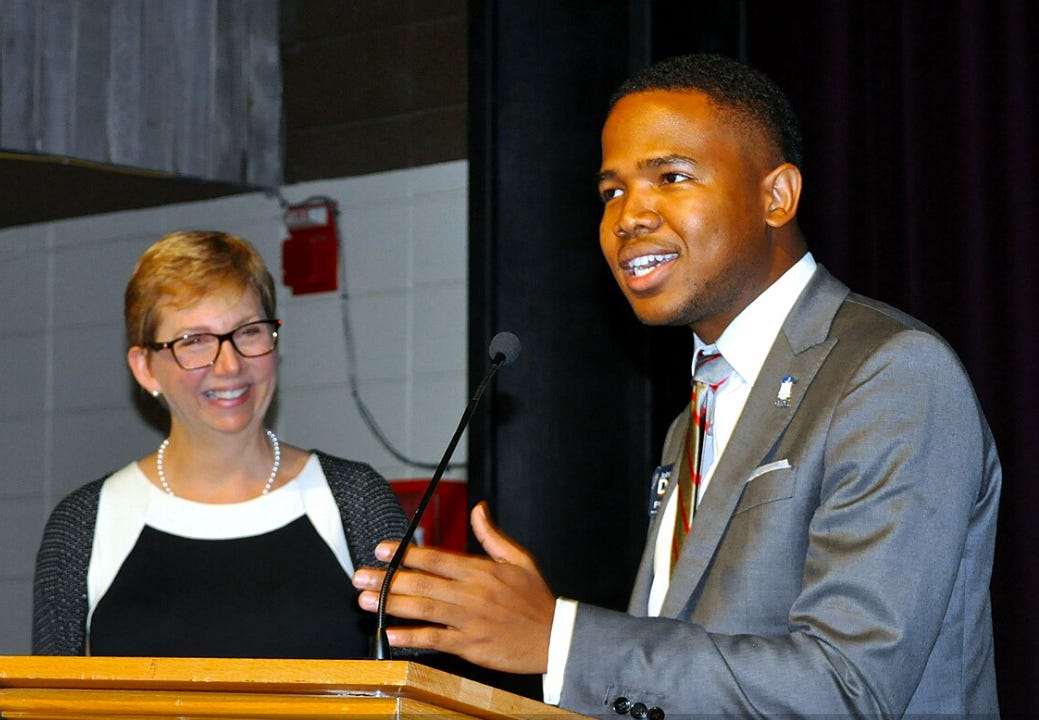
The Delegate at a Crossroads
Acevero’s story has always been more complicated than the caricatures. He is a gifted communicator, a committed progressive, and one of the few delegates who can electrify a room. He is also a young man whose personal life has, at times, collided with his public one.