

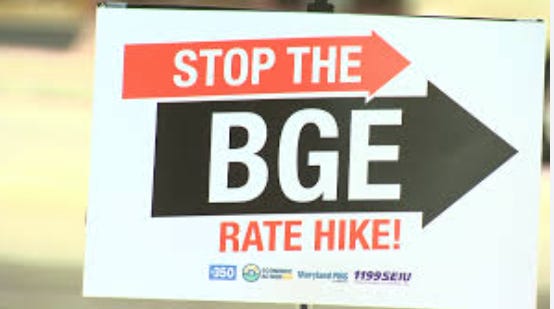
⚡️A High-Level Source Warns: BGE’s Triple Crown Power Grab Is Coming
A trusted, high-level source—someone who’s broken stories to me ahead of the curve for years—has just dropped a warning that demands immediate attention.
According to this source, Baltimore Gas and Electric (BGE) is preparing to move legislation in the upcoming Maryland General Assembly session that would grant the state’s largest utility unilateral control over electricity generation, distribution, and retail. This would be a sweeping expansion of corporate authority—far beyond anything proposed in Senate Bill 1 or its successors.

> “This is SB1 on steroids,” the source told me.
> “It’s the Triple Crown. Generation, distribution, and retail. All under one roof. No oversight. No competition.”
The bill, which is expected to be introduced by BGE’s legislative allies, would effectively create a commercial monopoly—allowing BGE to generate its own electricity, control how it’s distributed, and sell it directly to consumers. The justification? Infrastructure investment. The mechanism? Rate hikes.
🧾 What’s at Stake
- Ratepayer vulnerability: With no competitive checks, BGE could impose massive rate increases under the guise of grid modernization and climate resilience.
- Regulatory bypass: The bill would sidestep traditional Public Service Commission oversight, giving BGE carte blanche to define its own capital needs and cost recovery.
- Market consolidation: Smaller energy providers and community solar initiatives would be boxed out, leaving Marylanders with fewer choices and higher bills.
This isn’t just a policy shift—it’s a structural transformation of Maryland’s energy economy. And it’s being orchestrated quietly, with the kind of precision that suggests the groundwork is already laid.
If this bill drops tonight or in the coming days, it will likely be framed as a “resilience” or “modernization” initiative. But the real story is monopoly power—centralized, unchecked, and dressed in the language of infrastructure.
I’m not publishing this to break the story. I’m publishing it to mark the moment—because when the bill surfaces, the public deserves to know that it didn’t come out of nowhere.
More soon.