

A City in Crisis, with Suites Full of Crab Cakes
Baltimore is tightening its belt. Taxes and fees are rising, agencies are bracing for cuts, and the city’s long‑term fiscal picture is cloudy enough that even routine services are being re‑evaluated. Against that backdrop, the Baltimore Office of the Inspector General released a report that landed with the force of a cold wave hitting a hot stove: nearly $900,000 in food, flowers, parties, and perks charged to procurement cards and invoices by the Mayor’s Office between July 2022 and November 2025.
The numbers are stark. The IG tracked $801,839 in meals and catering, $42,691 in flowers and funeral services, and another $45,646 in unreconciled spending—charges that hadn’t even been properly recorded yet. The spending wasn’t for public events or community outreach. Much of it was for internal celebrations, staff comforts, and what one might politely call “morale enhancements.” In less polite terms, it reads like a three‑year floating holiday.
The Crab Feasts and the Cruise‑Ship Atmosphere
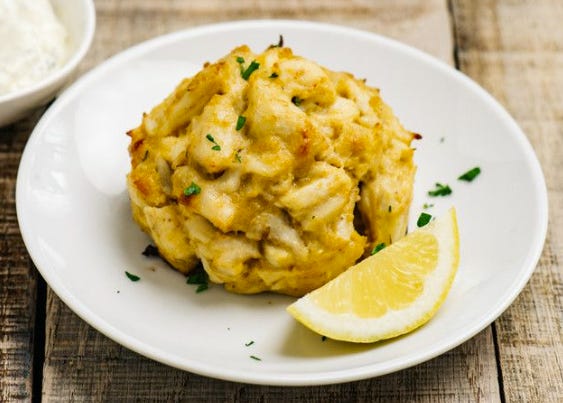
The report describes a workplace that, at least for senior staff, resembled a hospitality suite more than a government office. There were crab feasts, crab balls, pizza spreads, banana bread pudding, and a standing request for a “fresh fruit tray available to everyone in the mayor’s suite daily.”
One event in particular has become emblematic: a $3,636 farewell party for a senior aide that included crab balls, grilled salmon, a custom cake, a balloon arch, and nearly $400 worth of foam boards with the employee’s face on them. The aide never actually left city employment; he simply moved to another role and remains a top adviser.
These are not illegal expenditures on their face. But they are prohibited under city procurement rules unless the Mayor’s Office files a waiver with the Bureau of Procurement. And according to the IG, the office filed none.
The P‑Card Problem: 336 Violations and Counting
The city’s procurement card manual is clear: food, beverages, and flowers are prohibited purchases without a waiver. The IG found 336 transactions—totaling $167,455.06—made without the required waivers. Of those, 295 were food or catering purchases.
This is where the alcohol question becomes unavoidable. The IG repeatedly refers to “food and beverages,” and the stadium suite spending is explicitly categorized as such. Under city policy, alcohol is a prohibited purchase unless a waiver is granted. No waivers were filed. The report does not break out alcohol line‑by‑line, but the category itself includes it unless specifically excluded. In other words, the Mayor’s Office purchased prohibited items, and alcohol is one of the prohibited items.
The omission isn’t subtle; it’s structural. When the public hears “catering,” they imagine sandwiches. When they hear “food and beverages” at a stadium suite, they imagine beer and wine. The IG’s language supports the latter interpretation.
The Stadium Suites: A $52,000 Tab That Was Really $150,000
The IG found that the Mayor’s Office spent $52,588.78 in taxpayer funds on food and beverages at Orioles and Ravens games. Because the city receives a 70% discount on suite catering, the actual value of the food and drinks consumed was closer to $150,000.
Witnesses told investigators that this practice predates the Scott administration and that the suites are used to host firefighters, teachers, and other city workers. Mayor Scott has leaned heavily on that tradition, arguing that “nothing illegal was done here” and that the city has been spending money on skyboxes since he “was eight years old.”
But tradition is not the issue. The issue is compliance. The rules require waivers. The waivers were not filed. And the spending occurred during a period when the city was warning residents about budget shortfalls.
The Optics: A Tale of Two Baltimores
The IG’s findings would be controversial in any year. In a year of fiscal strain, they are combustible. Residents are being asked to pay more for less. Agencies are being told to do more with less. And the Mayor’s Office appears to have been doing more with more—more food, more perks, more comforts, more suite nights.
The contrast is not subtle. It is the kind of contrast that breeds cynicism, fuels rumors, and erodes trust.
The Rumors: A Tight Vendor Circle and the Campaign Loop
In political and restaurant circles, there is a persistent rumor—never substantiated in any public investigation—that a small circle of favored restaurants receives a disproportionate share of city and political business, and that some of that money finds its way back into campaign coffers. The rumor goes like this:
- The Mayor’s Office or political committees steer catering orders to a handful of restaurants.
- The restaurants send large invoices, sometimes padded with service fees or extras.
- Later, the same owners or entities appear as campaign contributors.
This is rumor, not fact. No IG report, no press investigation, and no public document has substantiated a kickback loop. But the optics of the documented spending—the volume, the repetition, the lack of waivers, the concentration of vendors—create a climate where such speculation feels plausible to insiders.
If such a loop were ever proven, it would raise serious issues: potential straw donations, misuse of public funds, and even honest‑services fraud if a quid pro quo could be shown. But that is the realm of hypotheticals. The IG did not allege it. The press has not documented it. It remains a rumor.
A Culture of “Because We Can”
The IG did not find deliberate misuse. The Mayor’s Office insists everything was done in good faith. But the pattern is unmistakable: a culture where procurement rules were treated as optional, where waivers were an afterthought, and where the comforts of office life were prioritized even as the city’s finances tightened.
The story is not about criminality. It is about stewardship. It is about judgment. It is about whether the people who ask Baltimoreans to sacrifice are willing to do the same.
And it is about the simple, unavoidable question that Baltimore residents will ask when they read the IG report: Why were they living so well on the public dime while telling everyone else to brace for cuts?
Interesting. How did the IG conclude there was no “deliberate misuse” after reviewing 336 P-Card transactions totaling nearly $168K that were made without the required waivers? At that point the real question becomes whether the IG is actually fulfilling its oversight role and holding Baltimore’s elected officials accountable for taxpayer dollars, or failing the public trust.